
Inspired by a dish served at the one of the oldest Chinese restaurants in the Philippines, air fried pork belly and crisp golden firm tofu are tossed in a thick sweet, sour and spicy sauce flavored with the Sichuan fermented broad bean chili paste called doubanjiang.

Cook’s notes
The restaurant is Boy Ching Woo which started as a humble panciteria in 1939. It was within walking distance from my parents’ house. I didn’t realize how much I missed its famous lechon con tokwa until I moved with my own family to the suburb. That was when I started deconstructing the dish to come up with my version.
What makes the dish so memorable? I assure you it isn’t just nostalgia. I am not that kind of person. I ate plenty of bad food as a child and I don’t yearn for them. I have exerted a lot effort to recreate this dish because it is beyond good. A sticky sauce that’s sweet, sour and a bit spicy coats the crispy pork belly (lechon kawali) and deep fried tofu (tokwa). But flavor is not everything in this dish. It’s the texture that really captures the imagination.
Does the pork skin stay crisp after being tossed in the sauce? Yes, if you serve the dish immediately. But if you allow the pork to simmer in the sauce, even as the skin loses its wonderful crispness, you get something else in return. The puffy skin turns chewy in an indescribable way. That was how the dish was served at Boy Ching Woo.
Here at home, however, with my husband’s obsession with crispy pork skin, I toss the crispy pork belly cubes in the sauce just long enough to coat them. Then, I serve the dish as soon as it’s off the stove.
It’s not a complicated dish to prepare at home. But because there are several components, you have to plan and time everything so that the pork skin is still at its prime by the time the meat is tossed into the sauce.
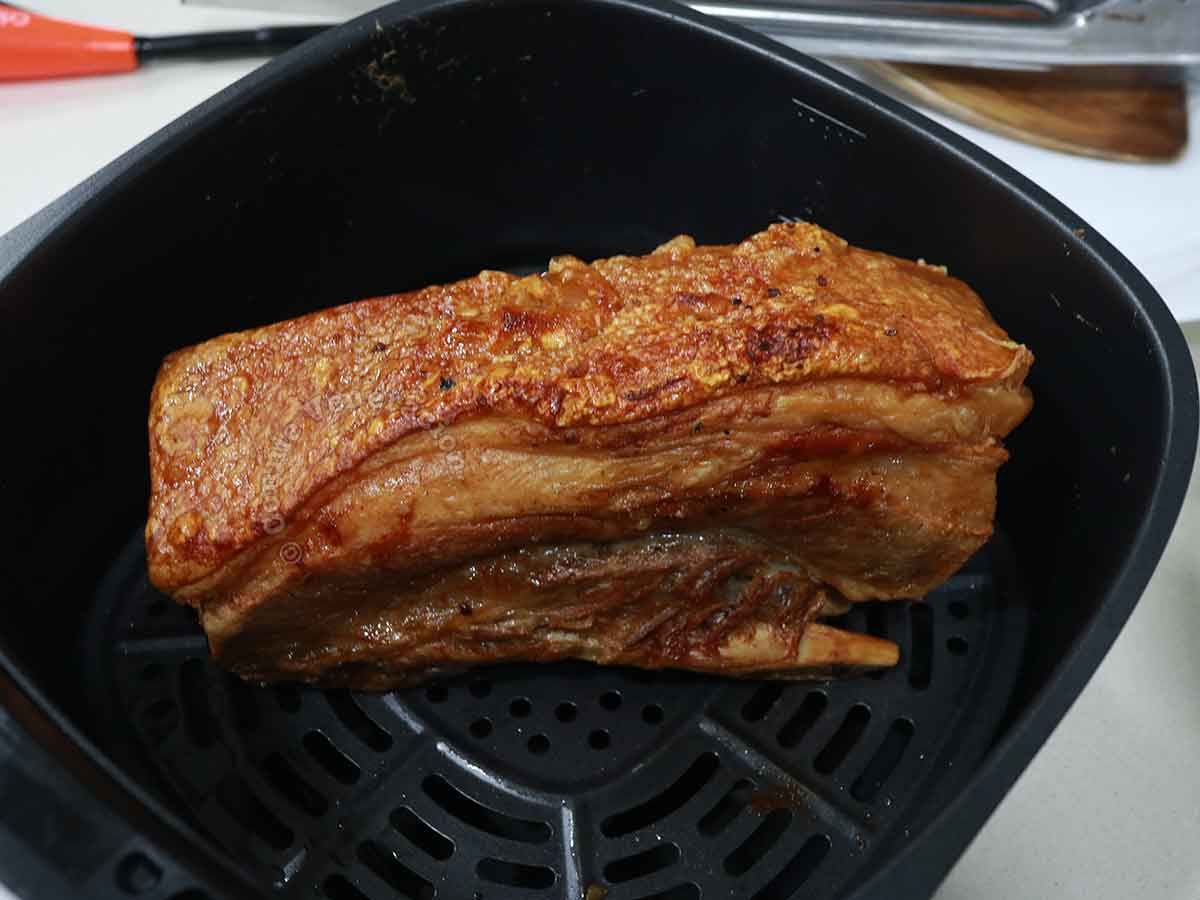 Simmer a slab of pork belly in heavily seasoned water until the meat is so tender it easily separates from the bone. Then, air fry the pork belly until the skin is puffed and crispy.
(Note that the prep and cook time indicated below does not include cooking the crispy pork belly.)
While the crispy pork belly rests to allow the juices to settle, prepare the rest of the components for the dish.
 You don’t have to make your own version of doubanjiang because it is readily available in most Asian groceries and supermarkets. Several brands are available, and I have to say that flavor and quality varies from one brand to another. What you see in the photo above is what we use at home (no, this is not a sponsored post).
Crispy pork belly (lechon kawali)
The traditional method of cooking this delectable Asian dish is to simmer the pork, leave it to dry a bit then deep fry it until the skin puffs and turns crisp. It’s messy and the frying can be hazardous in a home kitchen unless you have plenty of experience with the process. I prefer air frying.
Simmer a slab of pork belly in heavily seasoned water until the meat is so tender it easily separates from the bone. Then, air fry the pork belly until the skin is puffed and crispy.
(Note that the prep and cook time indicated below does not include cooking the crispy pork belly.)
While the crispy pork belly rests to allow the juices to settle, prepare the rest of the components for the dish.
What is doubanjiang?
Also called douban and toban-djan, it’s a Sichuan hot and savory chili paste. I know that sounds generic since chili pastes are found in numerous cuisines around the world. Even in the Sichuan province, there are several varieties but the original and most well-known is from Pixian, the present-day Pidu District in Chengdu city.It’s made by fermenting approximately seven parts Sichuan chili peppers (erjingtao) and three parts fava (broad) beans mixed with wheat flour and salt.
You don’t have to make your own version of doubanjiang because it is readily available in most Asian groceries and supermarkets. Several brands are available, and I have to say that flavor and quality varies from one brand to another. What you see in the photo above is what we use at home (no, this is not a sponsored post).
Use firm tofu
In a very general sense, tofu can be soft, silken or firm. Firm tofu is recommended for this recipe because it can withstand the all the tossing required toward the end of cooking.Crispy pork belly and tofu with chili bean paste (lechon con tokwa)
Ingredients
- 1 cake firm tofu about 300 grams / 10.5 oz in weight
- cooking oil for deep frying
- 2 shallots peeled and thinly sliced
- 4 cloves garlic peeled and thinly sliced
- 1 one-inch knob ginger peeled and grated
- 2 teaspoons doubanjiang also sold as douban or toban-djan (available in Asian groceries)
- 1 tablespoon dark soy sauce
- 2 tablespoons rice vinegar
- 2 tablespoons sugar
- 1 teaspoon tapioca starch
- crispy pork belly one kilogram / 2.2 pounds in weight before cooking; cut into two-inch cubes
Instructions
- Press the tofu between stacks of paper towels to remove excess moisture.
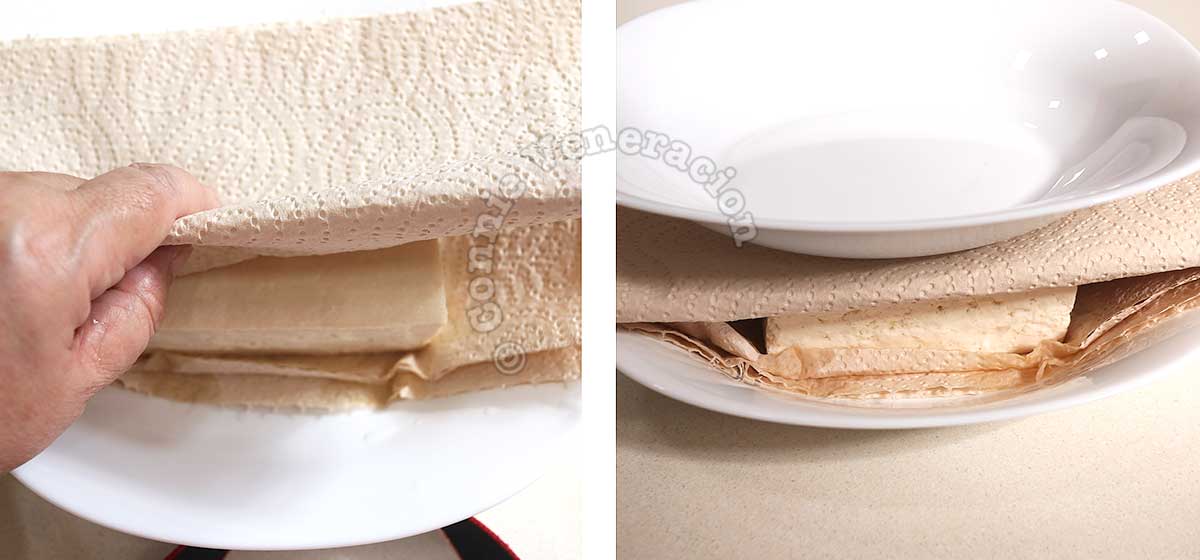
- Cut the tofu into slices about an inch thick.
- Heat enough cooking oil in a frying pan to reach a depth of two inches.
- Deep fry the tofu slices until golden and crisp.

- Cut the fried tofu into cubes.
- Pour off the oil from the pan leaving only about two tablespoonfuls.
- Saute the shallots, garlic and ginger until softened and aromatic.

- Add the tofu cubes and cook, tossing, until heated through.
- Into one cup of water, stir in the doubanjiang, soy sauce, rice vinegar, sugar and starch.
- Pour the sauce into the pan and cook, stirring, until thick and no longer cloudy.

- Add the crispy pork belly and toss a few times until each piece is coated with sauce.
- Serve your crispy pork belly and tofu with Chinese chili bean paste immediately. Best with rice.


 Creamy shrimp and broccoli spaghetti
