
Pork rendang
Cubes of stewing pork are mixed with herbs and spices, left to marinate then slow cooked with more spices, tamarind paste and coconut milk.
Servings 4 people
Ingredients
Pork and marinade
- 8 cloves garlic peeled
- 4 to 6 bird’s eye chilies
- 1 teaspoon coriander seeds
- 1 teaspoon black peppercorns peeled
- 6 to 8 shallots
- 1 one-inch knob turmeric peeled (or one teaspoon turmeric powder)
- ¼ teaspoon cumin seeds
- 1 teaspoon crushed galangal
- ¼ teaspoon ground nutmeg
- 1 kilogram stewing pork (I recommend belly, neck or shoulder) cut into two-inch cubes
To cook the pork rendang
- 3 tablespoons cooking oil
- 1 onion peeled chopped
- 2 stalks lemongrass white part only, bruised
- 2 sticks cinnamon
- 2 pairs kaffir lime leaves deveined and thinly sliced
- 4 to 5 cups coconut milk fresh, canned or hydrated coconut powder
- 2 tablespoons tamarind paste
- ⅓ cup desiccated coconut (or 1/2 cup freshly grated coconut, dry fried until lightly browned)
- fish sauce to taste
- sugar to taste
- 6 tablespoons sliced scallions
Instructions
Make the spice paste
- In an oil-free pan, toast the garlic, chilies, coriander seeds, peppercorns, shallots, turmeric and cumin seeds.
- Transfer to a blender, add the crushed galangal and nutmeg. Process with a couple of tablespoonfuls of water to form a paste.
Marinate the pork
- Place the pork in a shallow bowl.
- Pour in the spice paste.

- Mix and work the spice paste into the meat.
- Cover and keep overnight in the fridge.
Cook the rendang
- Heat the cooking oil in a thick-bottomed pan.
- Saute the chopped onion, lemongrass and cinnamon sticks.
- Add the pork to the hot oil and cook until lightly browned along the edges.

- Add the kaffir lime leaves.
- Pour in the coconut milk and tamarind extract.
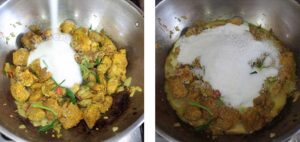
- Add the desiccated coconut. Stir.
- Season with fish sauce and sugar.
- Cover and simmer for an hour to an hour and a half (or longer) or until the pork is tender. Stir occasionally and remember to scrape the bottom of the pan. Taste occasionally as well and add more fish sauce or sugar, or both, as needed.
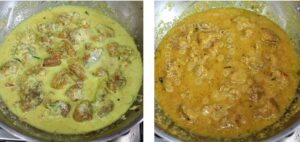
- Uncover the pan. Add half of the sliced scallions. Turn up the heat and continue cooking, stirring and scraping the bottom of the pan often, until the pork rendang is dry.
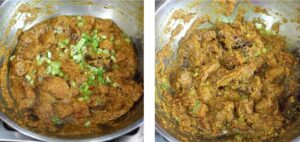
- Serve the pork rendang with more sliced scallions over hot rice.