
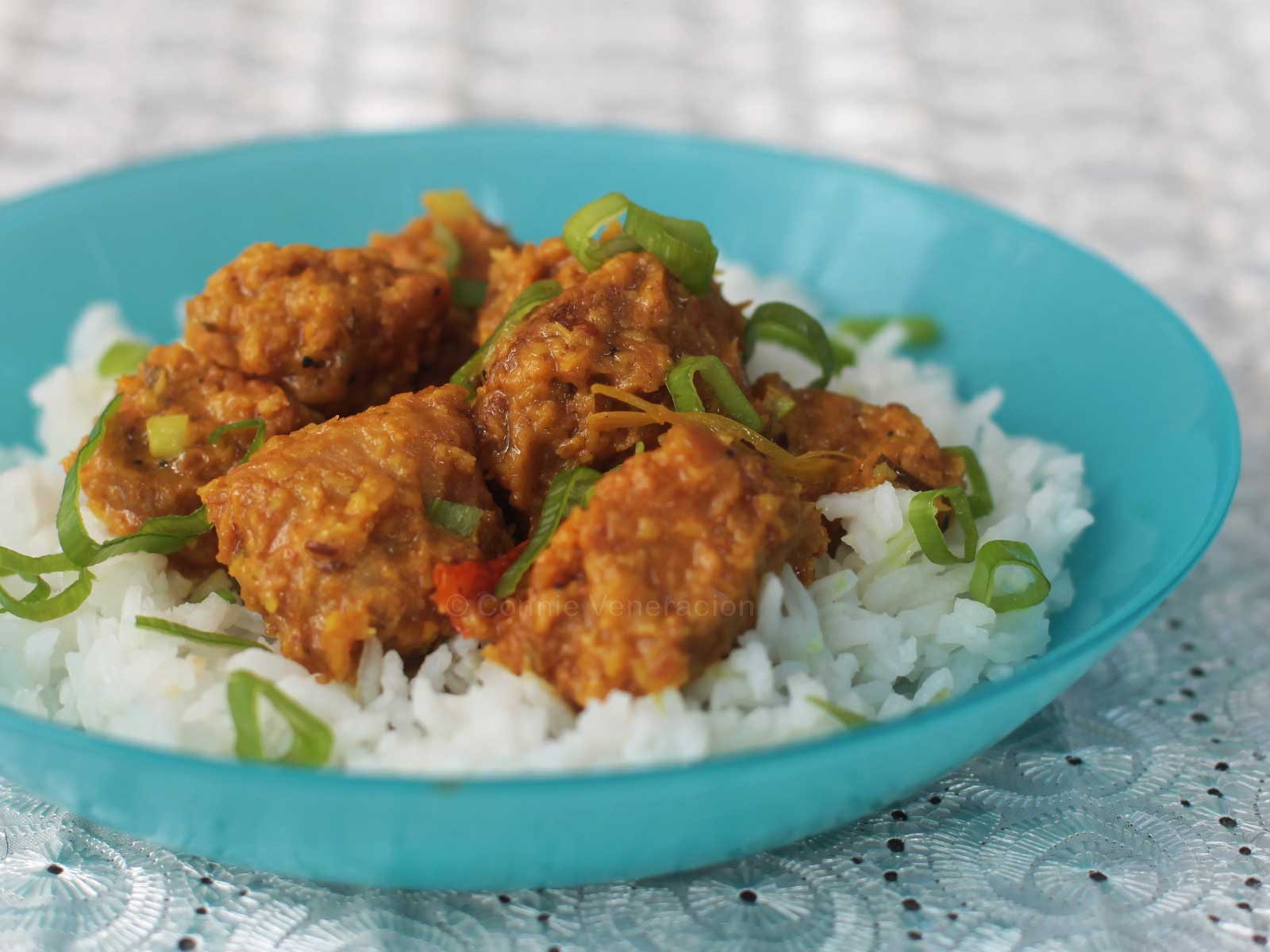
Cubes of stewing pork are mixed with herbs and spices, left to marinate then slow cooked with more spices, tamarind paste and coconut milk.

Cook’s notes
Rendang does not refer to a dish or a class of dishes. Rather, it describes a method of slow cooking meat until the cooking liquid and juices have evaporated and what remains in the pot of meat is a concentration of flavors. Beef rendang is probably the most well known of rendang dishes but pork rendang is just as delicious.
While rendang spice base can be bought ready-to-use, I prefer to grind the spices to marinate the pork in. Using a mortar and pestle is traditional (many cooks claim that manually grinding the spices releases oils and flavor better) but it’s not a crime to use a blender or a food processor.
What you should not skip is the actual marinating. I do this overnight in the fridge. We’re not cooking ground pork here and, with the size of the pork cubes, it will take some time for them to soak up the flavors in the spice base. So, overnight is best.
This is a recipe for dry pork rendang (wet rendang has more sauce). It’s not curry. There is no such thing as curry in authentic Asian cooking. Curry is a term coined by the British to give a name to the spicy sauces prevalent in South Asian dishes.
Don’t be tempted to use curry powder to cook rendang. Substituting commercial curry powder or paste for the rendang spice paste will not give the dish the flavors of real rendang.
For more details about some of the ingredients, see:
- How to cook with kaffir limes and leaves
- Cooking with chilies
- A guide to coconuts for eating, drinking and cooking
- How to grow and propagate lemongrass, and how to use it for cooking
- Scallion, spring onion, leek and shallot: how to differentiate
- Fermented fish sauce: how it is made and used in cooking
Pork rendang
Ingredients
Pork and marinade
- 8 cloves garlic peeled
- 4 to 6 bird’s eye chilies
- 1 teaspoon coriander seeds
- 1 teaspoon black peppercorns peeled
- 6 to 8 shallots
- 1 one-inch knob turmeric peeled (or one teaspoon turmeric powder)
- ¼ teaspoon cumin seeds
- 1 teaspoon crushed galangal
- ¼ teaspoon ground nutmeg
- 1 kilogram stewing pork (I recommend belly, neck or shoulder) cut into two-inch cubes
To cook the pork rendang
- 3 tablespoons cooking oil
- 1 onion peeled chopped
- 2 stalks lemongrass white part only, bruised
- 2 sticks cinnamon
- 2 pairs kaffir lime leaves deveined and thinly sliced
- 4 to 5 cups coconut milk fresh, canned or hydrated coconut powder
- 2 tablespoons tamarind paste
- ⅓ cup desiccated coconut (or 1/2 cup freshly grated coconut, dry fried until lightly browned)
- fish sauce to taste
- sugar to taste
- 6 tablespoons sliced scallions
Instructions
Make the spice paste
- In an oil-free pan, toast the garlic, chilies, coriander seeds, peppercorns, shallots, turmeric and cumin seeds.
- Transfer to a blender, add the crushed galangal and nutmeg. Process with a couple of tablespoonfuls of water to form a paste.
Marinate the pork
- Place the pork in a shallow bowl.
- Pour in the spice paste.

- Mix and work the spice paste into the meat.
- Cover and keep overnight in the fridge.
Cook the rendang
- Heat the cooking oil in a thick-bottomed pan.
- Saute the chopped onion, lemongrass and cinnamon sticks.
- Add the pork to the hot oil and cook until lightly browned along the edges.
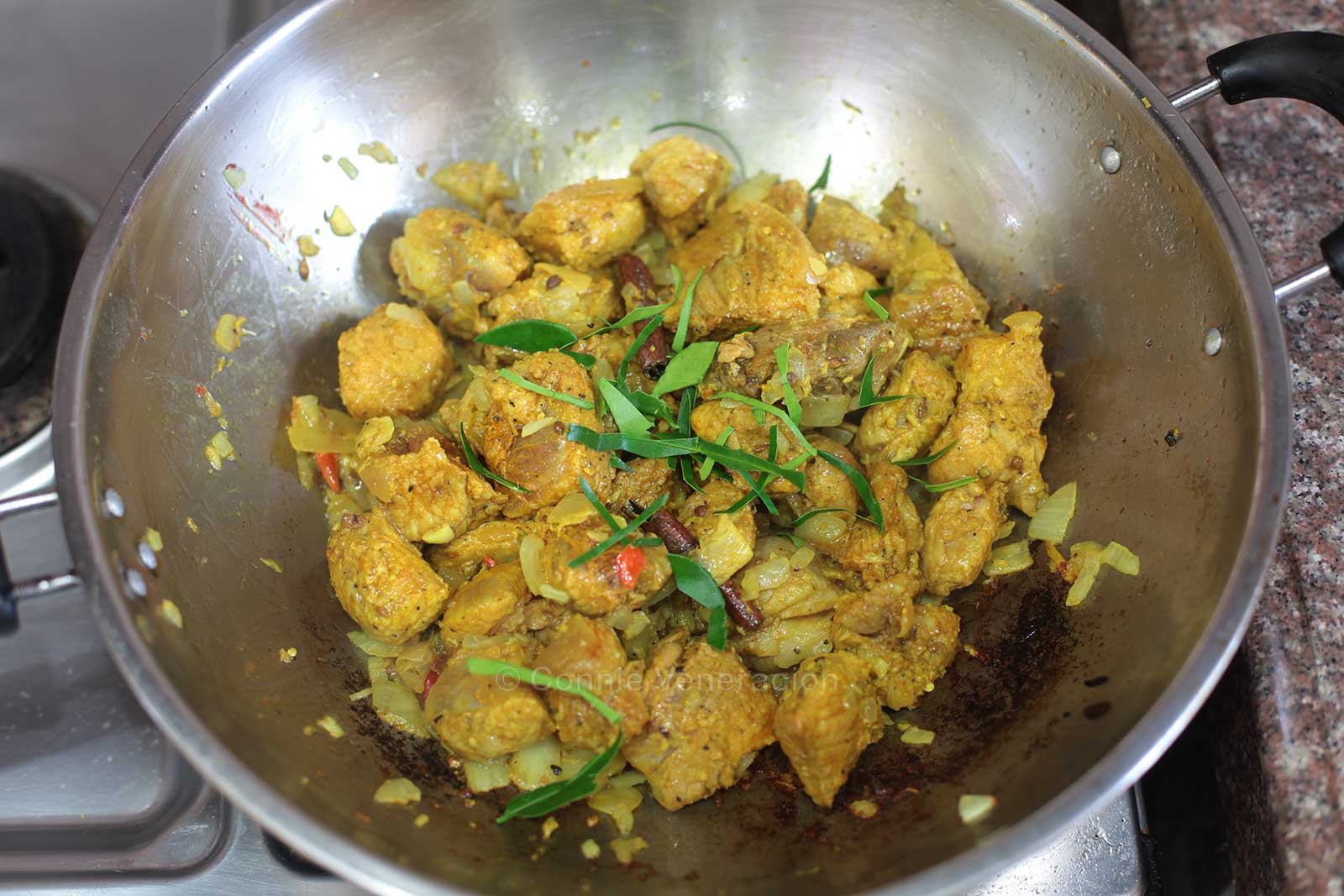
- Add the kaffir lime leaves.
- Pour in the coconut milk and tamarind extract.
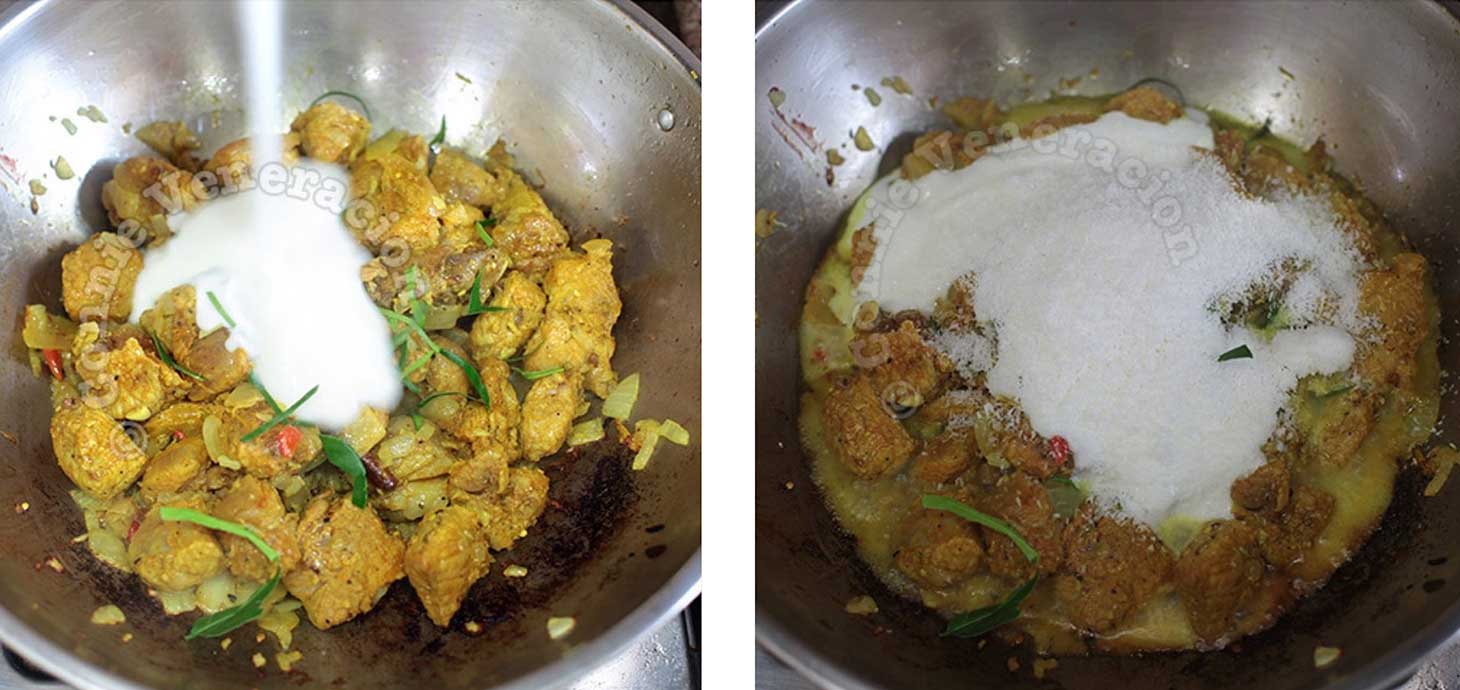
- Add the desiccated coconut. Stir.
- Season with fish sauce and sugar.
- Cover and simmer for an hour to an hour and a half (or longer) or until the pork is tender. Stir occasionally and remember to scrape the bottom of the pan. Taste occasionally as well and add more fish sauce or sugar, or both, as needed.
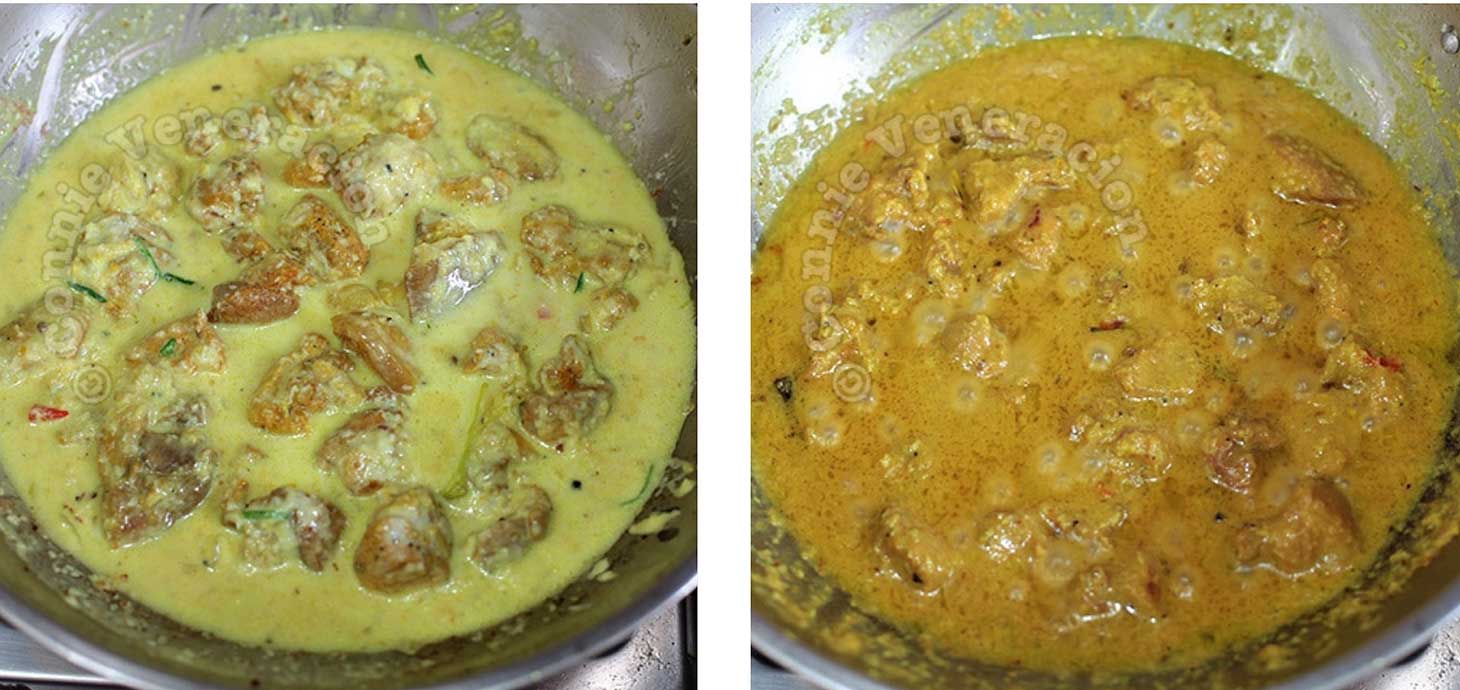
- Uncover the pan. Add half of the sliced scallions. Turn up the heat and continue cooking, stirring and scraping the bottom of the pan often, until the pork rendang is dry.
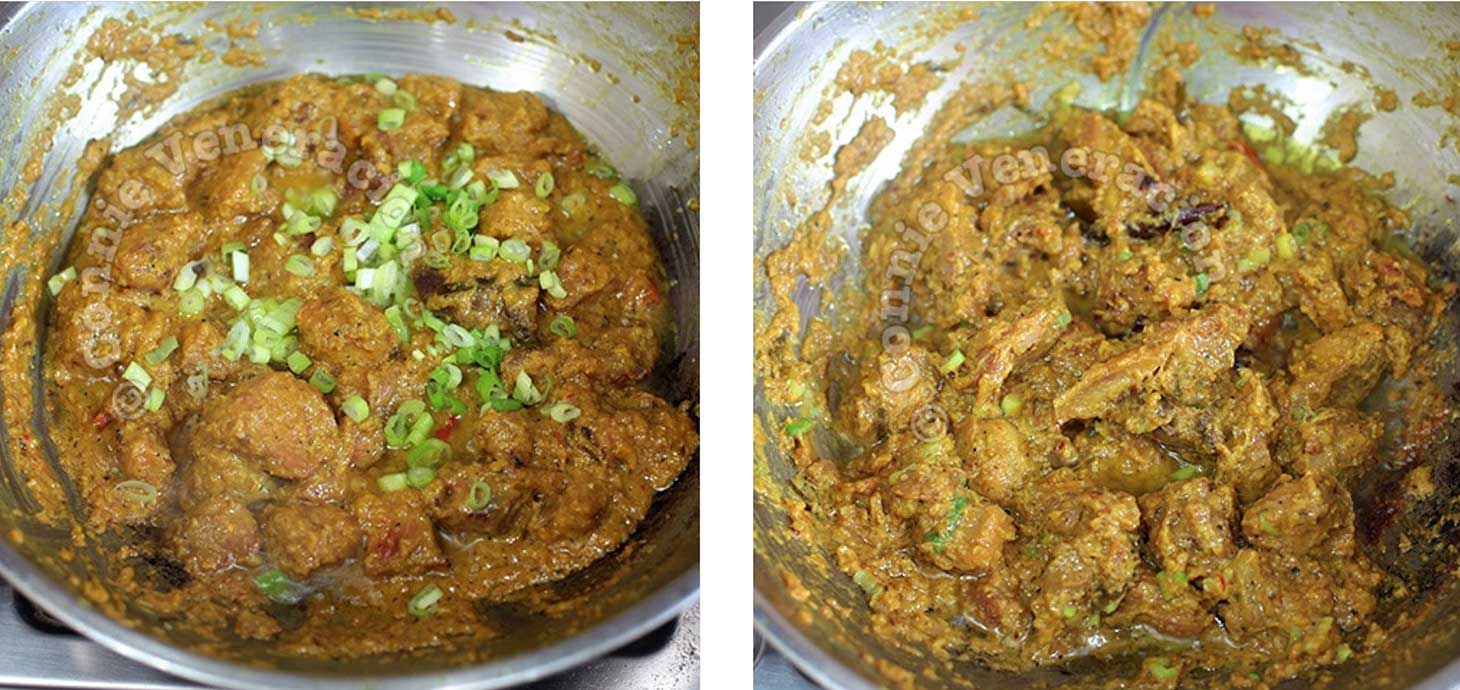
- Serve the pork rendang with more sliced scallions over hot rice.






 Beef and asparagus rolls with teriyaki sauce