

Cook’s notes
Everyone’s nuts over crispy fried chicken and cooks have been experimenting non-stop to make the best. Light and thin, the best crust crumbles like a sheet of paper when you cut through the chicken.
I’ve used so many formulas before. No egg. You can’t use wheat flour exclusively because the crust turns doughy as it cools. Combining egg with wheat flour is even worse because that’s like coating the chicken with bread. A combination of wheat flour and cornstarch used to be my default until I discovered potato starch. That’s what the Japanese use for cooking chicken karaage and the crust is just amazing. In the absence of potato starch, it was flour, egg and panko. You know, katsu-style.
But potato starch is pricey. And the flour-egg-panko trifecta requires the use of three bowls just to coat the chicken with a crust that will not fail to turn crisp. It so happened that, today, I was out of potato starch. I didn’t even have corn starch to combine with all-purpose flour. We had eggs and panko but I was not in the mood to wash three bowls if one would do. How was I going to create the crust? I scanned the kitchen shelves and saw baking powder.
The crust is a batter. Dipping the chicken in batter is the last thing you’ll do before frying.
The crust consists of three ingredients only. Wheat flour (all-purpose flour if that’s more understandable), baking powder and water. No need for pricey potato starch. No need for three bowls for flour, egg and panko either to cook the chicken katsu-style.
Baking powder is a leavening agent. It releases carbon dioxide into the batter and makes bubbles expand. That’s what bakers use for cakes. Without it, cakes would be dense and that is often undesirable. When you add baking powder to fried chicken batter, the effect is the same. Instead of a dense crust, you get something light and airy.
Creating the crust consists of two steps. Coating the chicken with flour and then dipping it in batter. If you skip flouring the chicken, the batter will have a difficult time clinging to the moist raw meat.
Excess batter is allowed to drip back into the bowl before the chicken is deep fried. At what temperature? Normally, I’d say fry at 325F until the chicken is done then fry at 375F to turn the batter into a golden crispy crust. But with baking powder in the batter, there is no need for double frying.
Cook the chicken at 350F (take care not to overcrowd the pan) until the batter turns golden. For how long? Well, that depends on the part of the chicken you’re using. I used chicken leg quarter fillets and the cooking time, per batch, was 12 minutes. Breast fillet requires a shorter frying time. You will need to fry bone-in thighs or drumsticks longer.
Very useful tips
Use only the light-colored portion of the lemongrass stalks. See the standalone post about lemongrass for illustration and details. How long the dipping sauce needs to cook in the microwave depends on your oven’s wattage. The important thing is that the mixture reaches boiling point but it doesn’t need to boil any longer after that. The batter should be thinner than pancake batter. I wish I could specify the exact amount of water but even all-purpose flour differs from brand to brand. So, you’ll need to eyeball how much water to stir into the flour. Shouldn’t the batter be seasoned? You may do that. I didn’t because the marinade was sufficient to flavor the chicken and there’s dipping sauce on the side. Seasoning the batter might have been overkill.Lemongrass fried chicken
Ingredients
Chicken
- 4 leg quarter fillets
- 3 stalks lemongrass
- 4 cloves garlic peeled
- 1 two-inch knob ginger peeled and sliced
- 1 finger chili sliced
- ¼ cup fish sauce
- 2 tablespoons sugar
Dipping sauce
- 4 tablespoons marinade
- 2 tablespoons peanut butter
- 1 tablespoon hoisin sauce
- 1 tablespoon oyster sauce
Frying
- ¾ cup all-purpose flour
- ½ teaspoon baking powder
- cooking oil for deep frying
To serve
- cooked rice
- toasted sesame seeds
- cilantro
Instructions
Marinate the chicken
- Rinse the chicken and wipe the surface with paper towels. Place the fillets in a shallow bowl.
- With a mortar and pestle, pound the lemongrass, garlic, ginger and chili. Add the fish sauce and sugar. Stir until the sugar is dissolved.
- Pour the marinade into the bowl with the chicken. Mix well.

- Cover the bowl and leave the chicken to marinate in the fridge for an hour.
Make the dipping sauce
- Remove the chicken fillets from the marinade. Scrape off any solids sticking to them.
- Strain the marinade and pour into a microwave-safe bowl or cup.
- Add the peanut butter, hoisin sauce and oyster sauce.

- Microwave on HIGH for 30 seconds or until bubbly (see notes).
- Whisk until smooth. Set aside.
Fry the chicken
- Spread one-fourth cup of flour on a plate. Dredge each chicken fillet until the surface is completely dusted.
- Place the remaining flour in a shallow bowl, slowly pour in water, stirring as you pour, to make a pourable batter (see notes).
- Whisk in the baking powder.
- Heat enough cooking oil in a pan to reach a depth of two to three inches.
- Drip each floured fillet in the batter, allow the excess to drip back into the bowl, then slide the battered fillet into the hot oil.

- Fry the chicken (in batches if your frying pan is not too large) for six minutes per side.

Serve the lemongrass fried chicken
- Ladle rice into bowls and arrange a lemongrass fried chicken on the side.
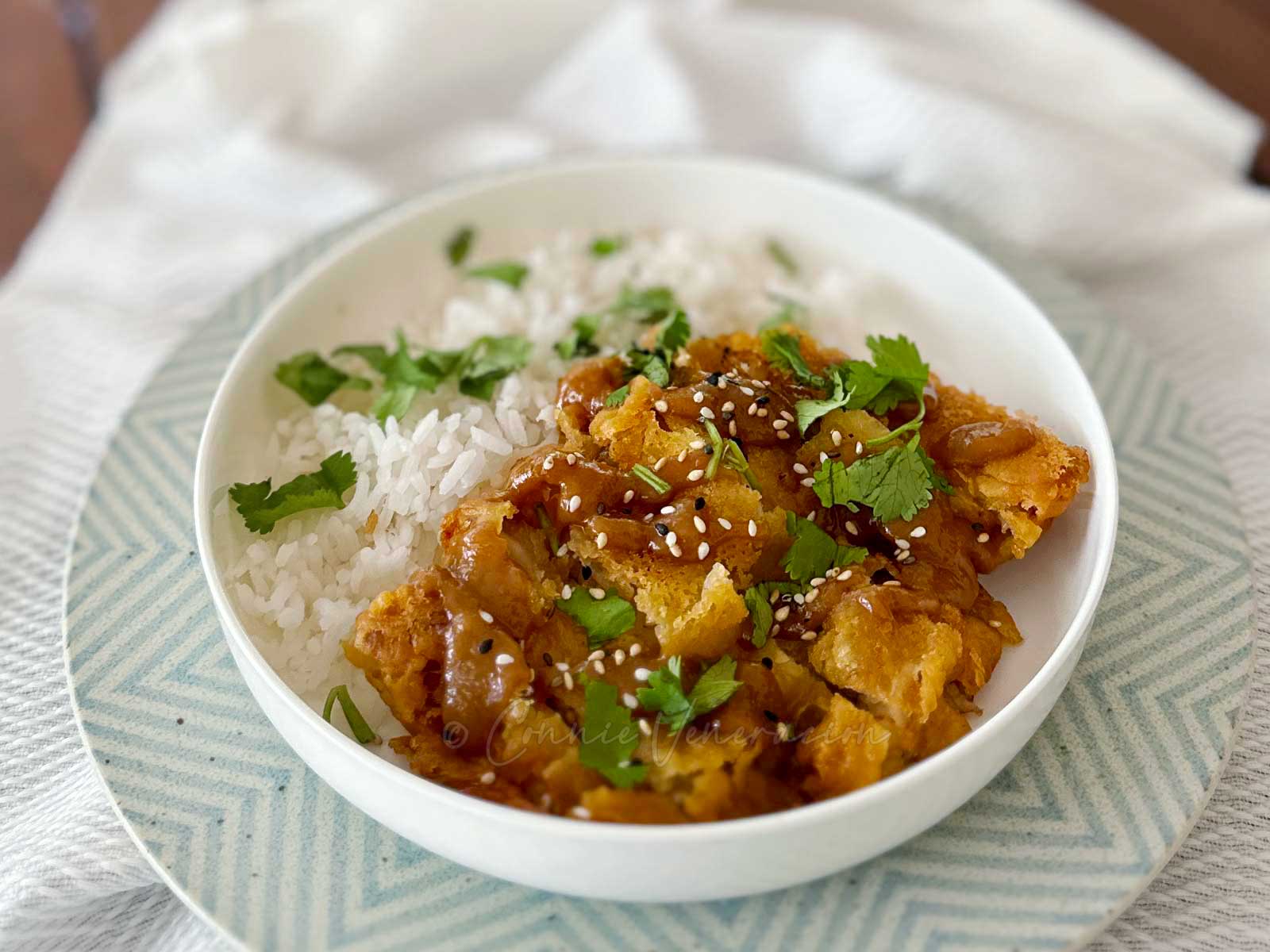
- Ladle some sauce over the chicken (optional) and garnish with cilantro and sesame seeds.
- Serve with the dipping sauce on the side.

 Pork, lemongrass, chili and tomato soup