
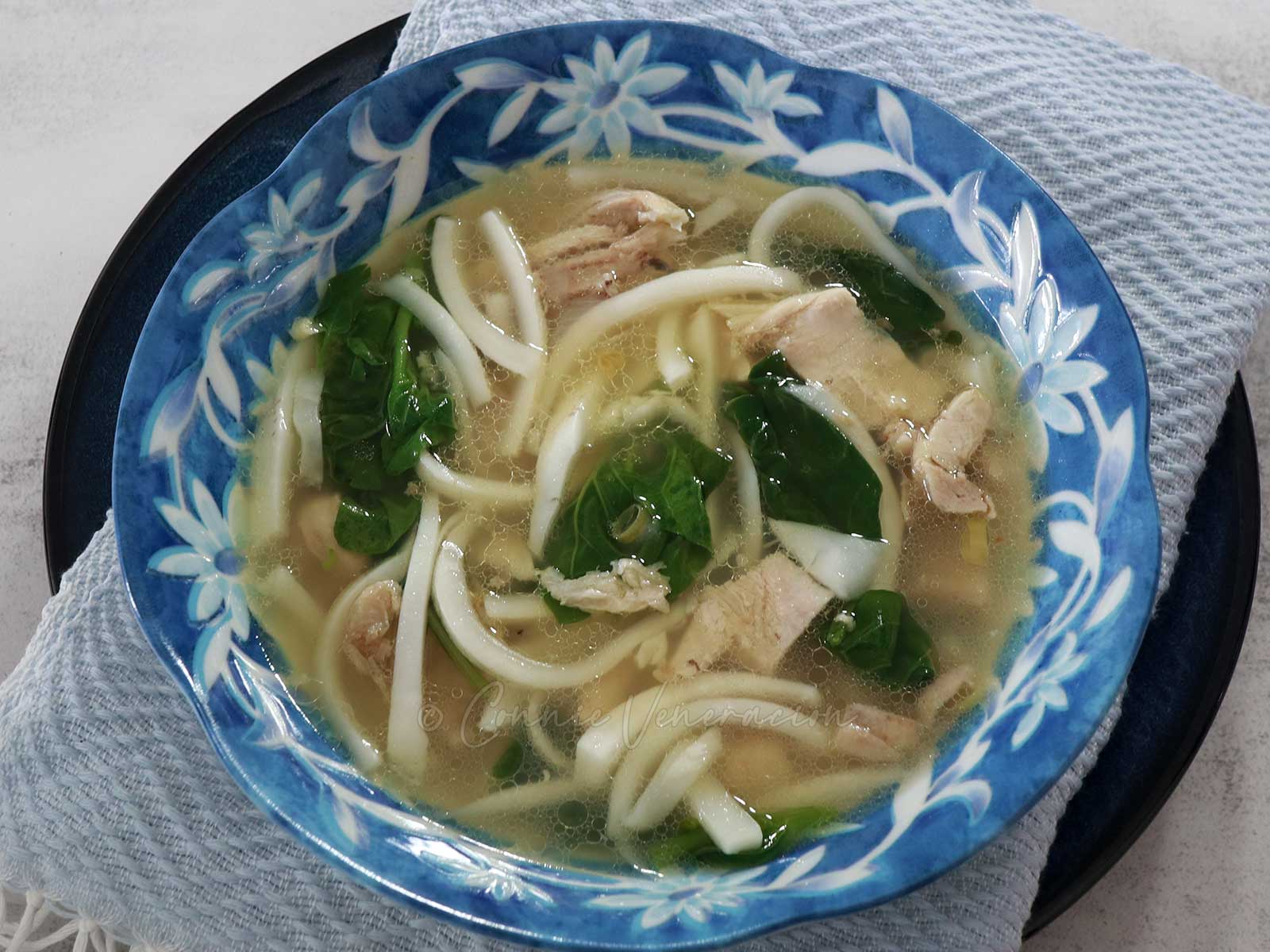
A rustic Filipino soup cooked by simmering chicken, ginger, shallots, garlic and lemongrass in coconut water seasoned with fish sauce. Tender coconut meat and spinach complete the dish.
Cook’s notes
It tastes similar to tinola but it isn’t tinola. The similarity is due mainly to the inclusion of ginger among the ingredients. Chicken binakol is sweeter because the broth is coconut water.
And if we’re to talk about cooking method, the traditional way of cooking binakol is nothing similar to the procedure for cooking tinola. In olden times, binakol was cooked inside a bamboo tube or in a coconut husk over live fire. Cooked that way with the broth, vegetables and chicken soaking up the peculiar flavors of the inside of the bamboo or coconut husk, binakol would probably taste even less like tinola.
But I’m guessing. I’ve never cooked in a tube of bamboo nor a coconut husk. And I’m not likely to. I love the modernity of my kitchen and I wouldn’t give up its comforts for the sake of being able to scream authentic! I’ll leave that to the bloody purists. I’m making fun of purists? Always.
But I’m not guessing when I say that binakol is associated with the province of Aklan more than any other place in the Visayas. I’m not guessing either when I say that there are many versions of binakol — some do not have coconut meat, others have coconut milk in the broth, there are versions with green papaya wedges and there are those which do not contain coconut water at all. This is how I cook chicken binakol at home — with water and meat from young coconuts.
As with many meat and vegetable soups in Asia, chicken binakol can be served as a main course. If that is your intention, there is no need to debone the chicken. Simply chop through the bones so that the pieces are of manageable sizes.
If serving as a soup ahead of the main course, it is wiser to debone the chicken. That way, a spoon is all you need to enjoy your chicken binakol.
Chicken binakol
Ingredients
- 1 kilogram chicken leg quarters (2.2 pounds)
- 1 two-inch knob ginger
- 2 stalks lemongrass
- 2 shallots
- 3 to 4 cloves garlic
- 2 tablespoons cooking oil
- 6 cups coconut water from two to three young coconuts
- fish sauce
- coconut meat from two to three young coconuts, cut into thin strips
- 2 large handfuls spinach leaves
Instructions
- Wipe the chicken leg quarters with paper towels.
- Peel the ginger and thinly slice.
- Measure about six inches from the root ends of the lemongrass, cut and discard the top portions.
- Peel off the discard the tough outer layers of the lemongrass, and thinly slice the tender inner portions.
- Peel the thinly slice the shallot.
- Peel and lightly smash the garlic cloves.
- Heat the cooking oil in a pot.
- Saute the ginger, lemongrass, garlic and shallot until aromatic.
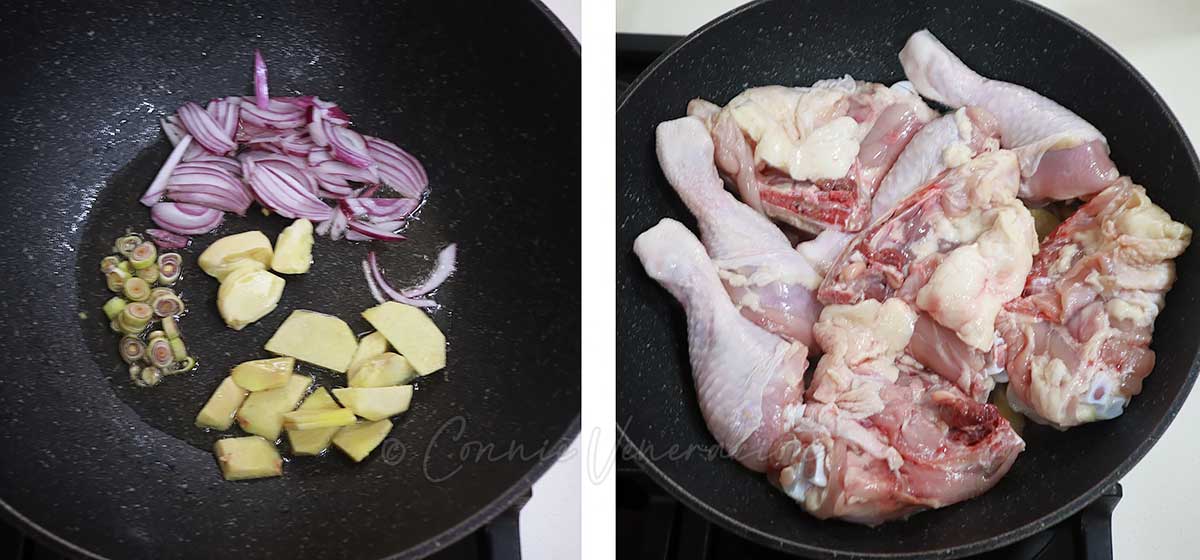
- Lay the chicken pieces, skin side down and leave to brown. Flip over and continue browning.
- Pour in the coconut water and about a quarter cup of fish sauce.
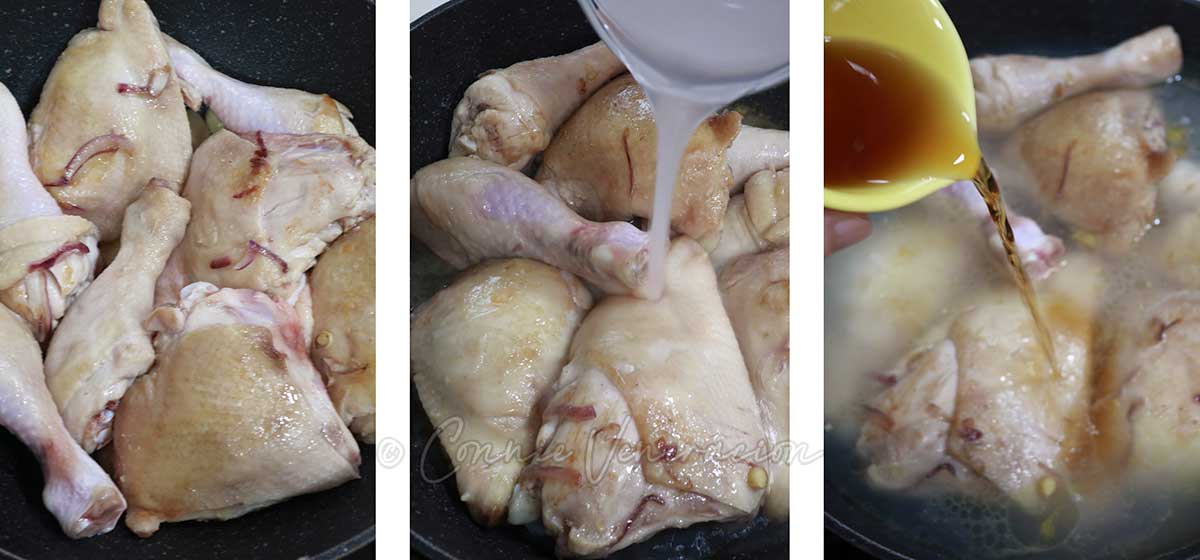
- Bring to the boil, lower the heat, cover the pot and simmer until the chicken meat easily separates from the bones.
- Scoop out the chicken and cool.
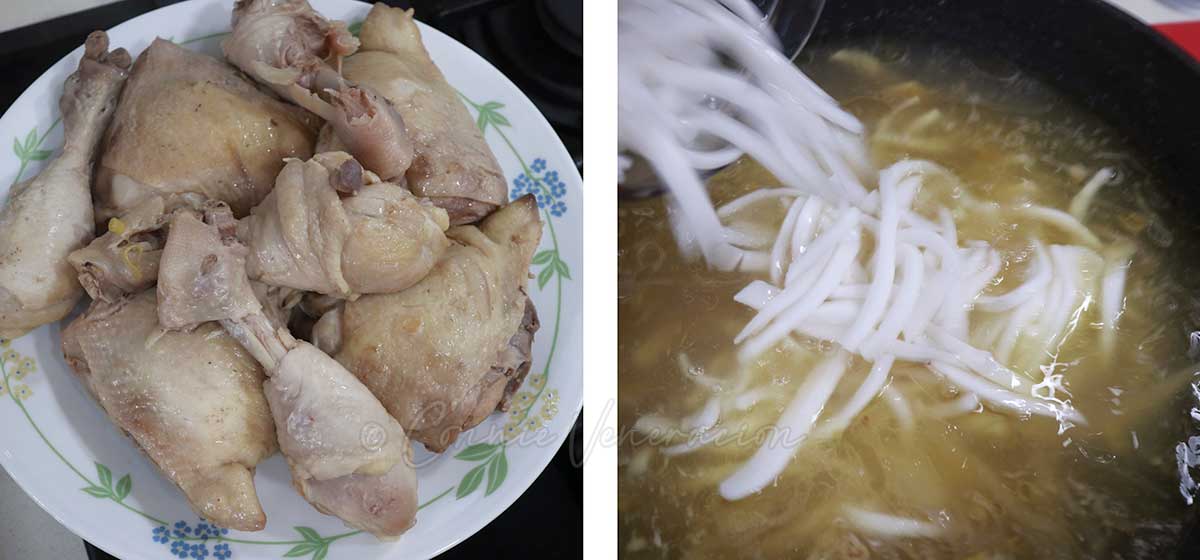
- Add the coconut meat to the simmering broth.
- Debone the chicken.
- Add the deboned chicken and spinach to the soup.
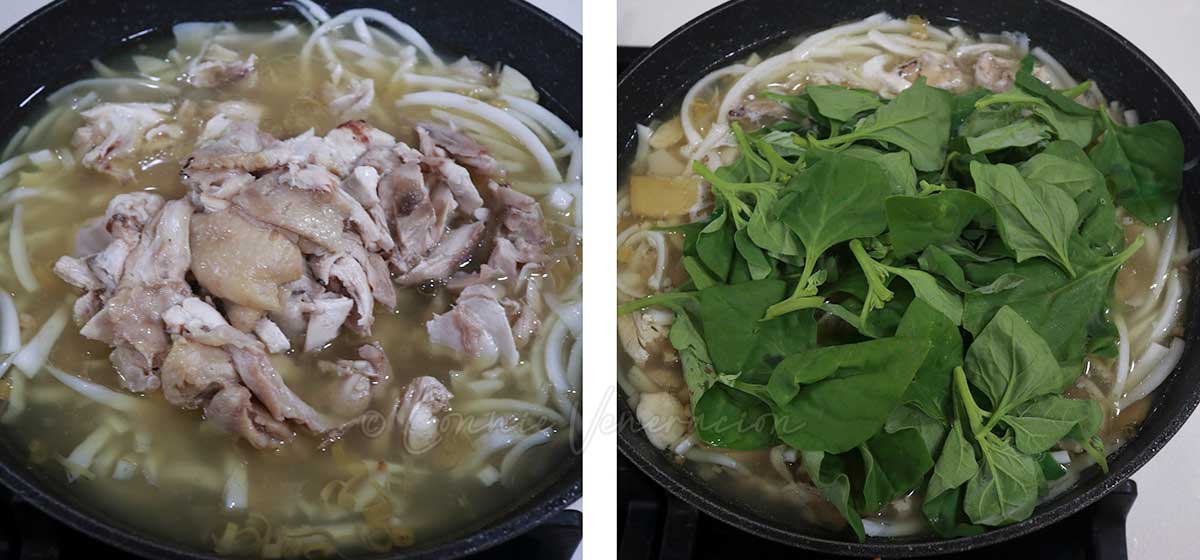
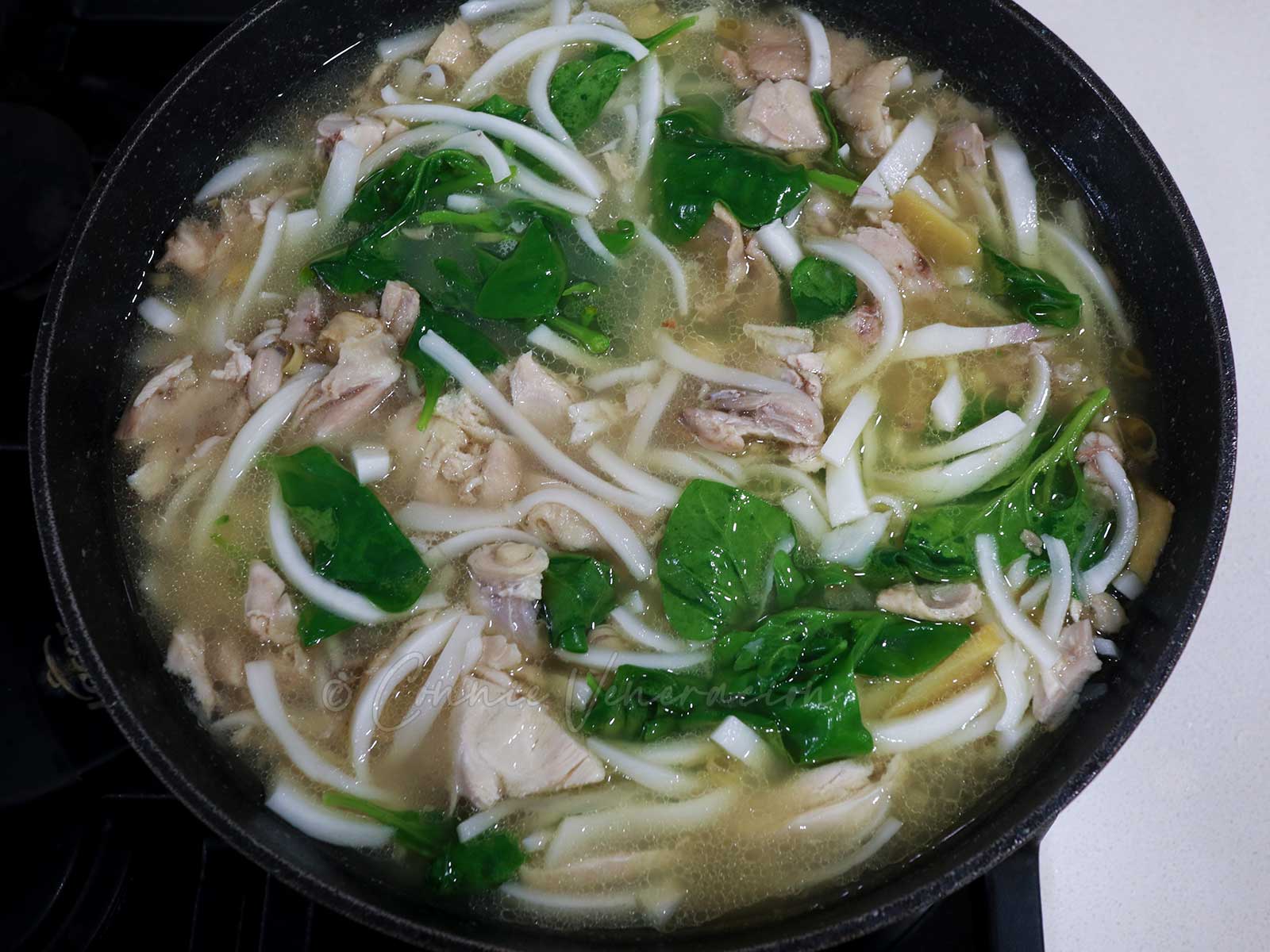
- Cover and simmer until the spinach is wilted.
- Taste the broth and add more fish sauce, if needed, before serving your chicken binakol.
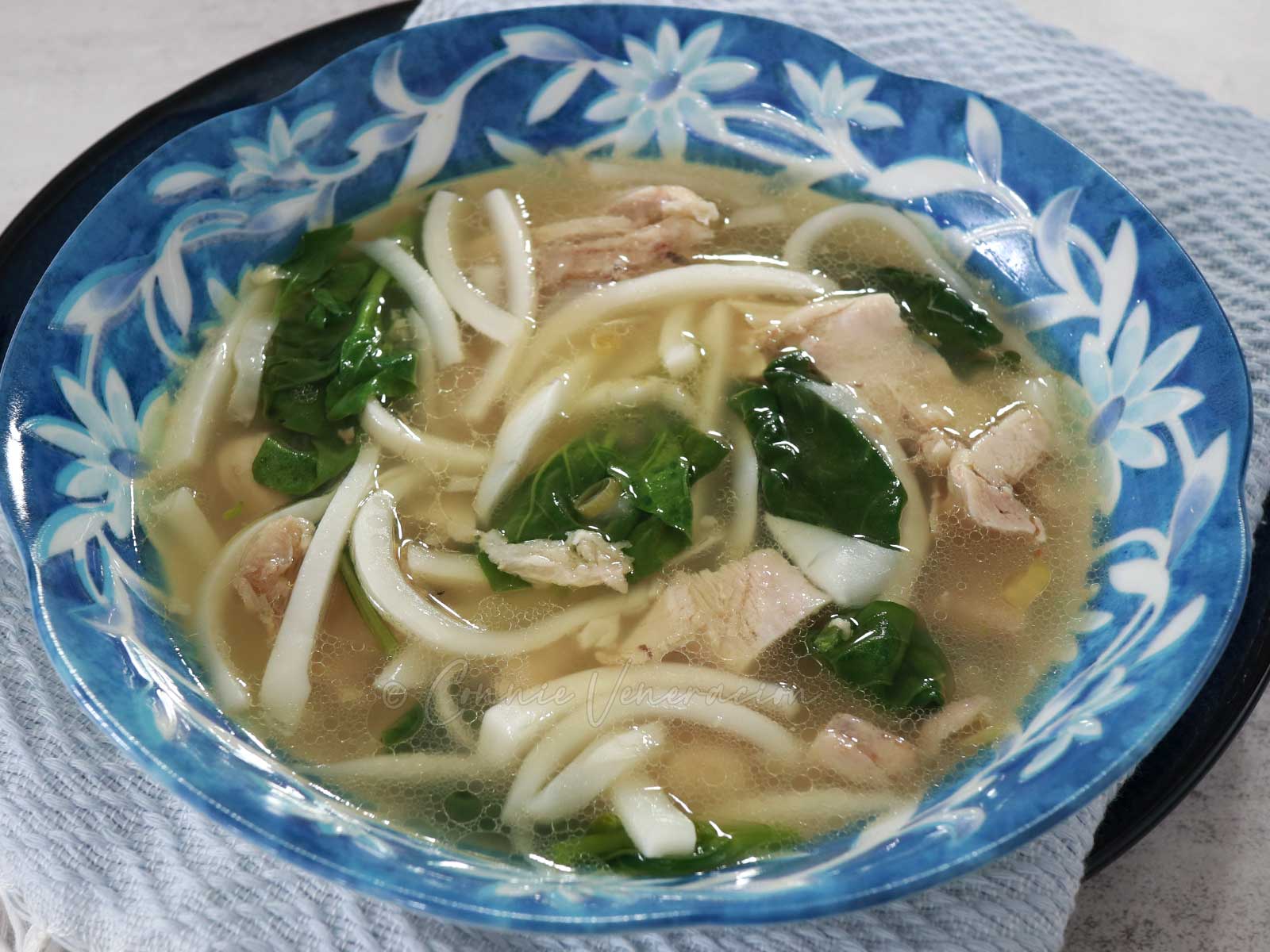
- Serve as a starter course or pair with rice as a main dish.

 Cucumber and mushroom stir fry