
With five minutes to prep and ten minutes to cook, you can have a delicious appetizer to enjoy cocktail drinks. Double or triple the recipe if serving to a larger crowd.
Cook’s notes
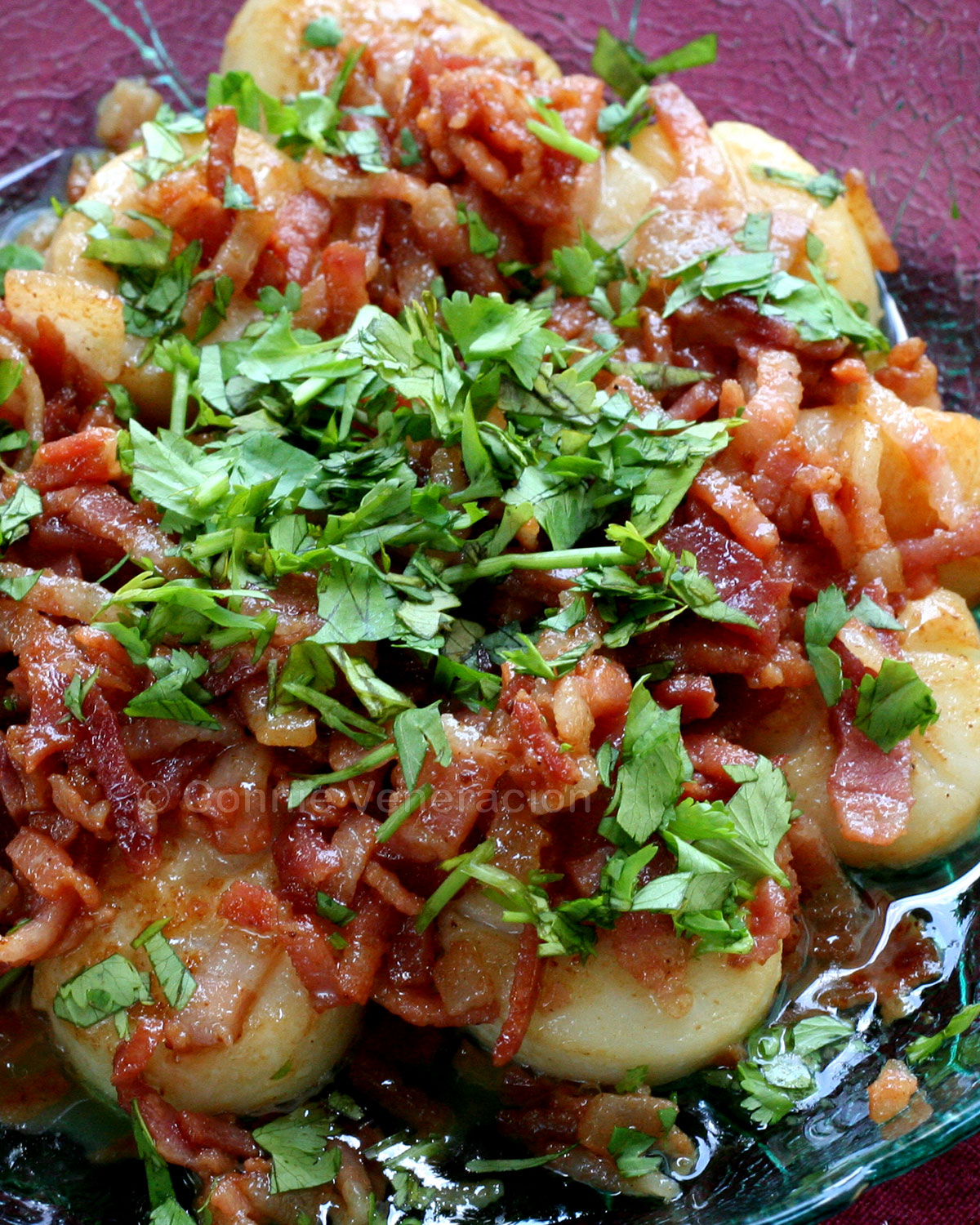
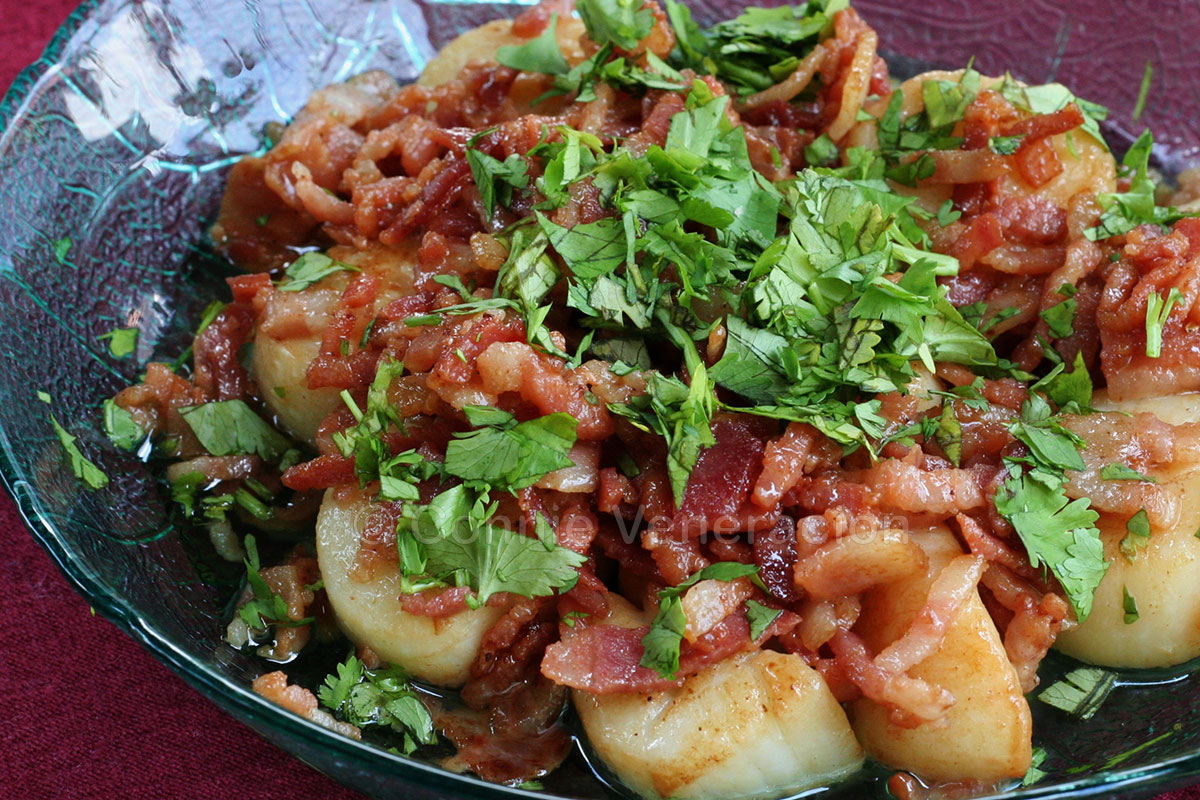
Based on a recipe by Nigella Lawson, this easy-to-cook pan-fried scallops with bacon ditches Nigella’s crumbled chorizo in favor of crispy bacon. My husband, Speedy, cooked this dish. Whether he found the inspiration in Nigella’s website or saw her cooking the dish on TV, I am not sure.
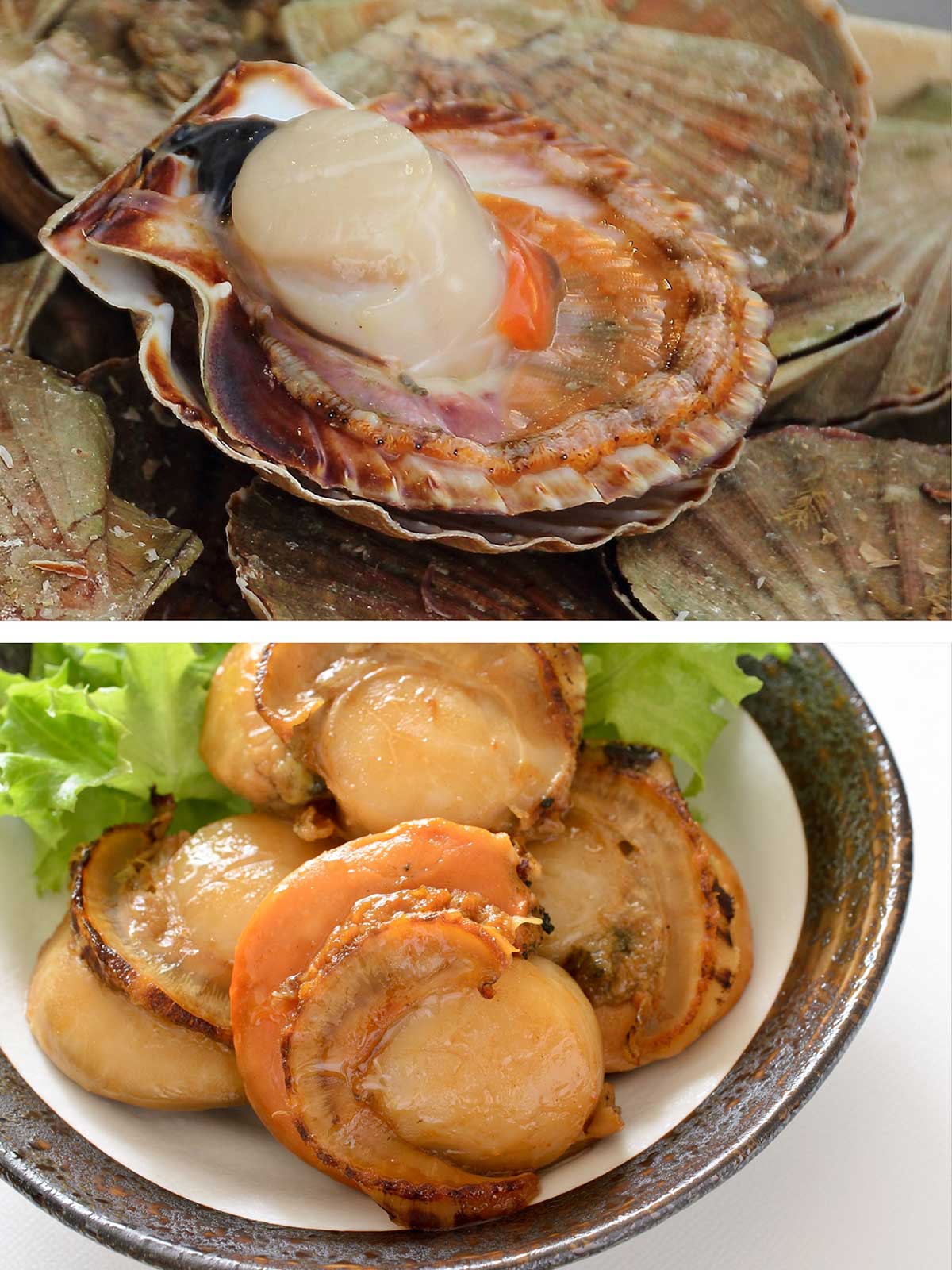 When you shuck a scallop, you will see two distinct types of muscle inside. There is a white muscle which is shaped like a flattened sphere. Then, there is the orange-y muscle surrounding it. The white muscle is what we get when we buy frozen scallops.
One school of thought says the orange-y muscle is also edible. Another achool of thought says only the white muscle is safe to eat. What is the orange-y muscle anyway? It’s called coral (obviously because of its color) and often erroneously referred to as roe (egg). It isn’t roe.
The coral has two parts, actually. There is the orange-y part and a gray portion (the frilly portion) that connects the coral to the white muscle and the shell. They are the female and male reproductive organs of the scallop, respectively. Scallops are permanent hermaphrodites so each animal has a male and female reproductive organ.
The coral is safe to eat. It is removed mostly to give the scallop better visual appeal. From experience though, the gray part of the coral (the male reproductive organ) is rather chewy. It is up to you which part of the scallop to serve and which to discard.
When you shuck a scallop, you will see two distinct types of muscle inside. There is a white muscle which is shaped like a flattened sphere. Then, there is the orange-y muscle surrounding it. The white muscle is what we get when we buy frozen scallops.
One school of thought says the orange-y muscle is also edible. Another achool of thought says only the white muscle is safe to eat. What is the orange-y muscle anyway? It’s called coral (obviously because of its color) and often erroneously referred to as roe (egg). It isn’t roe.
The coral has two parts, actually. There is the orange-y part and a gray portion (the frilly portion) that connects the coral to the white muscle and the shell. They are the female and male reproductive organs of the scallop, respectively. Scallops are permanent hermaphrodites so each animal has a male and female reproductive organ.
The coral is safe to eat. It is removed mostly to give the scallop better visual appeal. From experience though, the gray part of the coral (the male reproductive organ) is rather chewy. It is up to you which part of the scallop to serve and which to discard.
Scallop
Scallop is a shellfish. A bivalve mollusk, to be more precise. There are several species and they come in different sizes. We buy scallops frozen and fully cleaned. If you’re luckier and have access to fresh scallops, there are two schools of thought as to which part of the muscle is edible.
When you shuck a scallop, you will see two distinct types of muscle inside. There is a white muscle which is shaped like a flattened sphere. Then, there is the orange-y muscle surrounding it. The white muscle is what we get when we buy frozen scallops.
One school of thought says the orange-y muscle is also edible. Another achool of thought says only the white muscle is safe to eat. What is the orange-y muscle anyway? It’s called coral (obviously because of its color) and often erroneously referred to as roe (egg). It isn’t roe.
The coral has two parts, actually. There is the orange-y part and a gray portion (the frilly portion) that connects the coral to the white muscle and the shell. They are the female and male reproductive organs of the scallop, respectively. Scallops are permanent hermaphrodites so each animal has a male and female reproductive organ.
The coral is safe to eat. It is removed mostly to give the scallop better visual appeal. From experience though, the gray part of the coral (the male reproductive organ) is rather chewy. It is up to you which part of the scallop to serve and which to discard.
Scallop requires a short cooking time
Overcooking makes scallops tough and rubbery. That’s why pan-frying over high heat is the ideal cooking method. Cook to sear and caramelize lightly, flip to do the same with the other side, and the scallops are done.The dish does not need any salt as the salt from the bacon is enough to season everything without overpowering the delicate flavor of the scallops.
Easy pan-fried scallops with crispy bacon
Ingredients
- 12 large scallops
- 100 grams belly bacon (3.5 oz) unsweetened
- juice of half a lemon
- roughly chopped fresh parsley
Instructions
- Finely slice the bacon.
- Spread the bacon in a hot oil-free non-stick pan.
- Cook, stirring occasionally, until fat had been rendered and the bacon’s color turns deeper (you can go on cooking until the bacon bits are crisp — totally up to you).
- Scoop out the bacon bits. Keep the heat on.
- To the bacon fat in the pan, add the scallops.
- Cook to sear (high heat!), a minute or two per side, depending on their size.
- Pour in the lemon juice, scraping to loosen whatever bits are sticking to the bottom of the pan.
- Transfer the scallops to a plate.
- Pour over the pan juices.
- Add the bacon bits.
- Sprinkle with parsley.
- Serve hot.


 Roasted eggplant dip