
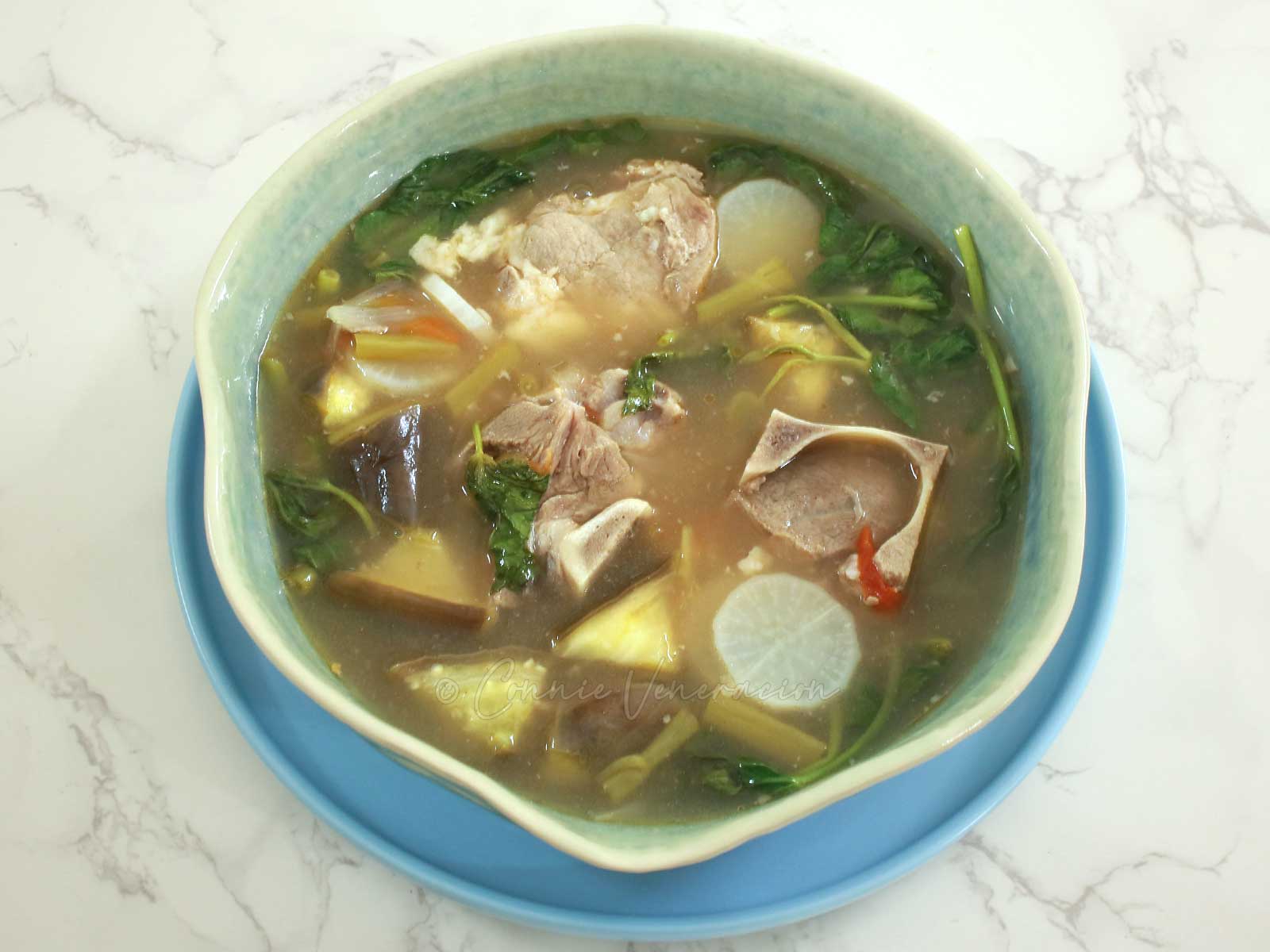
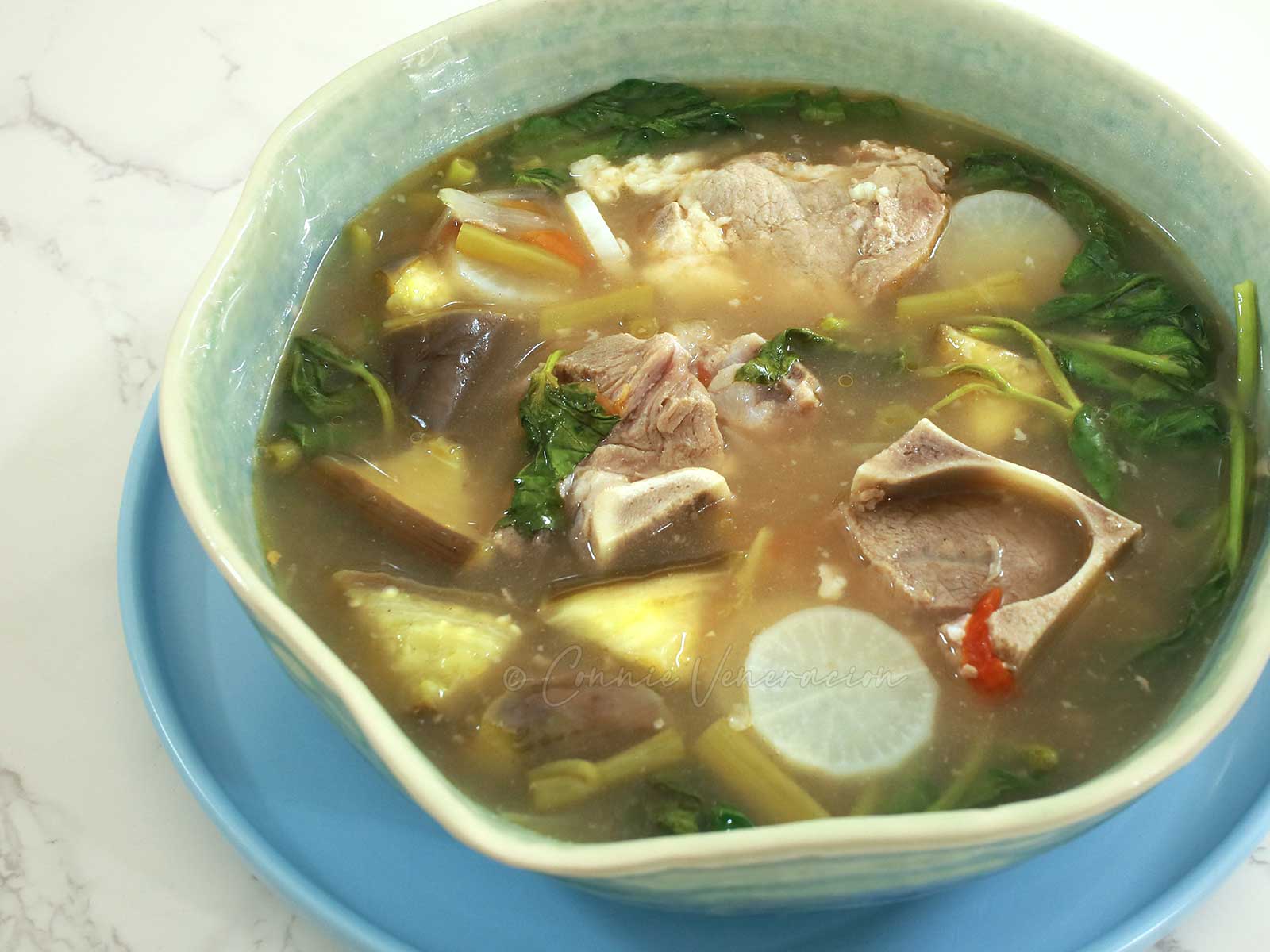
Chunky meat and all those vegetables in a flavorful broth… Don't think that it's a starter course. Sinigang is always served as a main course or a secondary course. And it's always paired with rice.
Cook’s notes
A good translation for pork sinigang is “Filipino pork and vegetables in sour broth” but it doesn’t completely capture the essence of this sour dish that is comfort food for countless Filipinos. Read on to get to know sinigang.
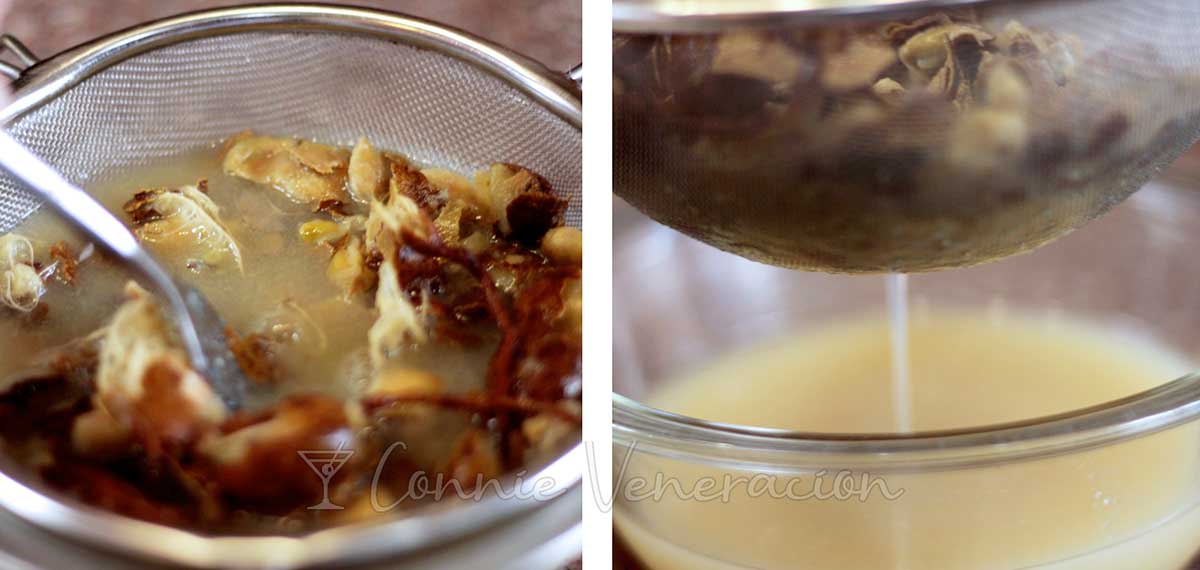 Yes, the broth is sour. Although tamarind is the most popular, and common, souring agent for flavoring sinigang, other fruits like kamias (bilimbi) may be used. When cooking sinigang with seafood instead of meat, bayabas (guava) is a popular choice.
When cooking sinigang with pork (or beef), choose a cut with bones because it is the bones that make the broth rich and full-bodied. Pork tail is traditional but we prefer ribs or bone-in belly because they are meatier. I recommend parboiling to remove scum.
The spice base consists of shallots, tomatoes, garlic and finger chilies. Pork and water are added and they simmer together.
Yes, the broth is sour. Although tamarind is the most popular, and common, souring agent for flavoring sinigang, other fruits like kamias (bilimbi) may be used. When cooking sinigang with seafood instead of meat, bayabas (guava) is a popular choice.
When cooking sinigang with pork (or beef), choose a cut with bones because it is the bones that make the broth rich and full-bodied. Pork tail is traditional but we prefer ribs or bone-in belly because they are meatier. I recommend parboiling to remove scum.
The spice base consists of shallots, tomatoes, garlic and finger chilies. Pork and water are added and they simmer together.
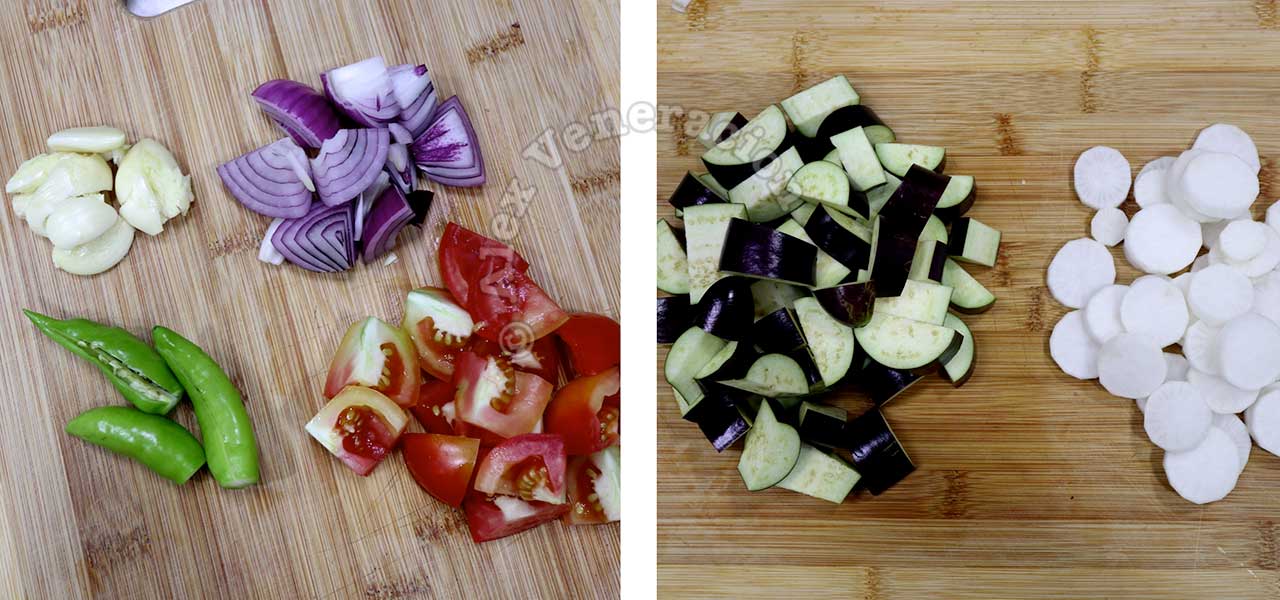 As for the vegetables, there are many vegetables that can go into a pot of pork sinigang. Kangkong (water/swamp spinach), sitaw (yard-long beans), talong (eggplants), labanos (radish) okra and gabi (taro) are traditional — add all of them or only some of them, it’s really your choice. For this recipe, we used kangkong, talong and labanos.
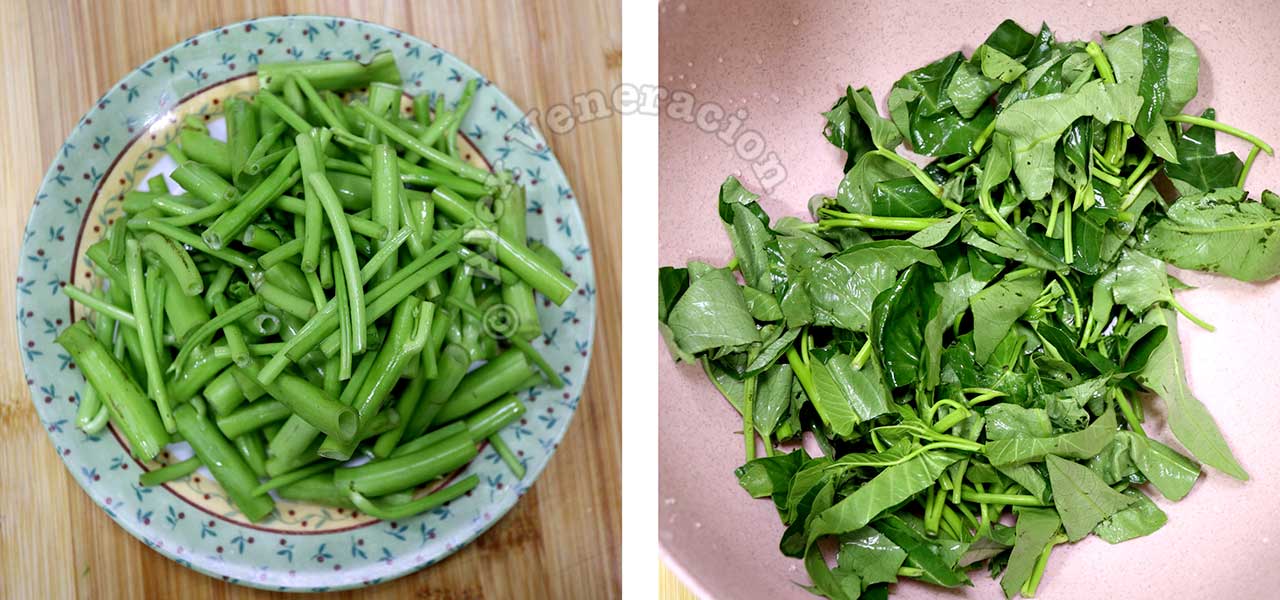 Tip: When cooking kangkong, make sure to rinse the kangkong well (it grows in swamps after all) before cutting. When you cut the vegetable, separate the stalks and leaves because they will not go into the pot at the same time.
Yes, the broth is sour. Although tamarind is the most popular, and common, souring agent for flavoring sinigang, other fruits like kamias (bilimbi) may be used. When cooking sinigang with seafood instead of meat, bayabas (guava) is a popular choice.
When cooking sinigang with pork (or beef), choose a cut with bones because it is the bones that make the broth rich and full-bodied. Pork tail is traditional but we prefer ribs or bone-in belly because they are meatier. I recommend parboiling to remove scum.
The spice base consists of shallots, tomatoes, garlic and finger chilies. Pork and water are added and they simmer together.
As for the vegetables, there are many vegetables that can go into a pot of pork sinigang. Kangkong (water/swamp spinach), sitaw (yard-long beans), talong (eggplants), labanos (radish) okra and gabi (taro) are traditional — add all of them or only some of them, it’s really your choice. For this recipe, we used kangkong, talong and labanos.
Tip: When cooking kangkong, make sure to rinse the kangkong well (it grows in swamps after all) before cutting. When you cut the vegetable, separate the stalks and leaves because they will not go into the pot at the same time.Pork ribs sinigang
Ingredients
Pork and broth
- 1 kilogram pork ribs (2.2 pounds)
- fish sauce
Spice base
- 2 tablespoons cooking oil
- 1 onion peeled and diced
- 2 tomatoes diced
- 4 cloves garlic peeled and smashed
- 2 to 3 finger chilies slit
Vegetables and seasoning
- 1 bundle kangkong swamp / water spinach, stalks and leaves separated
- 2 Asian eggplants diced
- 1 white radish peeled and cut into rings
- ½ to 1 cup tamarind juice
Instructions
Parboil the pork ribs
- Rinse the pork ribs, place in a pot and cover with water.
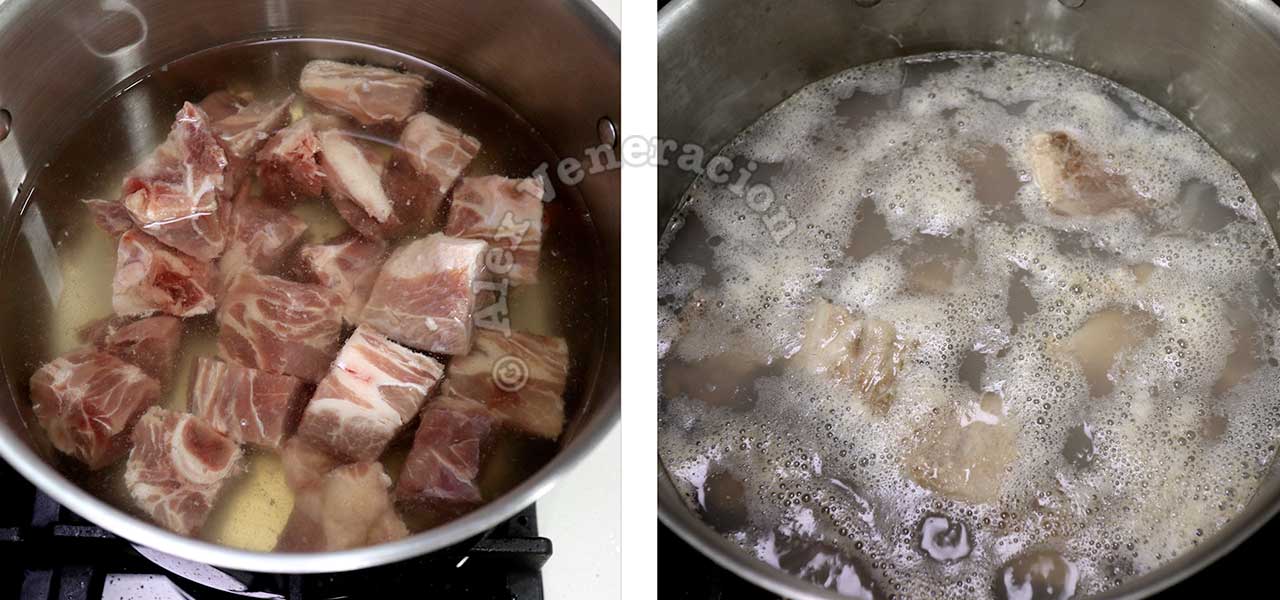
- Boil for about ten minutes to allow the scum to float on the surface.
- Drain the pork and rinse each piece well under the tap.
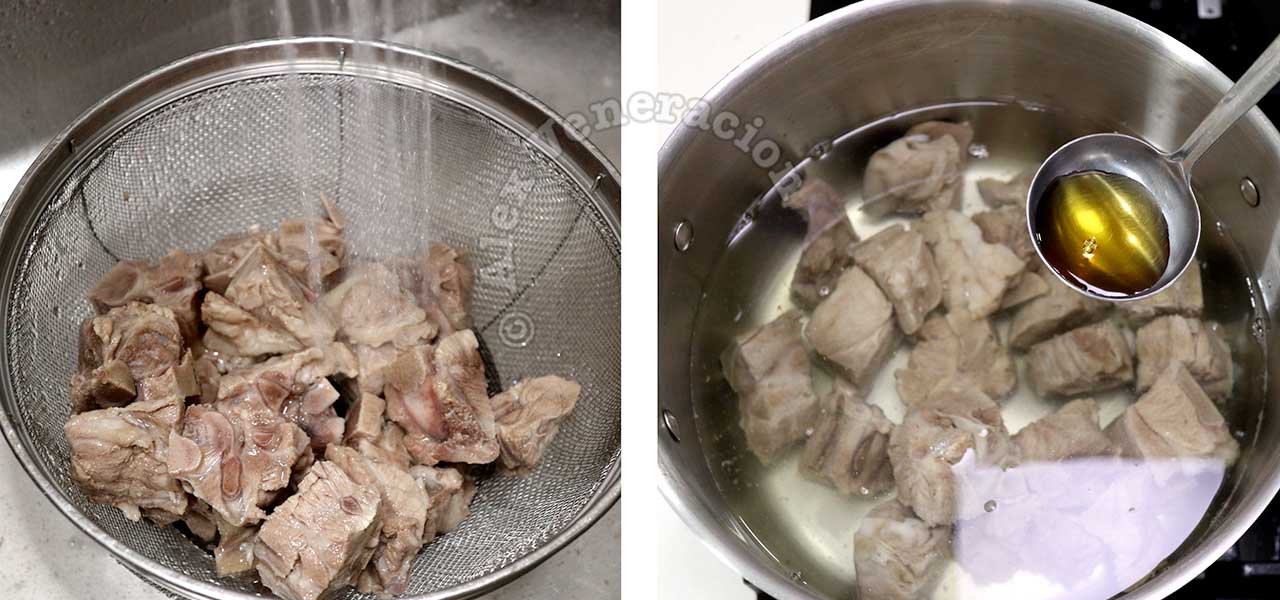
- Place the pork in a clean pot, cover with water, add about two tablespoons of fish sauce and bring to the boil.
- Set the heat to low, cover the pot and simmer until the meat is tender.
Make the spice base
- When the pork has been simmering for almost an hour, heat the cooking oil in another pot.
- Saute the garlic, onion, tomatoes and chilies until softened.
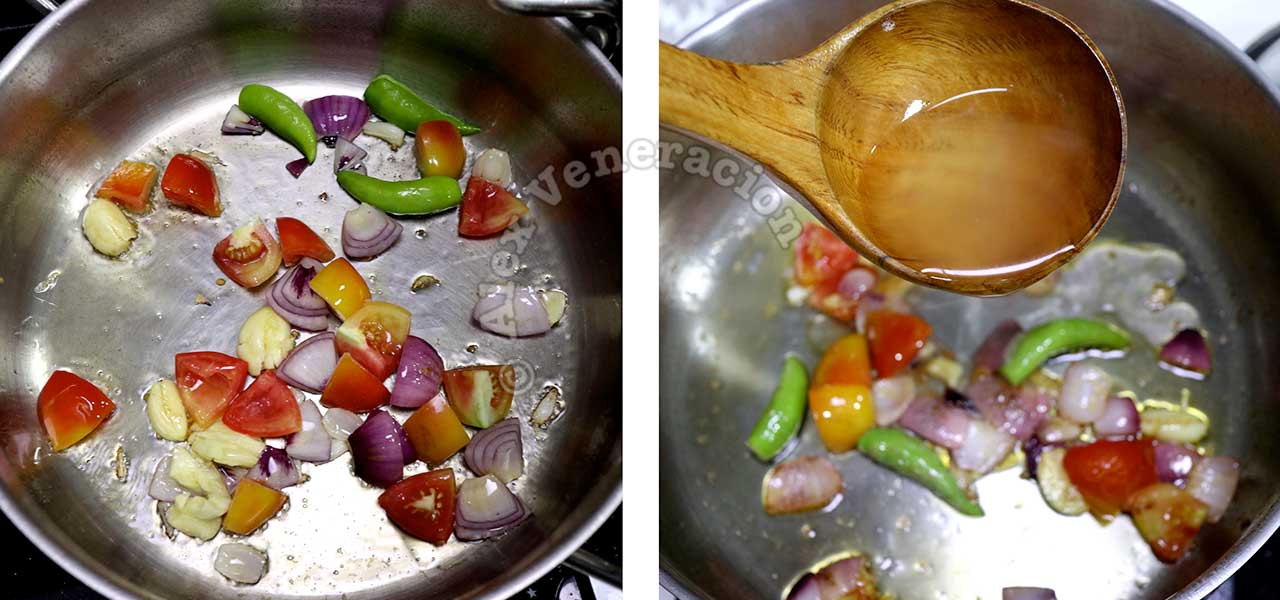
- Uncover the pot with the simmering pork, scoop out as much of the broth as you can without leaving the pork dry (continue simmering them) and pour into the pot with the sauteed spices.
Cook the vegetables
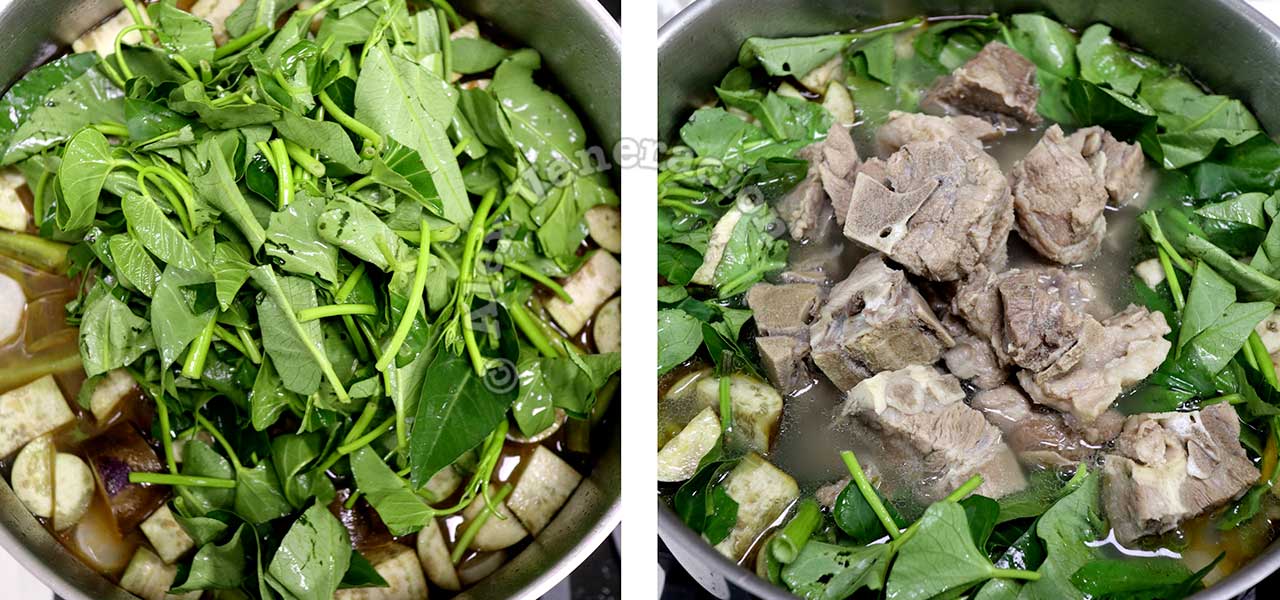
- Add the kangkong stalks into the pot with the spices, and simmer for five minutes.
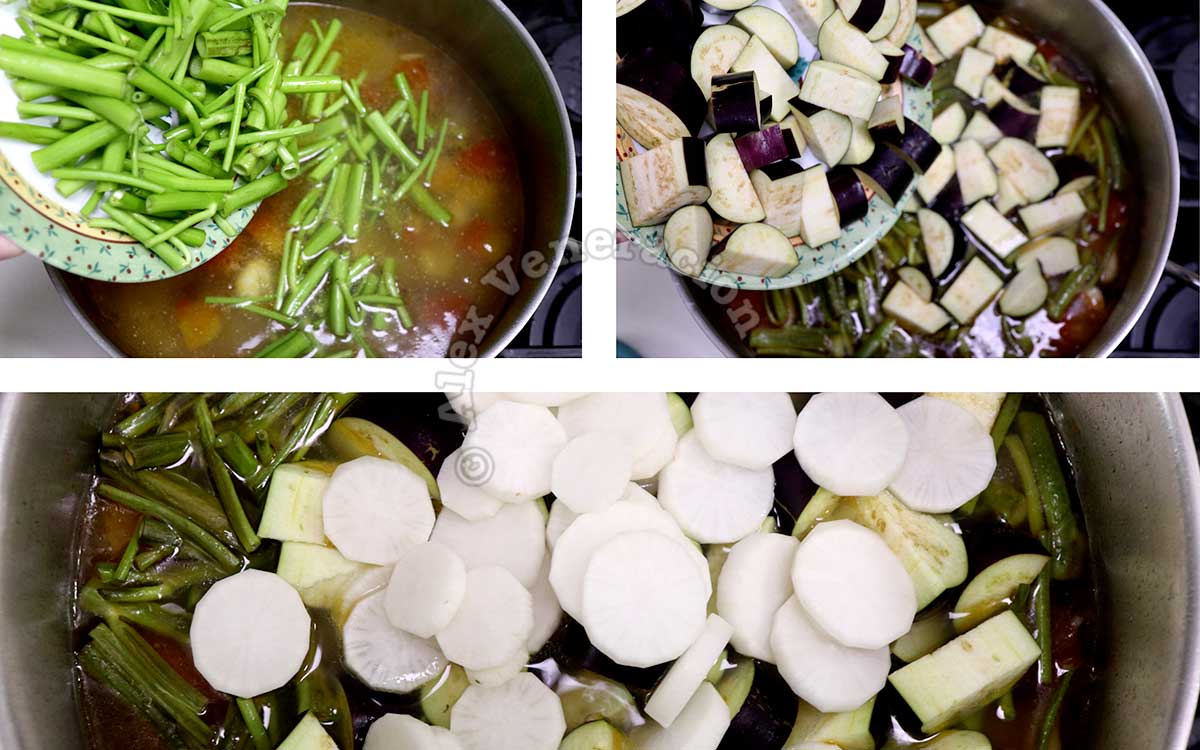
- Add the diced eggplants and sliced radish, and simmer for five to ten minutes depending on how mature they are.
- Add the kangkong leaves, the pork and any remaining broth.
Season and complete the dish
- Pour in the tamarind juice and stir.
- Taste the broth and add more fish sauce to create a good balance of salty and sour.
- Bring the pork ribs sinigang to a boil, cover and simmer for another five minutes or just until the kangkong leaves are wilted.
- Serve at once.


 Onion gravy