
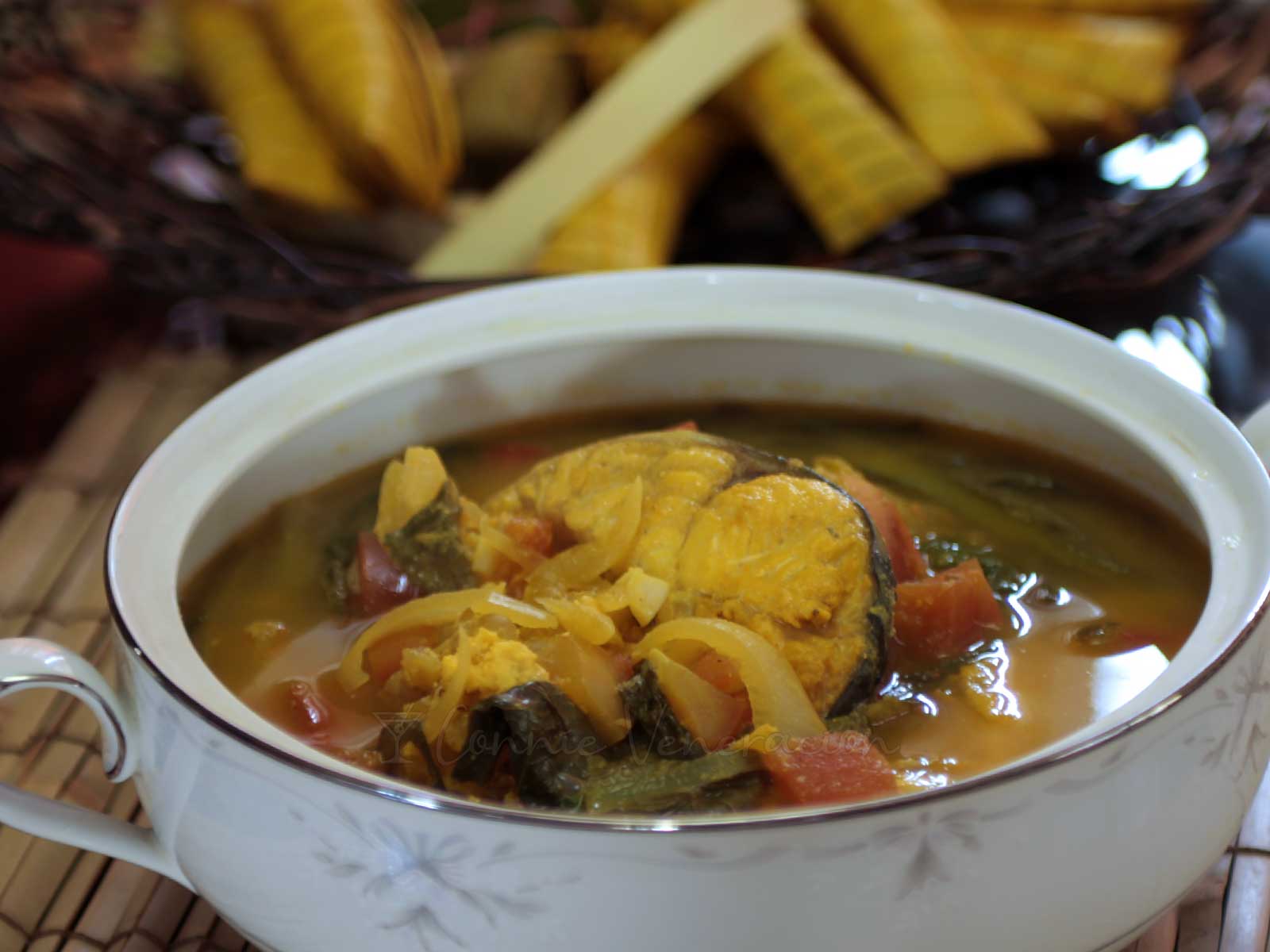
Traditionally served as a main dish (accompanied by rice), this catfish and miso sour soup is cooked with tamarind juice, yellow miso and mustard greens.
Cook’s notes
I wish there was a direct translation of the name of the dish for non-Filipino readers. The closest would be catfish and miso sour soup, but that really doesn’t give it the proper context.
This is a fish and vegetable soup in the Philippines. Kanduli is a species of catfish endemic to the island of Luzon. The broth is soured with tamarind juice and simmered with sauteed non-fermented miso.
Non-fermented miso? Yes. We buy this in the wet market (although some groceries sell it now).
Local miso can be white or yellow. And if taste it in its raw state, it tastes like tofu — bland. Very much unlike the Japanese and Korean miso pastes that flood the groceries.
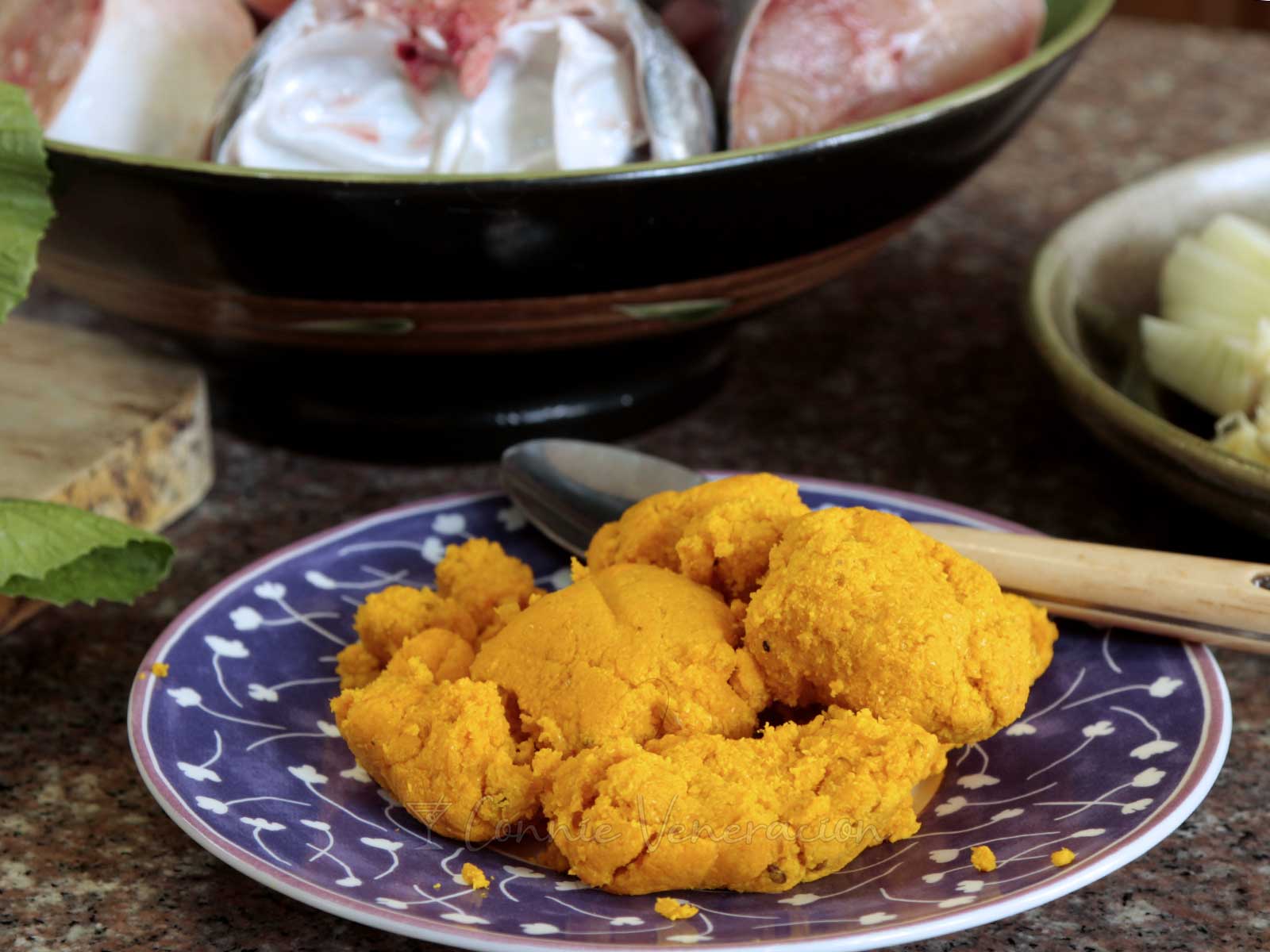 If local miso is bland, why add it to the soup at all? It thickens the broth and, if you use yellow miso, it does give the dish a lovely color.
Can Japanese or Korean miso paste be substituted? Some cooks have done that and, from what I’ve read, they seem to be satisfied with the result. You could do that too (just remember to use less fish sauce because fermented miso paste is salty) but the dish won’t be authentic Filipino sinigang sa miso. And that’s okay, really, so long as you’re happy with the flavor of the soup.
But this is a recipe for authentic sinigang sa miso. And we’re using all the traditional ingredients including the kind of fish that goes in it.
Catfish is the generic name for an array of fish with prominent barbels (a.k.a. cat’s whiskers). Kanduli is silver to gray which distinguishes it from hito, the more known catfish in Filipino cooking.
If local miso is bland, why add it to the soup at all? It thickens the broth and, if you use yellow miso, it does give the dish a lovely color.
Can Japanese or Korean miso paste be substituted? Some cooks have done that and, from what I’ve read, they seem to be satisfied with the result. You could do that too (just remember to use less fish sauce because fermented miso paste is salty) but the dish won’t be authentic Filipino sinigang sa miso. And that’s okay, really, so long as you’re happy with the flavor of the soup.
But this is a recipe for authentic sinigang sa miso. And we’re using all the traditional ingredients including the kind of fish that goes in it.
Catfish is the generic name for an array of fish with prominent barbels (a.k.a. cat’s whiskers). Kanduli is silver to gray which distinguishes it from hito, the more known catfish in Filipino cooking.
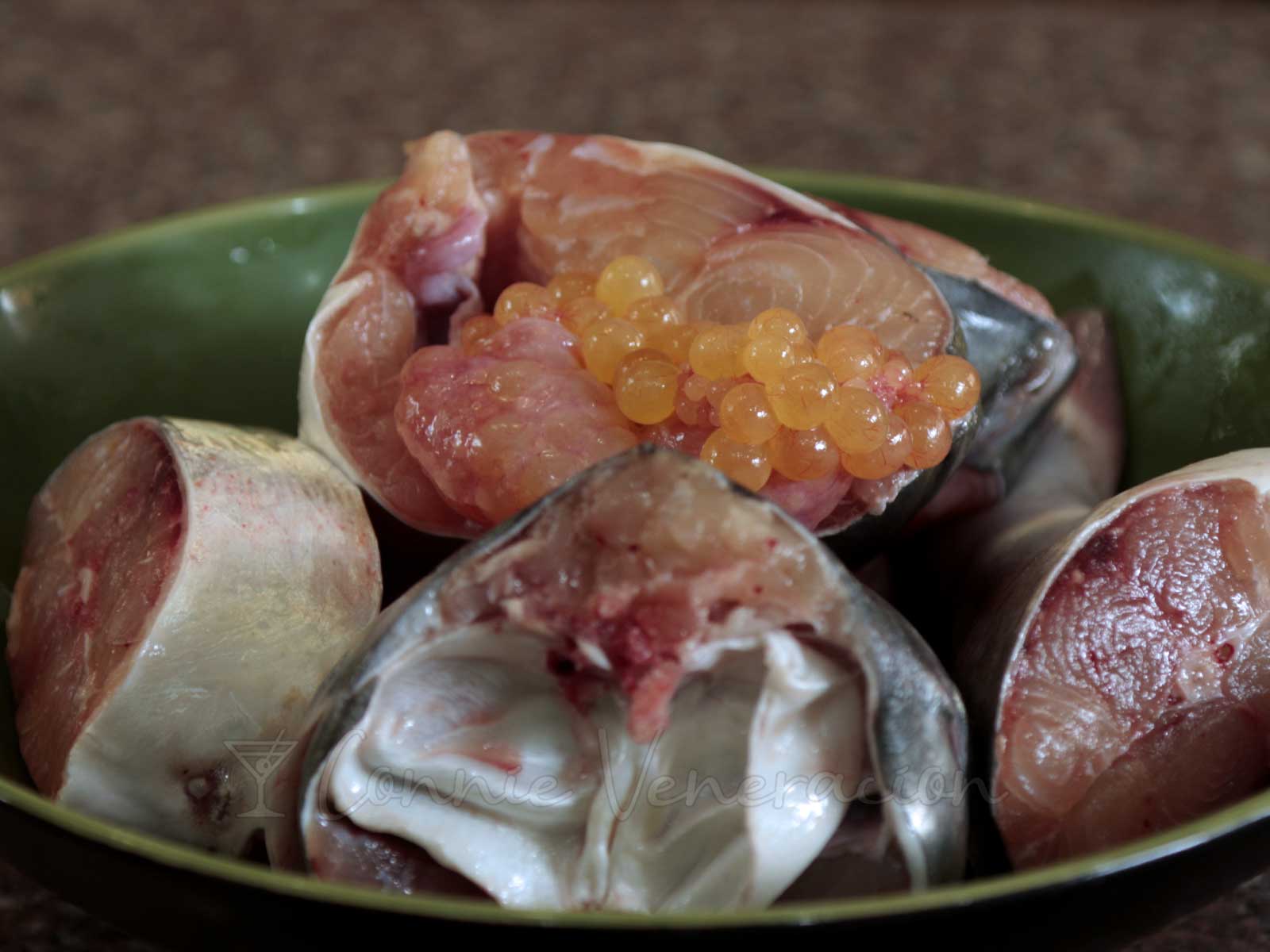 That’s a whole kanduli cut into portions. It has no scales so there’s nothing to scrape. You may ask the fish monger to gut the fish for you but it is best that you bring it home whole so that the slimy skin can be cleaned thoroughly.
What about the greens in the photo? The truth is you can use any geen leafy vegetable. When you say sinigang in the Philippines, the default is kangkong (water spinach). And when you say sinigang sa miso, it has to have mustasa.
That’s a whole kanduli cut into portions. It has no scales so there’s nothing to scrape. You may ask the fish monger to gut the fish for you but it is best that you bring it home whole so that the slimy skin can be cleaned thoroughly.
What about the greens in the photo? The truth is you can use any geen leafy vegetable. When you say sinigang in the Philippines, the default is kangkong (water spinach). And when you say sinigang sa miso, it has to have mustasa.
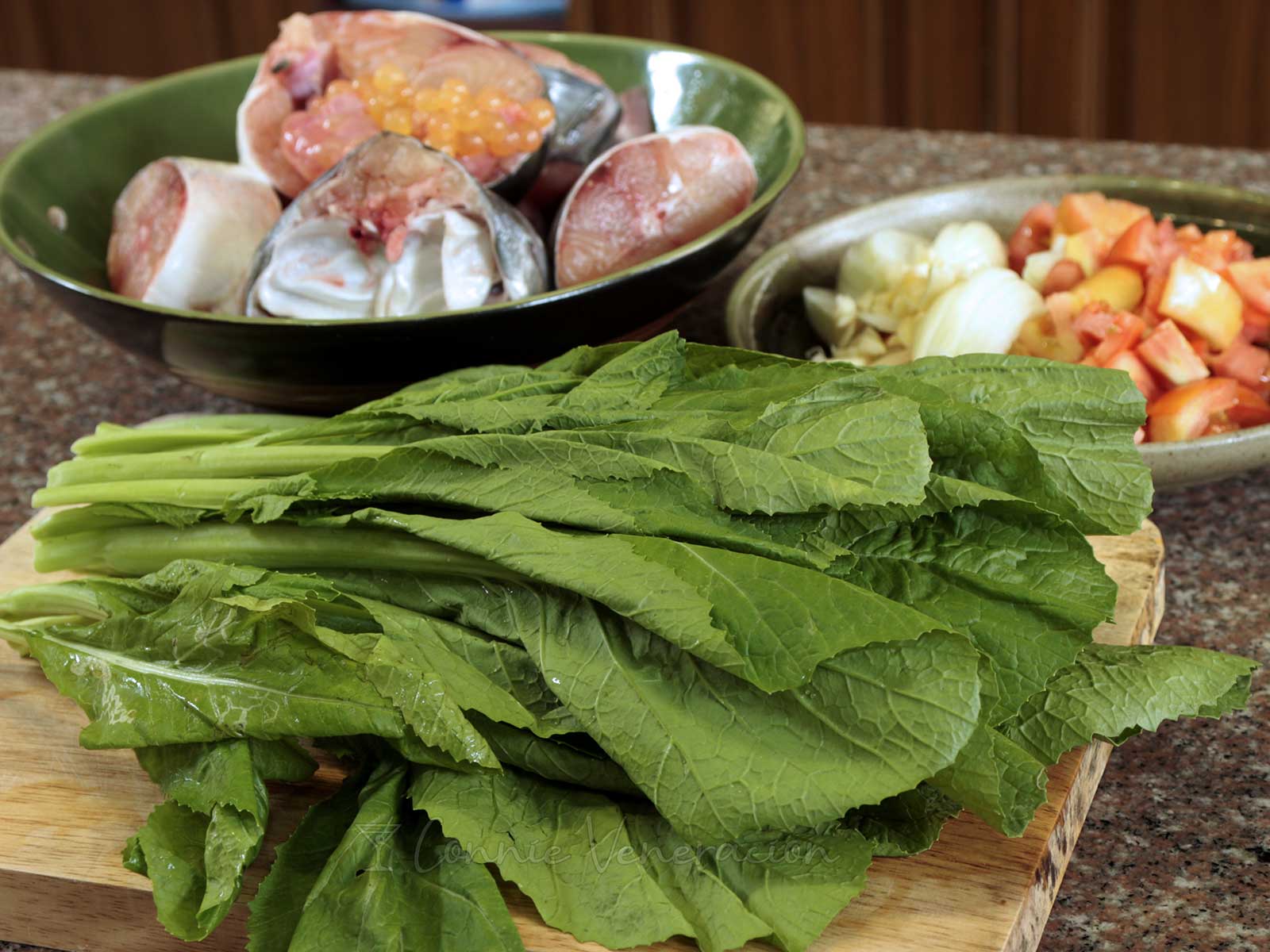 Mustard leaves (also called mustard greens) have a bold flavor. Peppery with a trace of bitterness. Punchy, really, like arugula which happens to be my favorite salad and sandwich greens.
The fourth and last ingredient that needs special mention is what you sour the broth with. Sinigang can be cooked using various souring agents but tamarind juice is the most common.
Mustard leaves (also called mustard greens) have a bold flavor. Peppery with a trace of bitterness. Punchy, really, like arugula which happens to be my favorite salad and sandwich greens.
The fourth and last ingredient that needs special mention is what you sour the broth with. Sinigang can be cooked using various souring agents but tamarind juice is the most common.
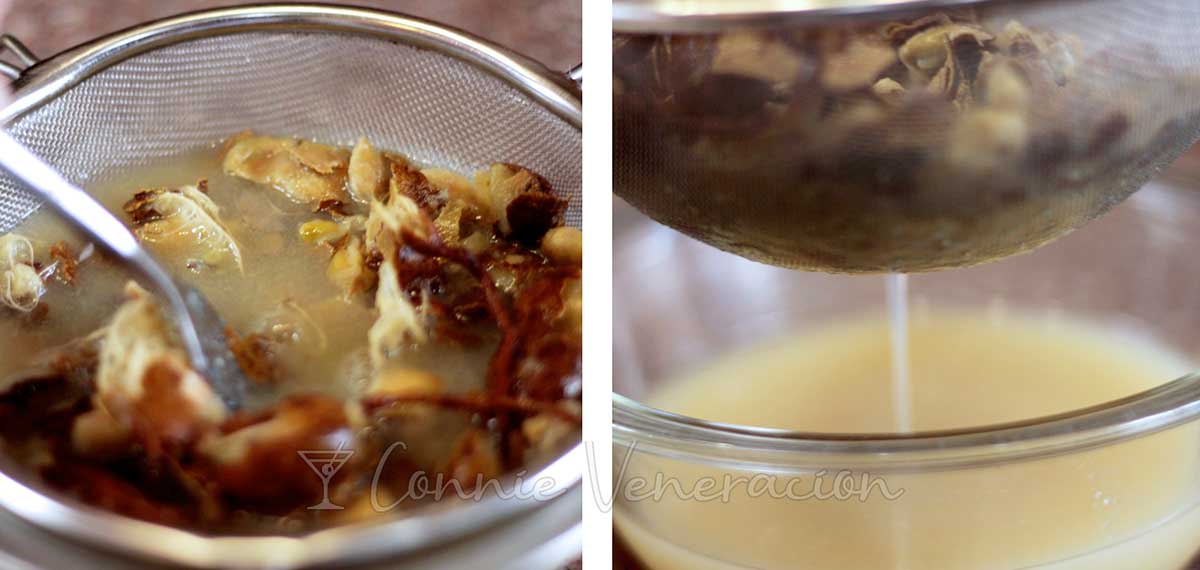 Sinigang mix in powdered form is easily available but if you can get your hands on fresh tamarind, I encourage you to take the extra step of pressing tamarind juice.
If local miso is bland, why add it to the soup at all? It thickens the broth and, if you use yellow miso, it does give the dish a lovely color.
Can Japanese or Korean miso paste be substituted? Some cooks have done that and, from what I’ve read, they seem to be satisfied with the result. You could do that too (just remember to use less fish sauce because fermented miso paste is salty) but the dish won’t be authentic Filipino sinigang sa miso. And that’s okay, really, so long as you’re happy with the flavor of the soup.
But this is a recipe for authentic sinigang sa miso. And we’re using all the traditional ingredients including the kind of fish that goes in it.
Catfish is the generic name for an array of fish with prominent barbels (a.k.a. cat’s whiskers). Kanduli is silver to gray which distinguishes it from hito, the more known catfish in Filipino cooking.
That’s a whole kanduli cut into portions. It has no scales so there’s nothing to scrape. You may ask the fish monger to gut the fish for you but it is best that you bring it home whole so that the slimy skin can be cleaned thoroughly.
What about the greens in the photo? The truth is you can use any geen leafy vegetable. When you say sinigang in the Philippines, the default is kangkong (water spinach). And when you say sinigang sa miso, it has to have mustasa.
Mustard leaves (also called mustard greens) have a bold flavor. Peppery with a trace of bitterness. Punchy, really, like arugula which happens to be my favorite salad and sandwich greens.
The fourth and last ingredient that needs special mention is what you sour the broth with. Sinigang can be cooked using various souring agents but tamarind juice is the most common.
Sinigang mix in powdered form is easily available but if you can get your hands on fresh tamarind, I encourage you to take the extra step of pressing tamarind juice.Sinigang na kanduli sa miso
Ingredients
- 2 tablespoons cooking oil
- 4 cloves garlic crushed
- 1 onion peeled and thinly sliced
- 3 tomatoes diced
- ¾ cup yellow miso
- ½ cup tamarind juice mixed with four cups water
- fish sauce to taste
- 1½ kilograms catfish (about 3.3 pounds) cleaned and cut into serving-size pieces
- 200 grams mustard leaves cut into halves if large
Instructions
- Heat the cooking oil in a pot and sauté the garlic, onion and tomatoes.
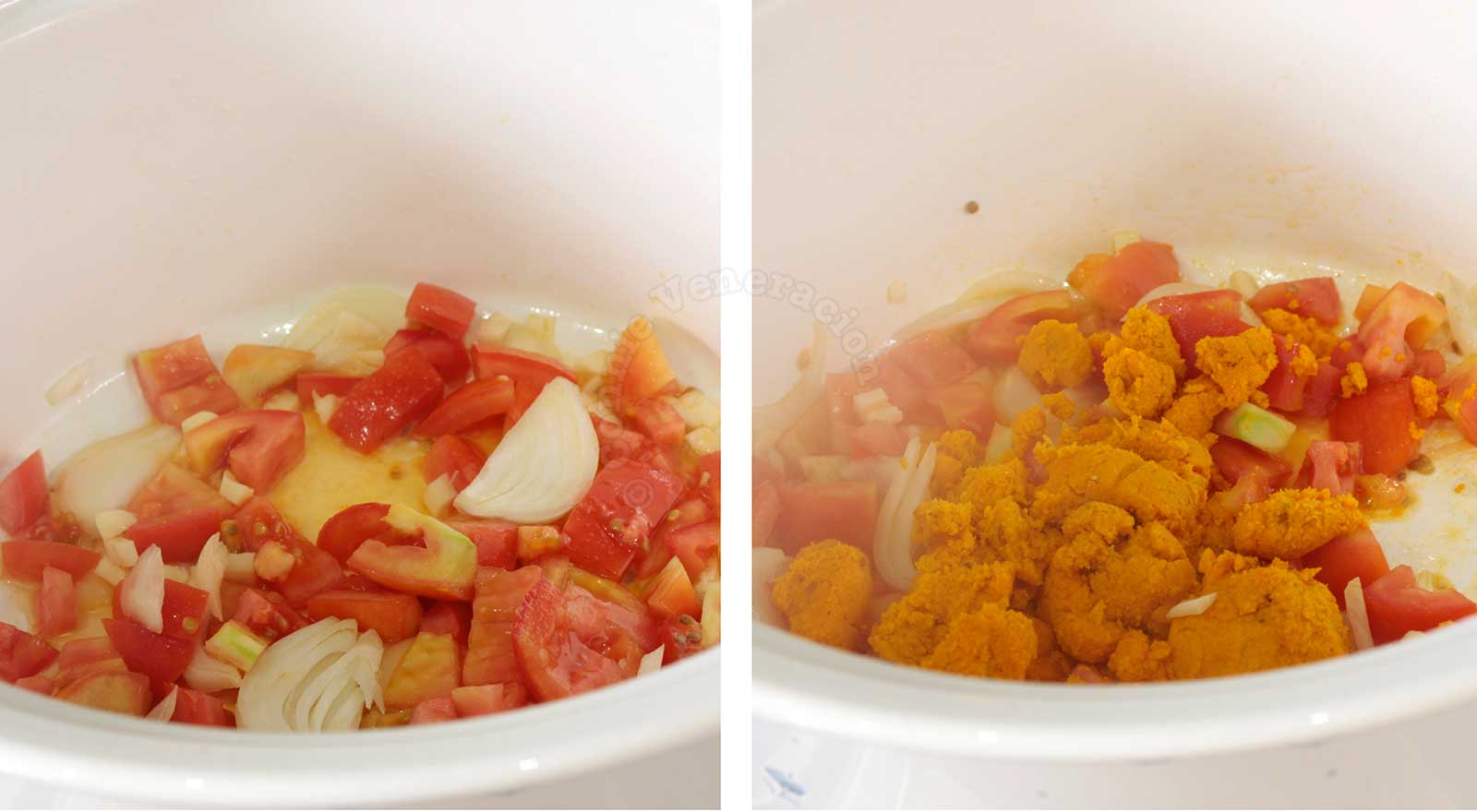
- When the garlic, onion and tomatoes start to soften, add the miso. Cook for a few minutes until the vegetables liquefy some more and the mixture turns a bit pasty.
- Pour in the diluted tamarind juice. Season with fish sauce to balance the sourness. If the broth is too sour, add more water.
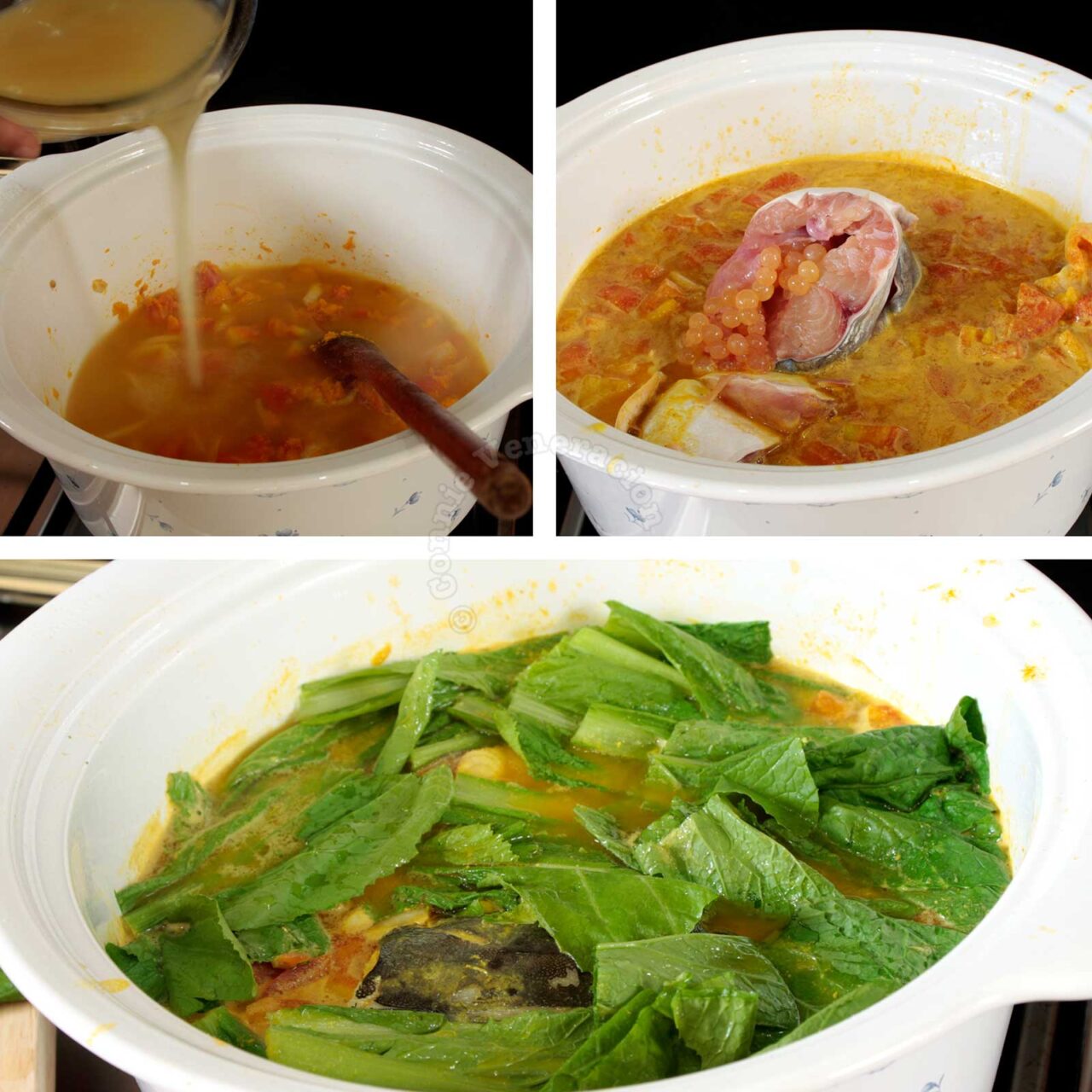
- Add the fish. Bring to the boil. Lower the heat cover and simmer for about ten minutes.
- Add the mustard leaves and simmer for another three minutes.
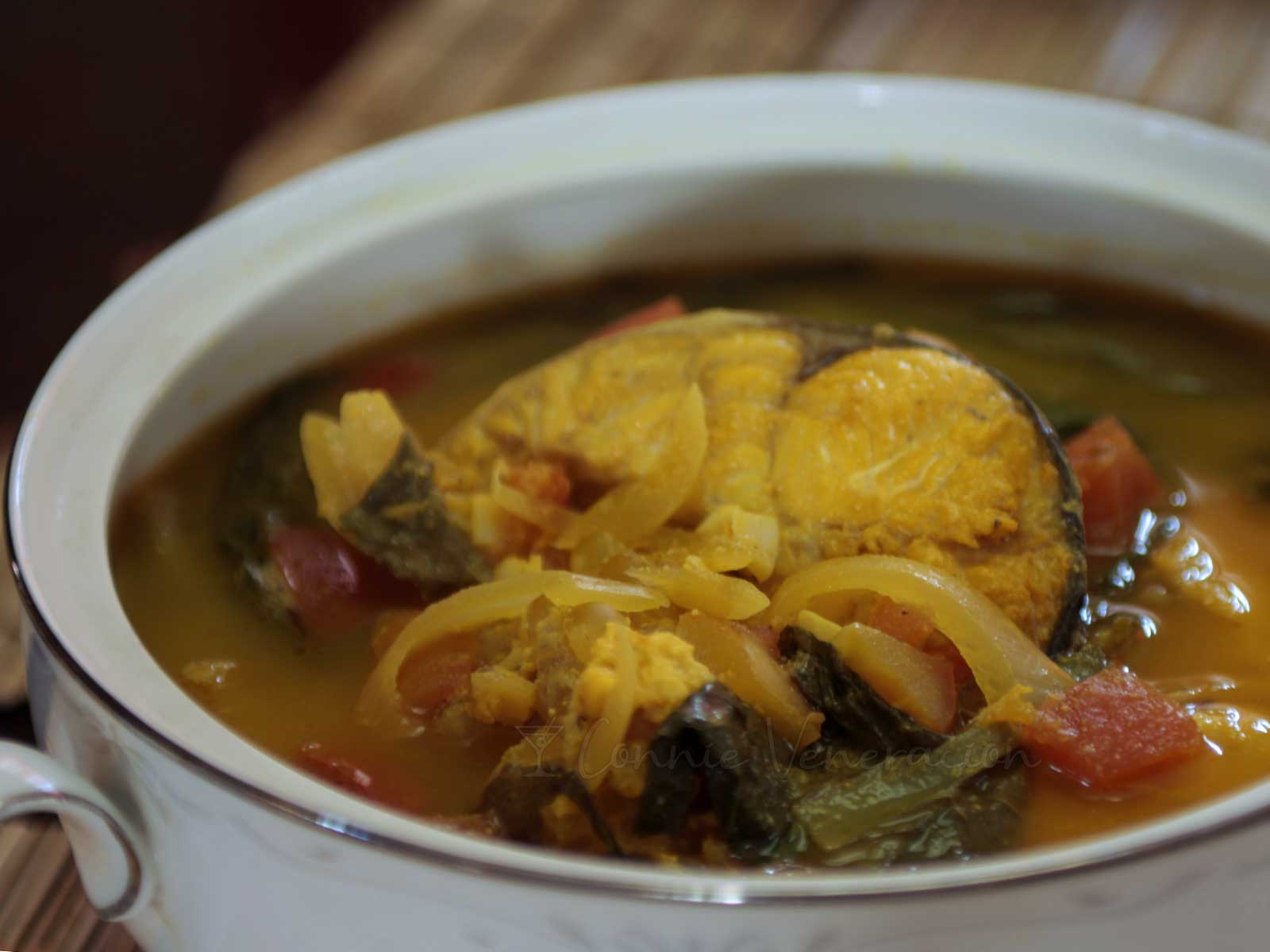
- Ladle the soup into your favorite soup tureen or serving bowl and serve at once.





 Browned sausage pasta with cream and cheese sauce