
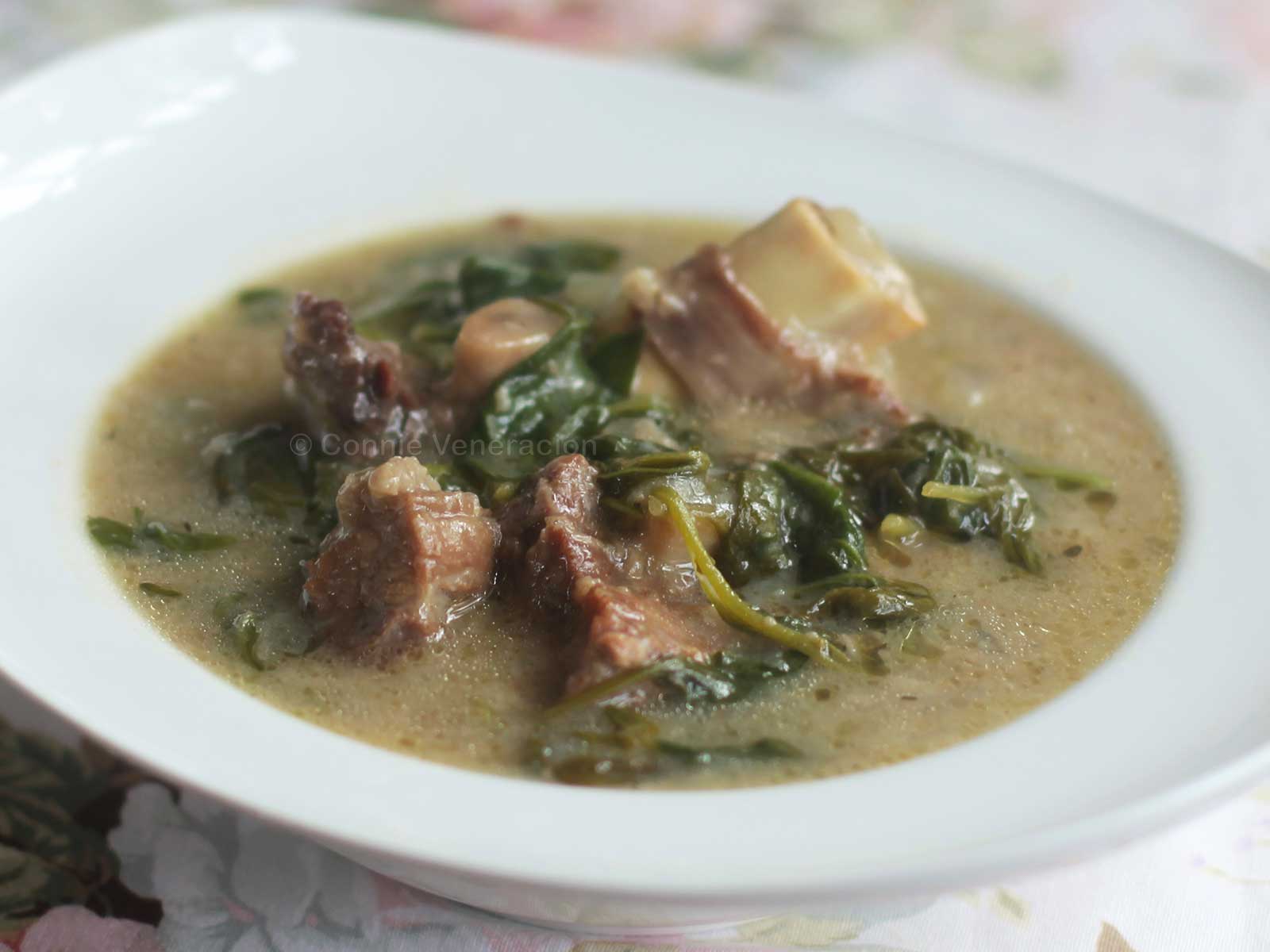
Heat from finger chilies and the natural sweetness of coconut milk blend with the rich flavors of slow cooked beef in this easy Asian-style beef stew.
Cook’s notes
Yes, we had it with rice, of course. This is Asia, after all. While Westerners like to dip crusty bread in the sauce of meat stew, we prefer to drizzle the stew’s sauce over rice and toss them together. And that is especially true when the sauce is cooked with coconut milk or cream.
Coconut milk, not cream
In this recipe, the beef shank was simmered in coconut milk — not coconut cream. For the difference, there is a post dedicated to everything coconut that I recommend you read “A guide to coconuts for eating, drinking and cooking“. Freshly squeezed coconut milk and cream can easily be obtained in Southeast Asia and in regions where coconut trees grow abundantly. Elsewhere, you’ll likely have to switch to canned or powder. If canned is the only thing available, know that there is canned coconut milk and canned coconut cream. If coconut cream is all you can find, that’s okay, because you can dilute it with water. The obvious question is why dilute coconut cream at all. Won’t that make a richer and thicker sauce? It would. But the cooking time is at least two hours and coconut cream will thicken to the point that it will scorch. Adding more coconut cream will not fix the problem. You need something thinner, and that makes coconut milk or diluted coconut cream the ideal choice.Brown the shank
If you’re wondering why the sauce has a brownish tinge when the beef was cooked in nothing but coconut milk, that’s because the beef was first browned in oil before the coconut milk was poured in. To know more about the benefits of browning meat before stewing, see “Do we really need to brown meat before braising or stewing?“ The actual weight of the beef shank needed to feed three people generously depends on the meat-to-bone ratio. If the bone is large, the shank should weigh closer to one kilogram (2.2 pounds).About the spinach
Kangkong (water spinach) was used in this dish. For the longest time, I was under the impression that kangkong only grew in the Philippines and that only Filipinos eat it as a vegetable. Wrong impression. If you Google “kang kong” (yes, two words) and “kangkung”, you’ll discover that it is just as ubiquitous in Asian and Malayan cuisines, including Indonesian and Malaysian. In Thailand, it is called phak bung; it is rau muong in Vietnam; kolmishak in Bangladesh and the Chinese has many regional names for it. Kangkong is a semiaquatic plant that grows in swamps. Hence, the name swamp or water spinach. The shape of the leaves vary. Kangkong with arrow-head leaves is common in Chinese cooking. The kind with wider and somewhat heart-shaped leaves is what we have in the Philippines. Both the hollow stalks and the leaves are edible although the stalks are tougher and take a bit longer to cook. Only the leaves were used in this dish. If you opt to include the stalks, they will have to be cooked longer than the leaves.Spicy beef shank (osso buco) coconut stew
Ingredients
Beef shank (osso buco)
- 2 tablespoons coconut oil divided
- 4 cloves garlic peeled and chopped
- 1 one-inch knob ginger peeled and chopped
- 1 cross cut of beef shank bone in with the marrow intact (about 750 grams / 1.6 pounds in weight)
- 2 to 4 cups coconut milk
- fish sauce
Spinach
- 2 shallots peeled and thinly sliced
- 3 to 4 finger chilies sliced
- 2 handfuls water spinach kangkong, (leaves only) roughly chopped
Instructions
- Heat a tablespoon of coconut oil in a pan.
- Saute the ginger and garlic until fragrant.
- Add the beef and brown both sides.
- Pour in two cups of coconut milk and abut two tablespoons of fish sauce. Simmer, covered tightly, for two to two-and-a-half hours or until very tender. Check the liquid occasionally, add more coconut milk and season with more fish sauce, as needed.
- Add the kangkong leaves and cook, stirring often, just until softened.
- Add the sautéed kangkong leaves to the beef, scattering them around the meat. Cover and simmer for another ten minutes.
- Serve the beef shank surrounded by the greens. Spoon some of the sauce over the meat just before serving to moisten the top.





 Rice cooker Hainanese-style chicken