
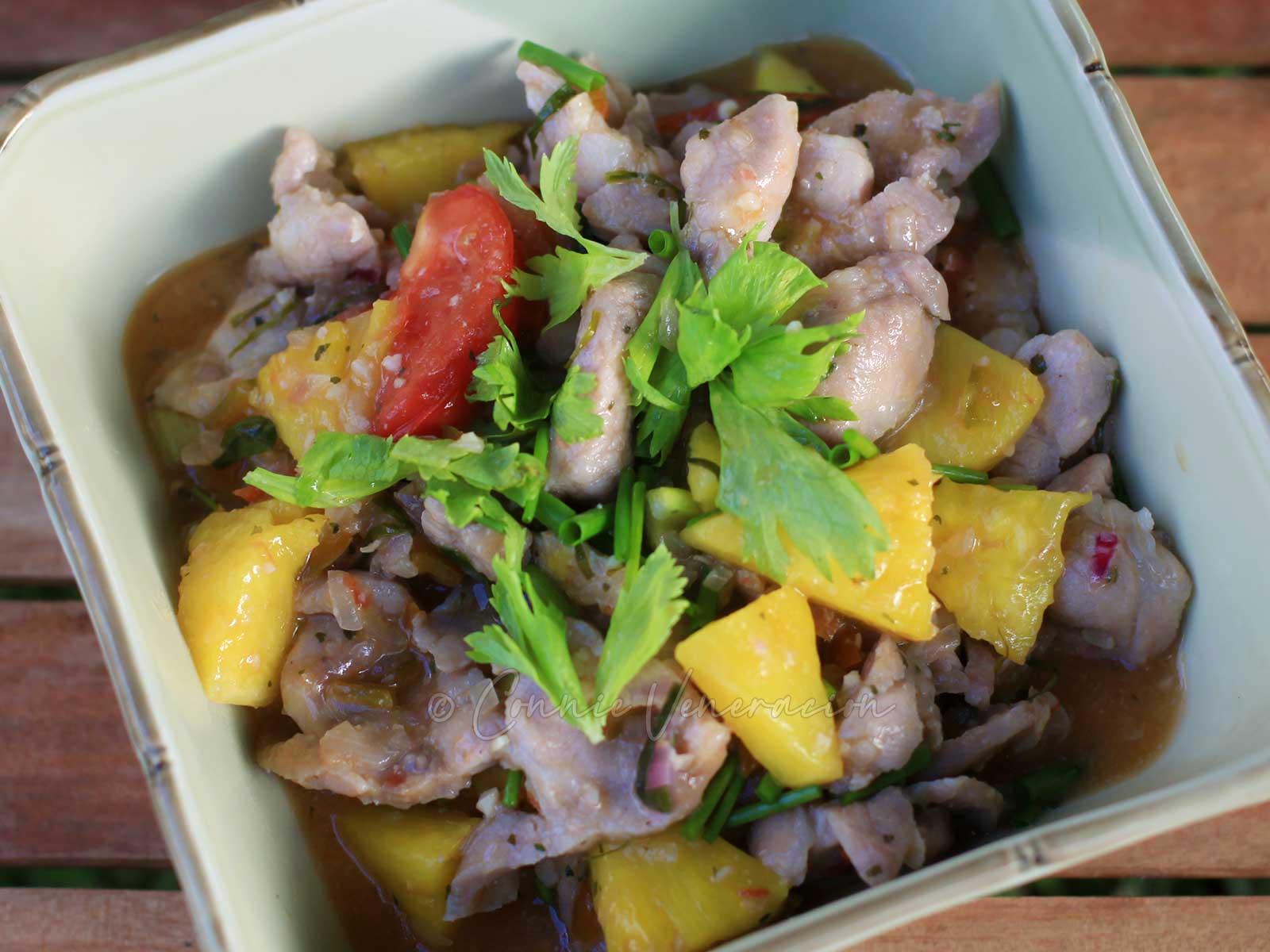
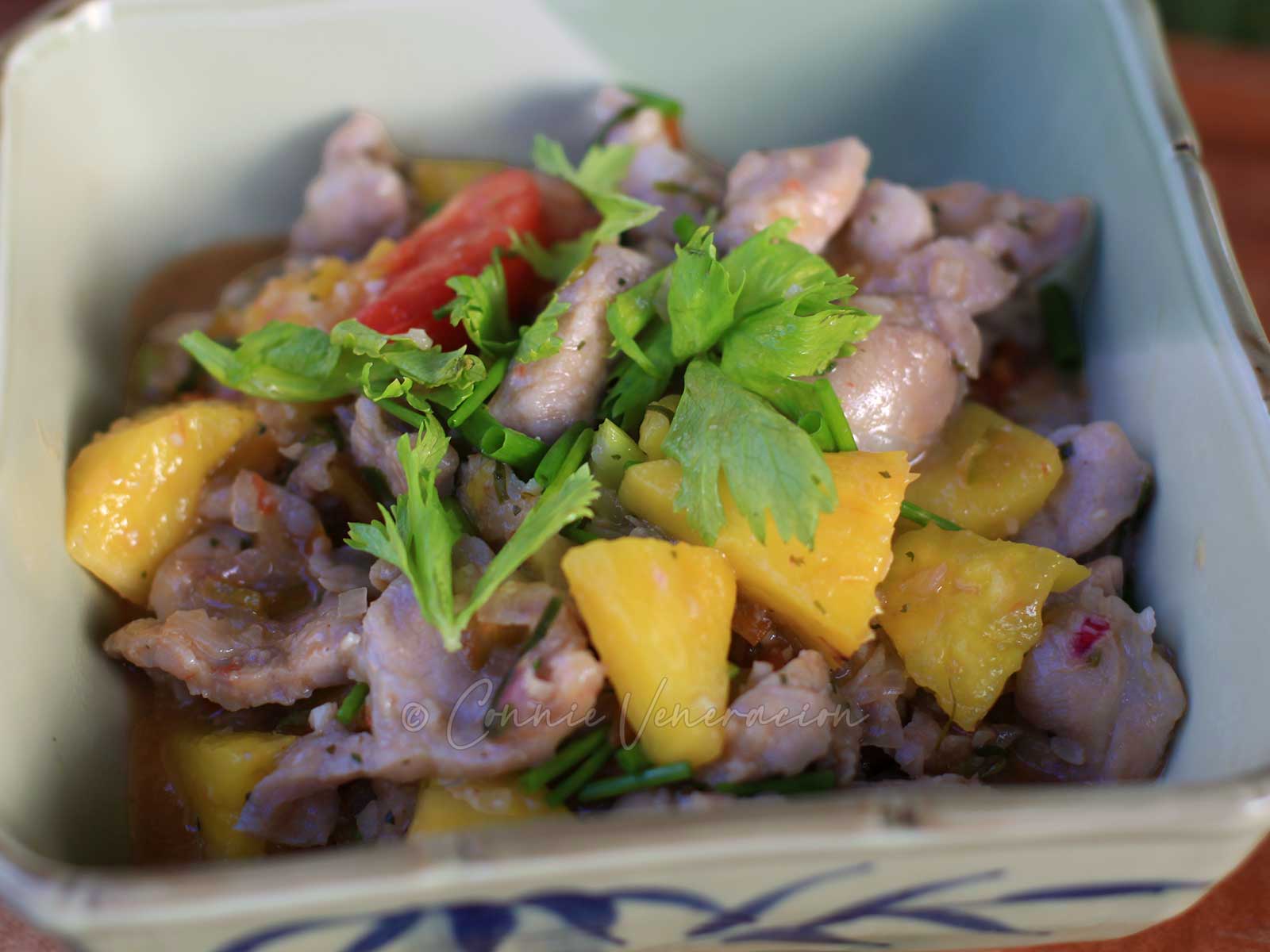
Salty, tangy and sweet. Meaty but bursting with fruit and vegetables. This simple stir fry has so much nuance that’s hard to resist.
Cook’s notes
Long before we visited Vietnam, we were already badly smitten with Vietnamese food. Or, at least, the version of Vietnamese food available locally.
While our acquaintance with the cuisine was initially limited to pho, spring rolls and beef stew, we augmented our knowledge by reading Vietnamese cookbooks and watching TV shows that featured Vietnamese food. Books by Andrea Nguyen and Luke Nguyen’s shows were more than helpful (no, I don’t think they’re related).
Then, we visited Vietnam a couple of times and indulged. A cooking class helped too. Today, we have a much better understanding of Vietnamese cooking. And we’ve created our home version of dishes we enjoyed in northern and southern Vietnam.
This dish, cooked long before we set foot in Vietnam, remains a favorite. Just what makes it so good? The simplicity of the cooking method, for starters. Marinate, stir fry the meat, stir fry the vegetables, combine the pork with the vegetables, add pineapple, pour in the sauce and toss together.
But it’s really the use of the correct ingredients that give this dish so much nuance in terms of flavor, texture and color.
Use fish sauce, not salt
If you’re new to this fermented Asian seasoning, read the full post dedicated to fish sauce. That should give you a good idea why salt is not a passable substitute.For best results, use fresh pineapple
Canned fruit just won’t give you the right texture and flavor. If you have to cut a whole pineapple to get those chunks, see how to skin and cut pineapple without waste.Starch to slightly thicken the sauce
It’s not much. Just a teaspoonful. You might think it won’t make any difference whether you use cornstarch or substitute all-purpose flour which is the staple in most non-Asian kitchens. But it does make a difference. All-purpose flour will give you a cloudy sauce. Cornstarch (not cornflour which is different) will yield a clear sauce.Ideal pork cut
A pork cut that requires a short cooking time is best for this recipe. We prefer the meat to have some fat so pork loin (not tenderloin which is too lean) with a generous layer of fat works well. Make sure to slice your pork thinly across the grain.Vietnamese pork and pineapple stir fry (muc xao khom)
Ingredients
- 300 to 400 grams pork loin (10.5 to 14 oz) thinly sliced
- 2 tablespoons sugar divided
- 2 to 3 tablespoons fish sauce
- ¼ to ½ teaspoon freshly ground black pepper
- 3 tablespoons cooking oil
- 3 cloves garlic peeled and minced
- 1 onion peeled and roughly chopped
- 1 bell pepper deseeded and roughly chopped
- 1 large and plump tomato cut into quarters or eighths
- 1 stalk celery finely sliced (save the leaves for garnish)
- 3 stalks onion leaves roughly chopped
- 1 teaspoon cornstarch dissolved in 2 tablespoons of water
- 1 tablespoon white vinegar
- 1 tablespoon lemon juice
- 1 cup fresh pineapple chunks
Instructions
- Place the pork in a bowl. Add half of the sugar, fish sauce and black pepper. Mix well, working the seasonings into the meat. Cover and marinate in the fridge for at least two hours.
- Mix together the remaining sugar, starch, vinegar and lemon juice for the sauce.
- Heat two tablespoons cooking oil in a wok or frying pan.
- Add the pork and stir fry until the meat changes color.
- Add the garlic and continue stir frying until the edges of the pork start to brown lightly.
- Scoop out the pork and keep warm.
- Add the remaining cooking oil to the wok and heat. Stir fry the onion, celery, bell pepper and tomato.
- Return the pork back into the wok.
- Add the pineapple chunks.
- Pour in the sauce.
- Cook, stirring often, just until the sauce thickens.
- Transfer the stir fried dish to a platter. Garnish with onion leaves and the celery leaves (and cilantro, if you like).
- Serve your Vietnamese pork and pineapple stir fry with hot rice.


 Pineapple orange duck in white wine sauce