
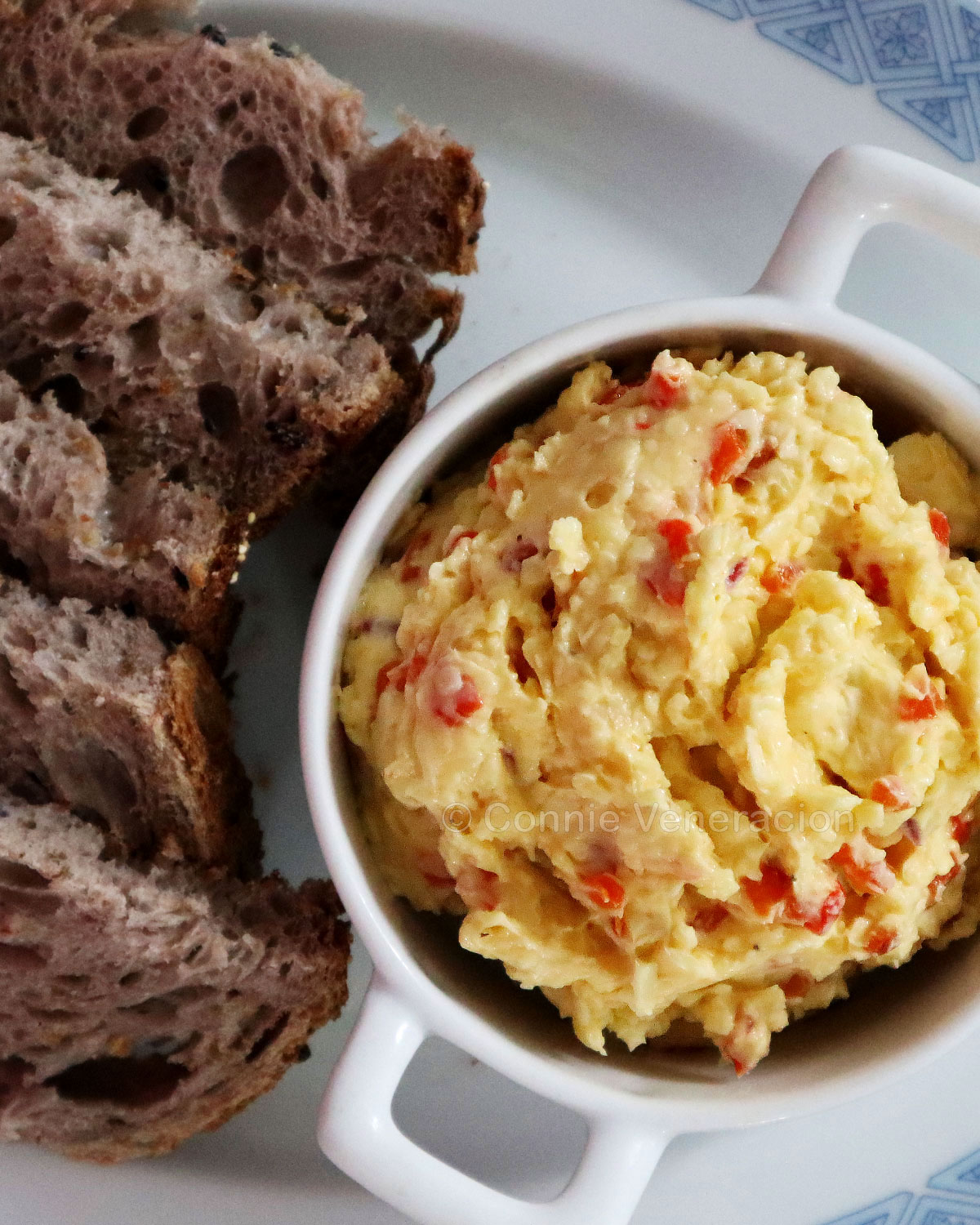
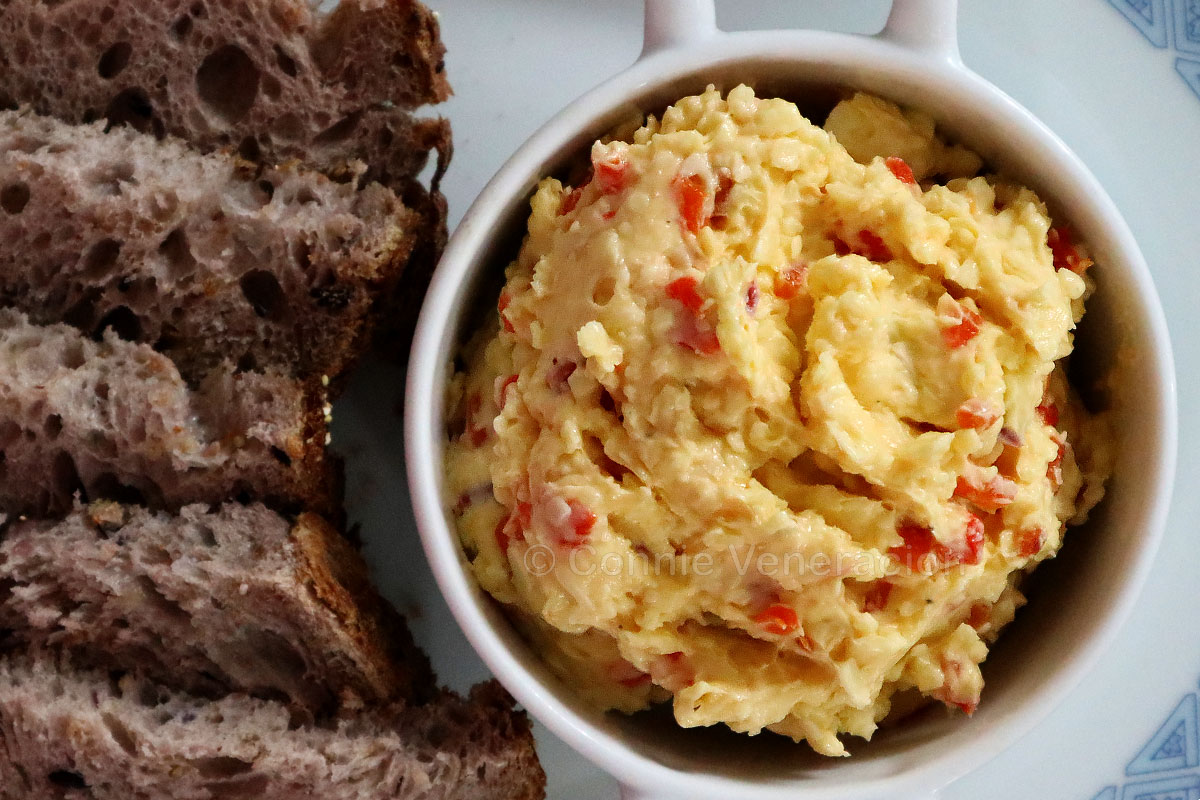
The Filipino adaptation of the American pimiento cheese. Ours has roasted pimiento, butter and three kinds of cheese — Parmesan, cream cheese and cheddar. The spread is creamier and the flavors are fantastic.
Cook’s notes
It’s comfort food for a generation that was raised by parents who grew up during the American colonial period. I grew up with a semi-permanent supply of cheese pimiento in the fridge. My mother, the non-cook, would often prepare the spread and my brother and I could just take it out of the fridge and spread it on bread whenever we were hungry. The mixture was equal parts of butter and shredded cheese, a small can of chopped pimiento and sugar.
Back then, our cheese pimiento spread was always made with Kraft cheddar cheese. I don’t know whether that’s because it was the only thing available or because it was the only brand that my mother was familiar with. Today, fortunately, our generation is well-acquainted with other varieties of cheese and, more importantly, we have easy access to them.
While its American ancestor has mayo and the traditional Filipino version has Edam, our family’s recipe of cheese pimiento spread is made with Parmesan, cream cheese, cheddar, roasted and skinned pimiento, and butter. Yes, butter. Not mayo. Trust me, cheese pimiento with butter tastes better.
As for the pimiento, fresh pimiento is really best as the smokiness add so much in terms of aroma and flavor. It’s not that hard.
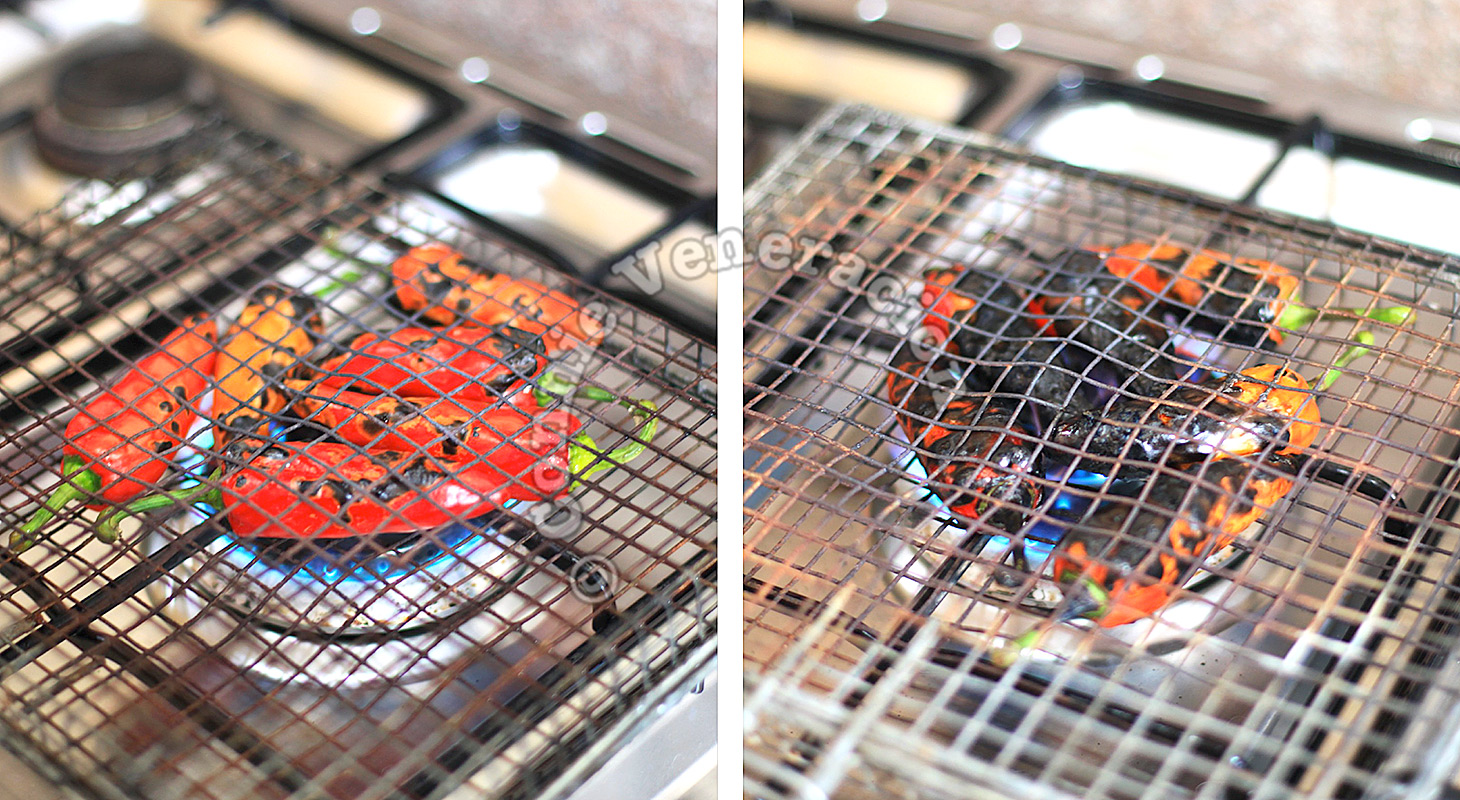 I like roasting pimientoes on an open flame but you can also loosen the skin by blanching, steaming or broiling. When roasting on an open flame, a fish basket is very useful. Just leave the pimientoes to scorch, flipping over occasionally.
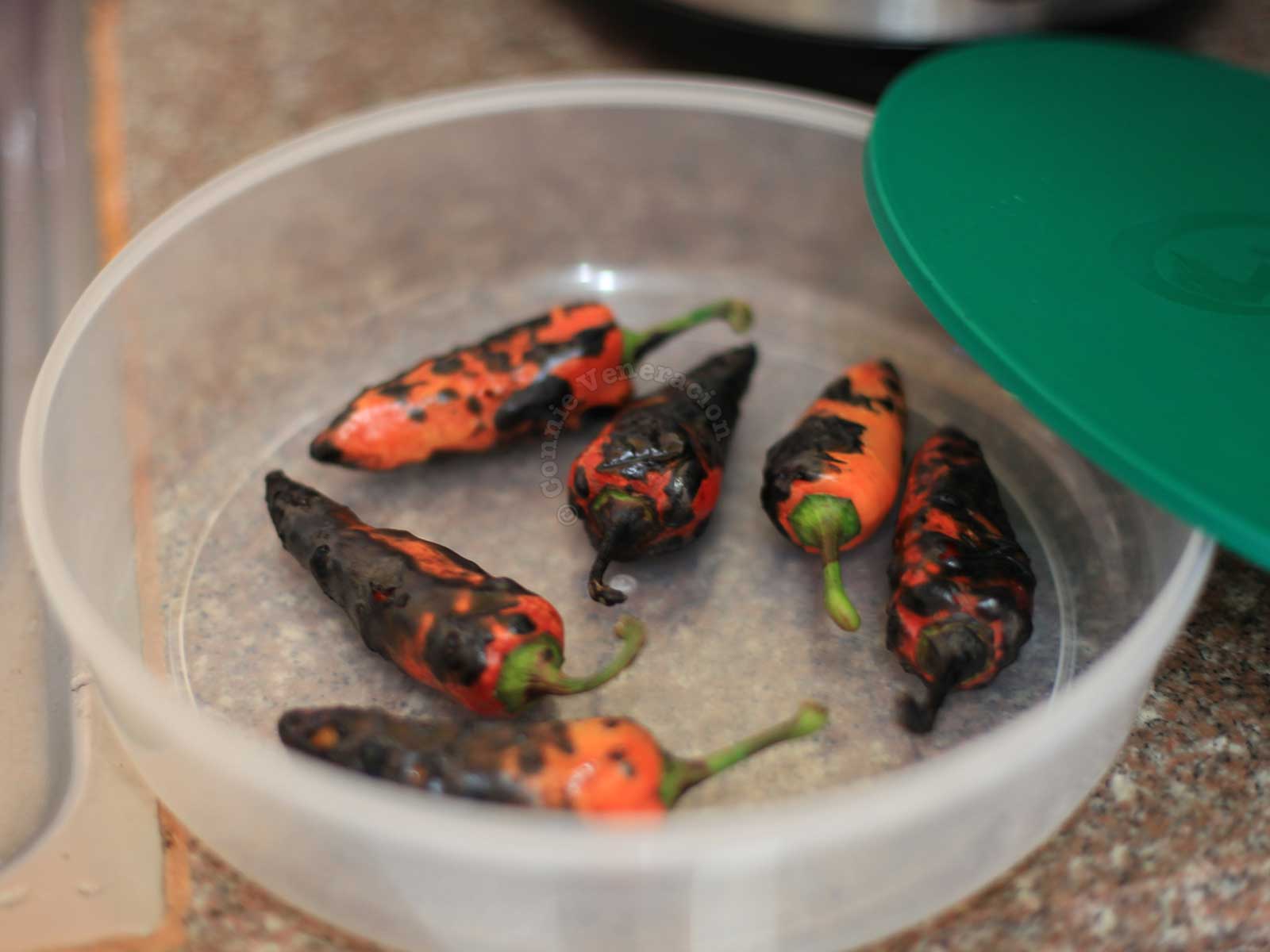 Transfer the pimientoes to a container with a lid (even a resealable bag will do), seal and leave until cool. The steam generated will loosen the skin. To remove the skin, simply peel off. It comes off easily. Or rub between sheets of paper towels. Then, slit the pimientoes and scrape off the seeds. Chop the pimientoes and they’re ready to be mixed with your cheeses.
If you opt for canned, choose skinless pimiento because the skins have a nasty way of getting stuck on the roof of the mouth which isn’t a pleasant sensation at all.
Transfer the pimientoes to a container with a lid (even a resealable bag will do), seal and leave until cool. The steam generated will loosen the skin. To remove the skin, simply peel off. It comes off easily. Or rub between sheets of paper towels. Then, slit the pimientoes and scrape off the seeds. Chop the pimientoes and they’re ready to be mixed with your cheeses.
If you opt for canned, choose skinless pimiento because the skins have a nasty way of getting stuck on the roof of the mouth which isn’t a pleasant sensation at all.
I like roasting pimientoes on an open flame but you can also loosen the skin by blanching, steaming or broiling. When roasting on an open flame, a fish basket is very useful. Just leave the pimientoes to scorch, flipping over occasionally.
Transfer the pimientoes to a container with a lid (even a resealable bag will do), seal and leave until cool. The steam generated will loosen the skin. To remove the skin, simply peel off. It comes off easily. Or rub between sheets of paper towels. Then, slit the pimientoes and scrape off the seeds. Chop the pimientoes and they’re ready to be mixed with your cheeses.
If you opt for canned, choose skinless pimiento because the skins have a nasty way of getting stuck on the roof of the mouth which isn’t a pleasant sensation at all.Cheese pimiento
Ingredients
- 175 grams butter (6.17 oz) softened
- 175 grams cream cheese (6.17 oz) softened
- 175 grams Parmesan (6.17 oz) finely grated (feta is great too!)
- 175 grams sharp cheddar (6.17 oz) shredded
- ½ cup chopped pimiento preferably roasted, skinned and deseeded
- 2 tablespoons superfine sugar
Instructions
- In a large bowl, whisk the butter, cream cheese and sugar until the sugar is dissolved (do not overmix though because you don’t want the butter cream to separate from the fats).
- Fold in the Parmesan, cheddar and pimiento until blended.
- Spread on bread. Enjoy!

 Baby back ribs braised in spicy orange sauce