
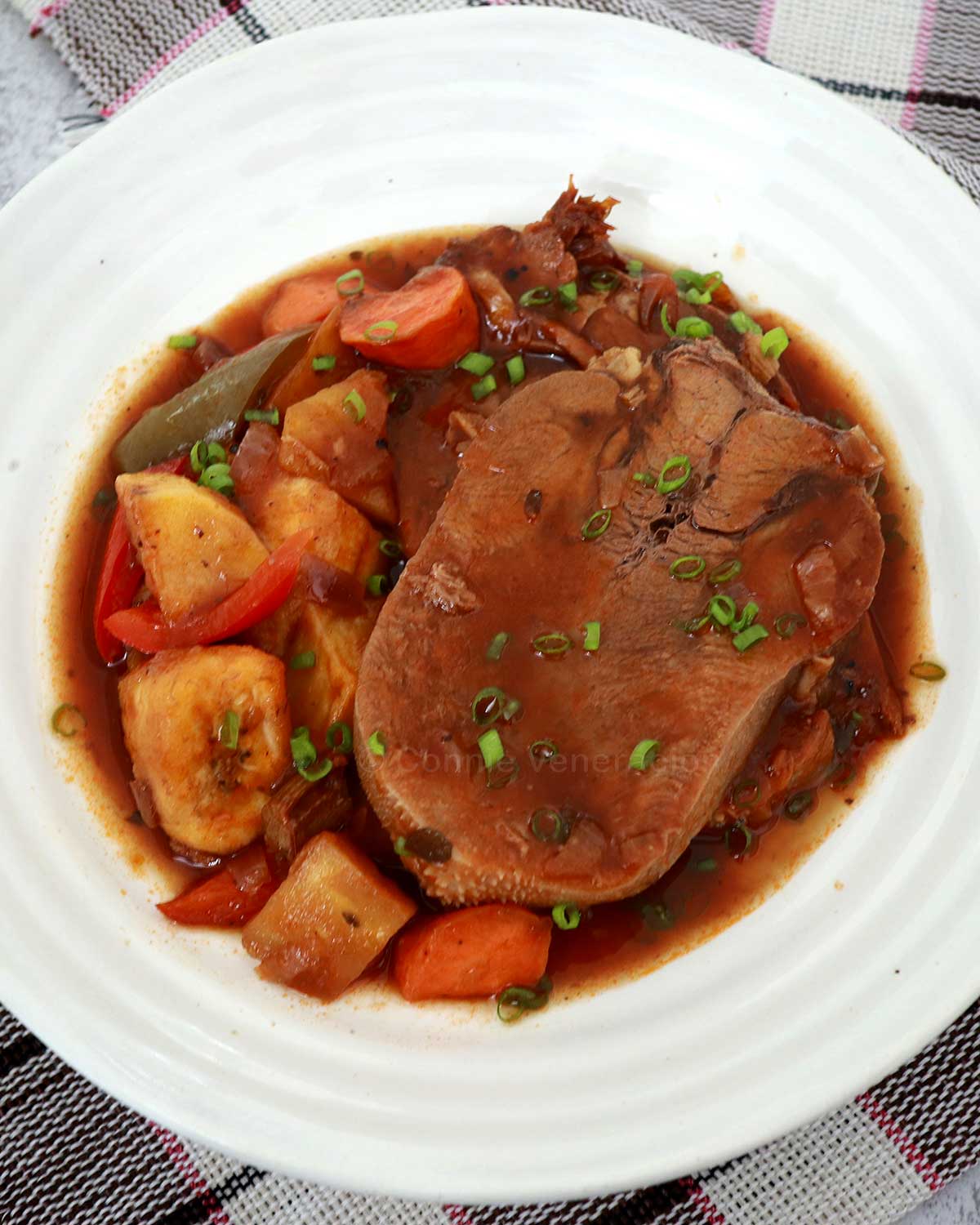
Sweet, tangy and salty, here is an easy and tasty dish to serve on special occasions. The colorful vegetables give it a festive look.
Cook’s notes
Estofado is from the Spanish word estofar which means to braise in a covered pan. This Filipino adaptation is a fusion of the traditional Spanish cooking method, Chinese seasoning (soy sauce) and Filipino ingredients (saba bananas).
Why is it a special occasion dish? For two reasons. Beef tongue is rather pricey and because it requires quite a bit of preparation. If you have the time and inclination, and you don’t mind the rather lengthy preparation, there is no reason why you have to wait for a special occasion to serve this dish. We didn’t.
It starts with cooking the beef tongue in salted water. Adding herbs and spices is optional. Because it takes hours to tenderize the meat, I like doing this step overnight in the slow cooker. If you don’t have a slow cooker, just use a large pot with a heavy bottom. Simmer the tongue for four to six hours. The actual cooking time depends on the size and weight of the tongue.
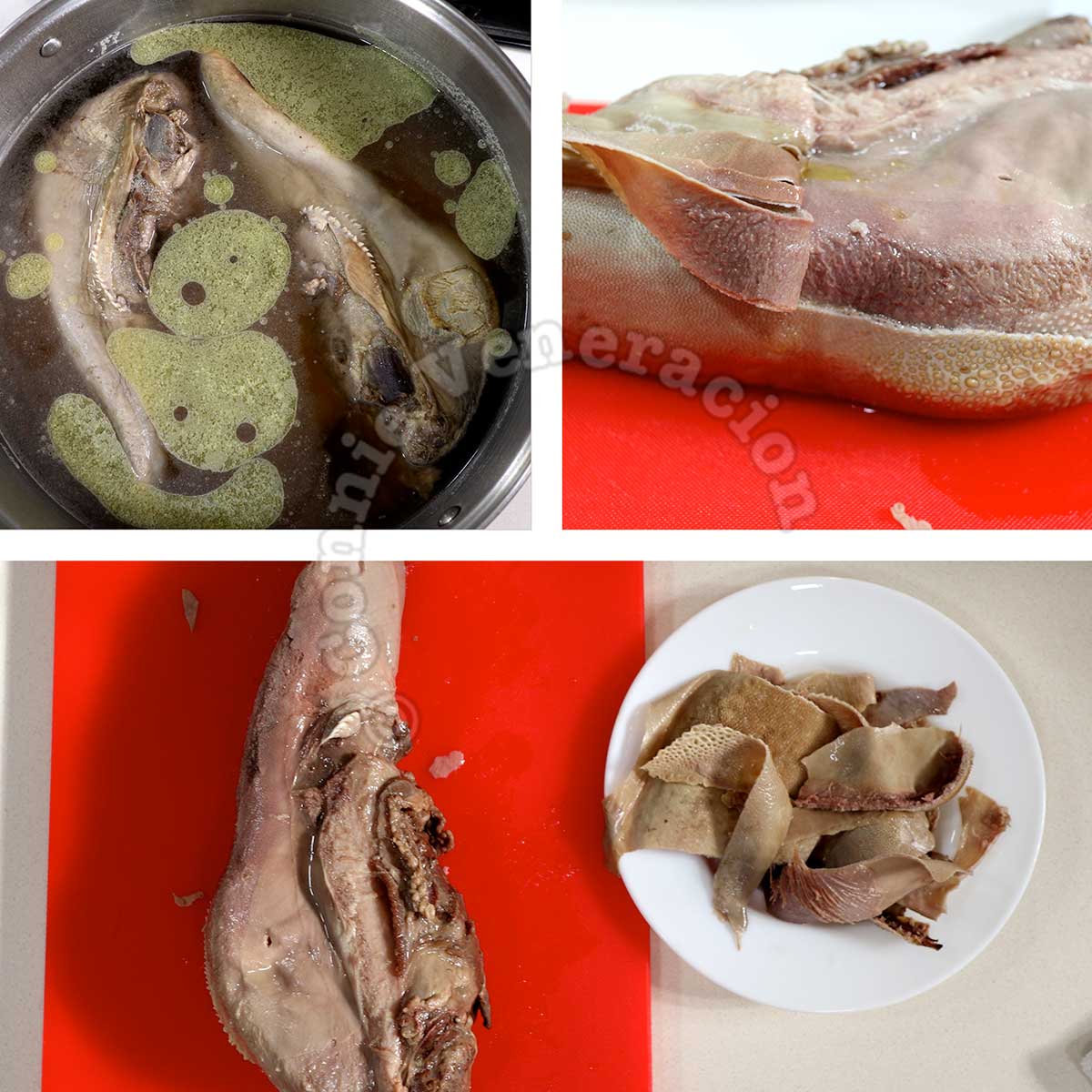 Cool the beef tongue, wrap in cling film and stick in the fridge for several hours for the very tender meat to firm up so that it is easier to make clean slices.
Peel off the skin (it will come off easily if the beef tongue has been sufficiently cooked) and cut the tongue into slices about three quarters of an inch thick. Set the meat aside while you make the sauce and cook the vegetables.
Cool the beef tongue, wrap in cling film and stick in the fridge for several hours for the very tender meat to firm up so that it is easier to make clean slices.
Peel off the skin (it will come off easily if the beef tongue has been sufficiently cooked) and cut the tongue into slices about three quarters of an inch thick. Set the meat aside while you make the sauce and cook the vegetables.
Cool the beef tongue, wrap in cling film and stick in the fridge for several hours for the very tender meat to firm up so that it is easier to make clean slices.
Peel off the skin (it will come off easily if the beef tongue has been sufficiently cooked) and cut the tongue into slices about three quarters of an inch thick. Set the meat aside while you make the sauce and cook the vegetables.
The prep and cook times exclude cooking the tongue, and frying the potatoes, carrots and saba bananas.
Lengua (beef tongue) estofado
Ingredients
- 2 tablespoons cooking oil
- 2 shallots peeled and chopped
- 6 cloves garlic peeled and chopped
- 2 sprigs oregano leaves only
- ¼ teaspoon black pepper
- ¼ cup dark soy sauce
- ¼ cup vinegar
- ⅓ cup brown sugar
- 1 bay leaf
- ¼ cup tomato paste
- 3 to 4 cups broth vegetable broth was used here
- salt to taste
- 1 beef tongue (about one kilogram / 2.2 pounds total weight) fully cooked, peeled and cut into ¾-inch slices
- 2 bell peppers cored, deseeded and diced
- 2 medium potatoes peeled, diced and fried
- 2 medium carrots peeled, diced and fried
- 4 saba bananas peeled, diced and fried
- torn mint leaves optional
- finely sliced scallions to garnish
Instructions
- Heat the cooking oil in a pan.
- Saute the shallots, garlic and oregano with the black pepper until softened and aromatic.
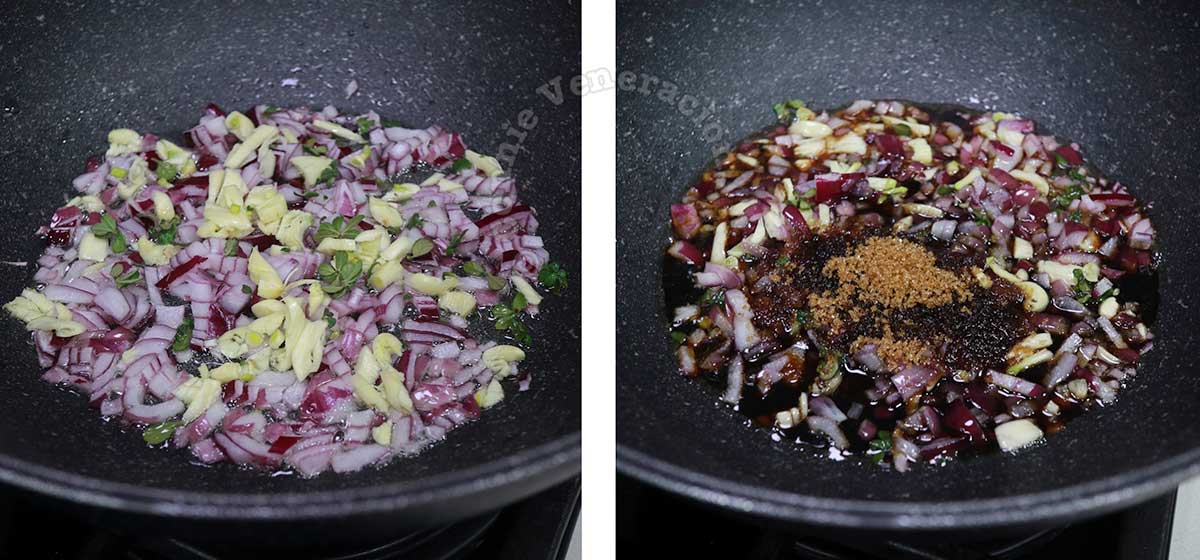
- Pour in the soy sauce and vinegar.
- Stir in the brown sugar until dissolved.
- Add the tomato paste and bay leaf, and pour in the broth. Cook until simmering.
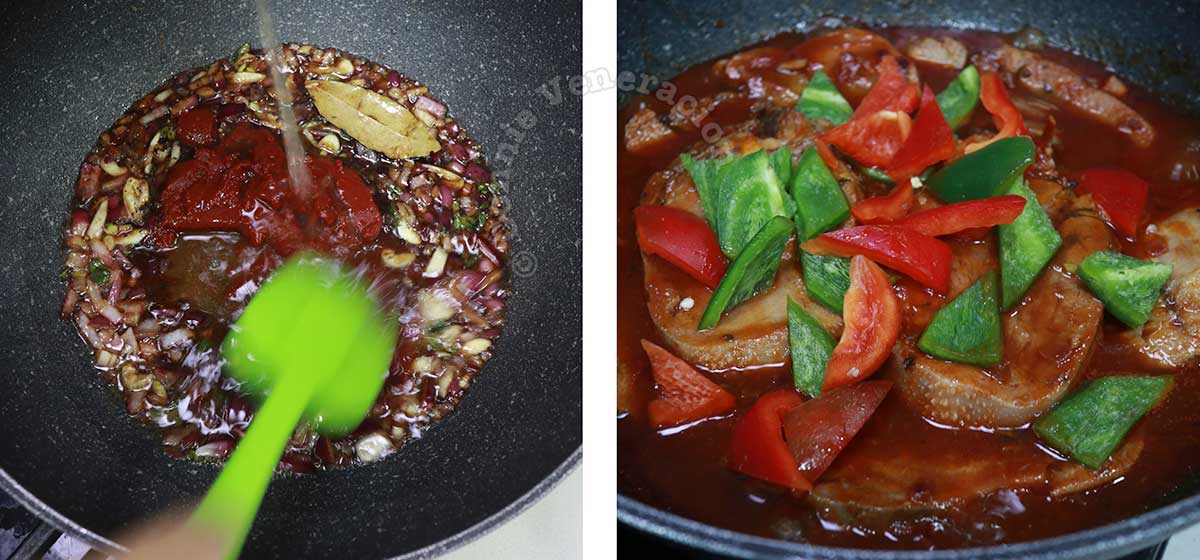
- Taste and adjust the amount of vinegar or sugar, or both (note that as the sauce simmers, the flavors will become stronger). Add salt, if needed, not more soy sauce to prevent the sauce from turning too dark.
- Add the beef tongue slices and spread the bell peppers over them.
- Simmer for ten minutes.
- Carefully scoop out the beef tongue slices and move to a serving bowl or individual bowls.
- Add the fried potatoes, carrots and saba bananas to the sauce (and, optionally, torn mint leaves), and stir.
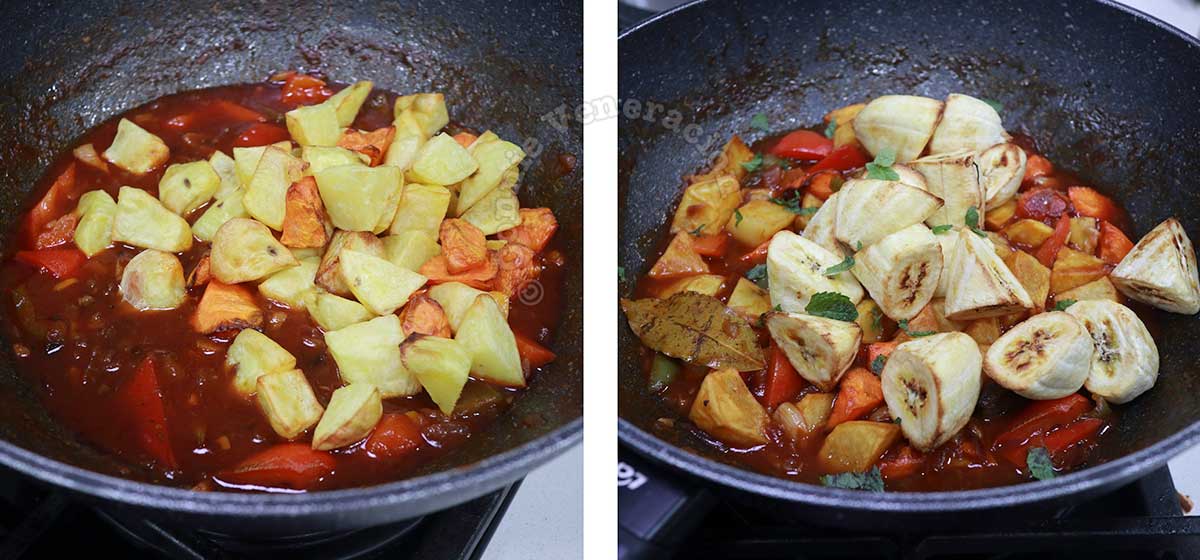
- If there is too little sauce, add more broth and adjust the seasonings. Be careful not to add too much liquid though to prevent the dish from becoming soupy.
- Simmer for another ten minutes.
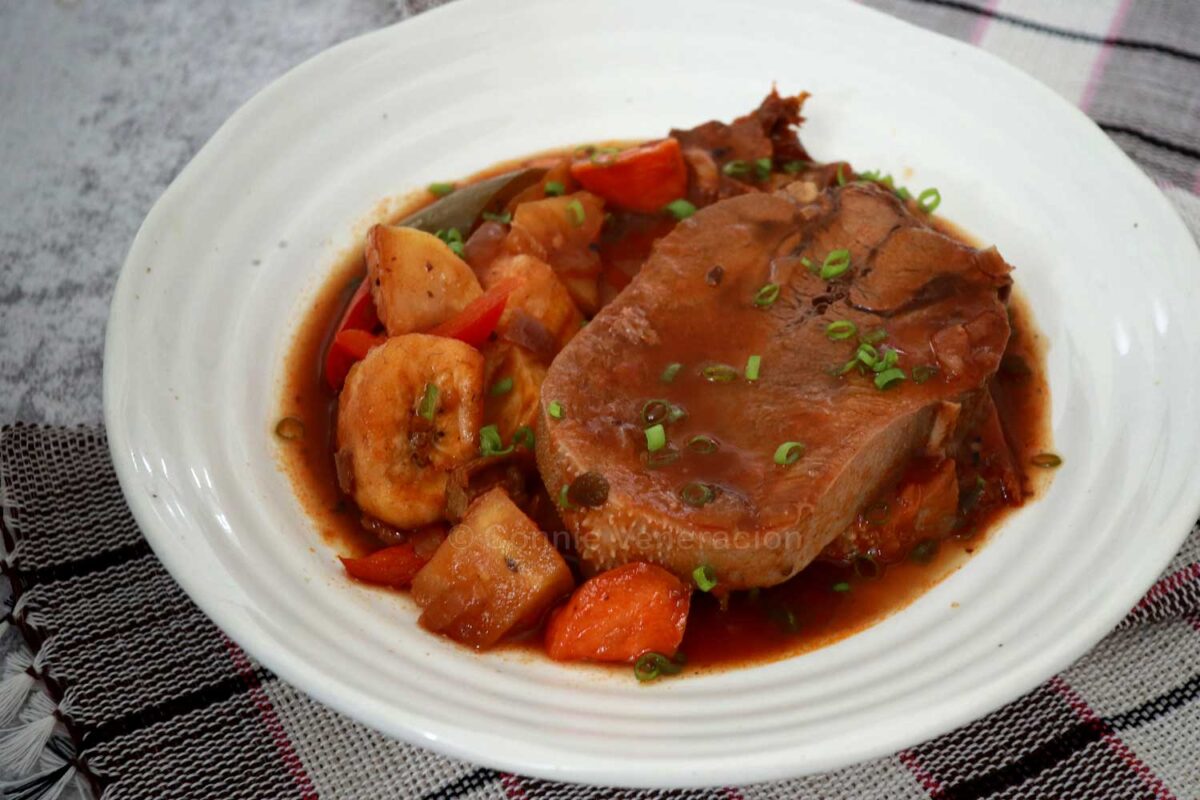
- Ladle the sauce, bananas and vegetables beside the beef tongue slices.
- Sprinkle sliced scallions on top and serve.


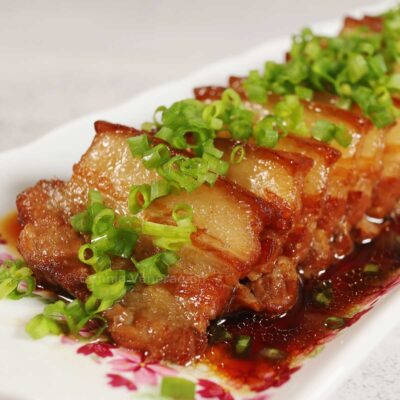

 Air fried lechon kawali (crispy pork belly)