Cook’s notes
How could it not be delicious? You have fatty pork that cooks slowly in coconut milk and, as it does, the meat soaks up the flavors of the spices and seasonings. Meanwhile, as the coconut milk (or cream) reduces, the coconut cream curdles and separates from the coconut oil. The coconut oil mixes with the rendered pork fat, and the result is just fantastic.
 Five finger chilies went into the dish. Finger chilies are green chilies the size of an average human pointer. It’s milder than small red chilies (such as bird’s eye). These long, thin chilies are called by different names around the world. Just remember that you want a variety that’s only mildly hot and rather sweet.
Three chilies were split, and the seeds and membranes were scraped off and discarded. The chili halves with the hollowed cavities were thinly sliced and went into the pan during the early stage of cooking. The seeds and membranes of the two remaining chilies were left undisturbed. They were simply cut into thirds and thrown into the pan at the same time as the spinach.
Why do it that way? Adding chilies at two different stages helps control the level of heat more efficiently. The heat is concentrated in the seeds and membranes, and with those removed, in effect, the cooking begins with a mild level of heat. More heat is added, optionally, towards the end with the two remaining chilies.
Five finger chilies went into the dish. Finger chilies are green chilies the size of an average human pointer. It’s milder than small red chilies (such as bird’s eye). These long, thin chilies are called by different names around the world. Just remember that you want a variety that’s only mildly hot and rather sweet.
Three chilies were split, and the seeds and membranes were scraped off and discarded. The chili halves with the hollowed cavities were thinly sliced and went into the pan during the early stage of cooking. The seeds and membranes of the two remaining chilies were left undisturbed. They were simply cut into thirds and thrown into the pan at the same time as the spinach.
Why do it that way? Adding chilies at two different stages helps control the level of heat more efficiently. The heat is concentrated in the seeds and membranes, and with those removed, in effect, the cooking begins with a mild level of heat. More heat is added, optionally, towards the end with the two remaining chilies.
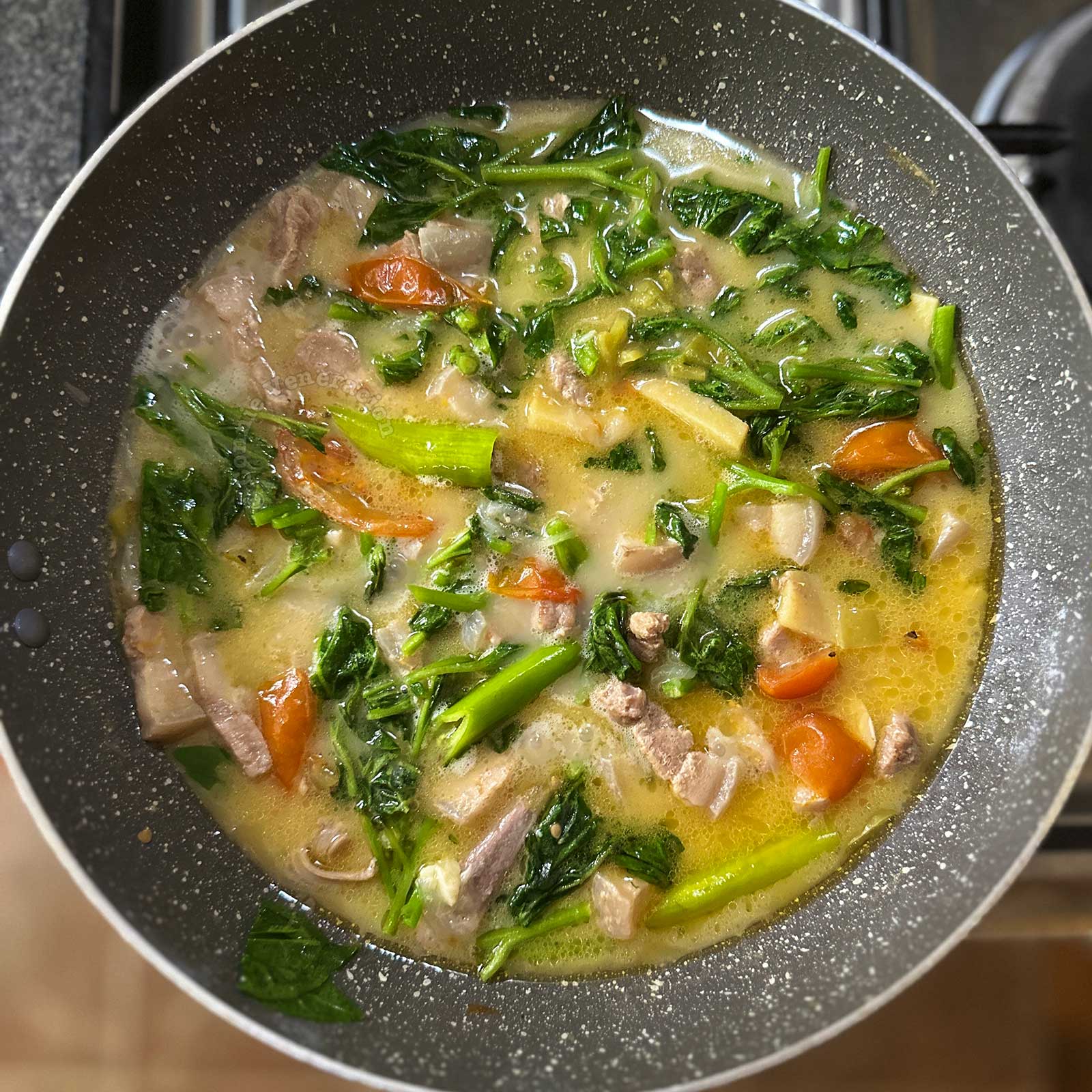 Add the spinach in three tranches. The bottom third first, then the middle third and, finally, the topmost third at intervals of two to three minutes. That way the spinach gets cooked through evenly.
Chili tips
Five finger chilies went into the dish. Finger chilies are green chilies the size of an average human pointer. It’s milder than small red chilies (such as bird’s eye). These long, thin chilies are called by different names around the world. Just remember that you want a variety that’s only mildly hot and rather sweet.
Three chilies were split, and the seeds and membranes were scraped off and discarded. The chili halves with the hollowed cavities were thinly sliced and went into the pan during the early stage of cooking. The seeds and membranes of the two remaining chilies were left undisturbed. They were simply cut into thirds and thrown into the pan at the same time as the spinach.
Why do it that way? Adding chilies at two different stages helps control the level of heat more efficiently. The heat is concentrated in the seeds and membranes, and with those removed, in effect, the cooking begins with a mild level of heat. More heat is added, optionally, towards the end with the two remaining chilies.
Spinach tips
Spinach has leaves and stalks. Well, unless you’re in a part of the world where bags of spinach leaves, without stalks at all, are easily obtainable from the neighborhood grocery. In my part of the world, spinach always comes with stalks. My trick with spinach — at least in cooking this dish — is to cut the spinach in three portions. The bottom third is the toughest part of the stalk. The middle third consists of the more tender part of the stalk and some leaves. The topmost third is mostly leaves with very thin and tender stalks.
Add the spinach in three tranches. The bottom third first, then the middle third and, finally, the topmost third at intervals of two to three minutes. That way the spinach gets cooked through evenly.
My final tip
Exercise patience. The pork needs to cook slowly over low heat to the point that the fat is so soft that it turns into mush when pressed between the tongue and the roof of the mouth.Spicy pork belly, spinach and coconut cream stew
Ingredients
- 2 tablespoons cooking oil
- 450 grams pork belly (about one pound) cut into half-inch strips
- 1 onion peeled and thinly sliced
- 6 cloves garlic peeled and lightly pounded
- 1 two-inch knob ginger peeled and thickly sliced
- 3 tomatoes diced
- 3 finger chilies (seeds and membranes removed) thinly sliced
- salt
- 1 cup pork bone broth (you may need more)
- 1 ½ cups coconut cream
- 250 grams spinach (8.8 oz) cut into thirds
- 2 whole finger chilies (optional) cut into thirds
Instructions
- Heat the cooking oil in a wok or pot.
- Over high heat, spread the pork strips in the hot oil and leave to brown the undersides. Stir and toss until browned in more spots.
- Add the onion, garlic, tomatoes, ginger, sliced chilies and a teaspoon of salt. Cook, stirring and tossing, until the vegetables start to soften.
- Pour in the broth and coconut cream, and bring to a simmer. Taste and add a little more salt, if needed (as the water content evaporates, the saltiness becomes concentrated so go easy on the salt at this point). Cover the pan and simmer the pork until tender If the liquid dries up before the pork is done, stir in more broth, a quarter cup at a time.
- Taste the sauce. If you want more heat, stir in the two finger chilies that had been cut into thirds.
- Drop in the lower thirds of the spinach (the portion with the thickest stalks) and stir. Cover the pan and cook for two to three minutes. Add the middle third of the spinach, cook for to three minutes then add the top third of the spinach and cook for another two to three minutes.
- Taste the sauce one last time. Add more salt, if necessary.
- Serve immediately with rice.


 Kimchi soup with fish cake (odeng) and sweet potato