
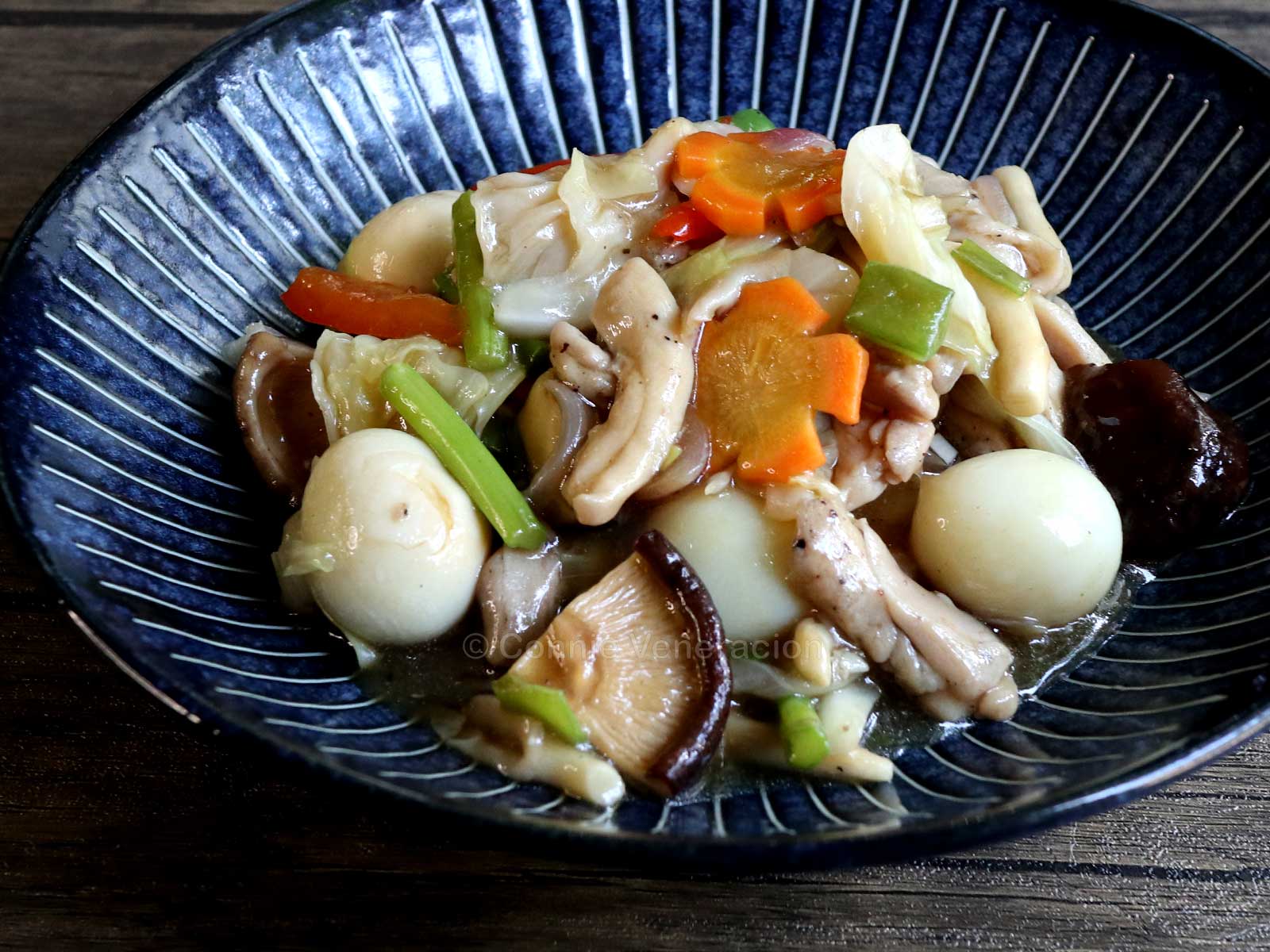
Stir fried bits and pieces of vegetables, and meat or seafood tossed with a little sauce. That's chop suey. In this chicken chop suey recipe, we've added mushrooms and quail eggs too.
Cook’s notes
Along with sweet sour pork, I grew up thinking that chop suey was the quintessential Chinese food. Then I read that the dish was born in America. If that’s not confusing enough, I would learn much later that the American tale might be more myth than fact.
You might have read the story that, during the construction of the First Transcontinental Railroad when the Chinese flocked to the United States to seek work, American laborers wanted food but there was this Chinese cook had only bits and pieces of meat and vegetables. He tossed them together, added sauce, and chop suey was born.
A variation of the story pins the birth of chop suey during the Gold Rush. American miners demanded food, the flustered Chinese cook didn’t have much to cook with so he got creative.
The story, in either version, sounds plausible enough especially when we consider how good the Chinese are at salvaging leftovers because being wasteful is frowned upon in Asia. Just think of fried rice and you get the idea.
While the term chop suey itself, spelled that way, may be an American thing, there are anthropological bases that the Chinese-American chop suey is most probably an adaption of the Chinese tsap seui (literally, “miscellaneous leftovers”), a dish found in Guandong where many of the early Chinese immigrants to the United States came from.
The difference between the source and the adaptation is in the cooking. The immigrants who introduced the stir fry to America were not skilled cooks, and their attempt to replicate the dish from home was more Frankenstein-like than anything else. American-style chop suey, in its earliest form, bore little resemblance to anything found in China. It was so bad that the Chinese in America did not eat it.
But all that was long ago. Today, chop suey is cooked in pretty much the same way that most meat and vegetable stir fries are. When prepared by cooks who understand the essence of stir-frying — high heat, short cooking time and just enough thick sticky brownish sauce to coat the ingredients — chop suey can be a truly delicious dish.
Chicken chop suey
Ingredients
Sauce
- 1 cup chicken bone broth
- 1 tablespoon soy sauce
- 2 tablespoons Shaoxing rice wine
- 1 ½ tablespoons oyster sauce
- 1 teaspoon sugar
- ¼ teaspoon sesame seed oil
- 1 heaping tablespoon tapioca starch or potato starch or cornstarch
To stir fry
- 2 tablespoons cooking oil
- 2 cloves garlic peeled and crushed
- 2 shallots peeled and finely sliced
- 400 grams chicken thigh fillets (14 oz) cut into thin strips
- salt
- pepper
- 1 carrot peeled and cut into thin slices
- 1 bell pepper deseeded and diced
- 8 asparagus spears cut into two-inch lengths
- 6 green beans stringed and cut into one-inch lengths
- ½ medium head white cabbage cored and cut into half-inch slices
- 24 quail eggs hard boiled and peeled
- 4 shiitake mushrooms (caps only) halved or quartered
- 100 grams oyster mushrooms (3.5 oz) separated
Instructions
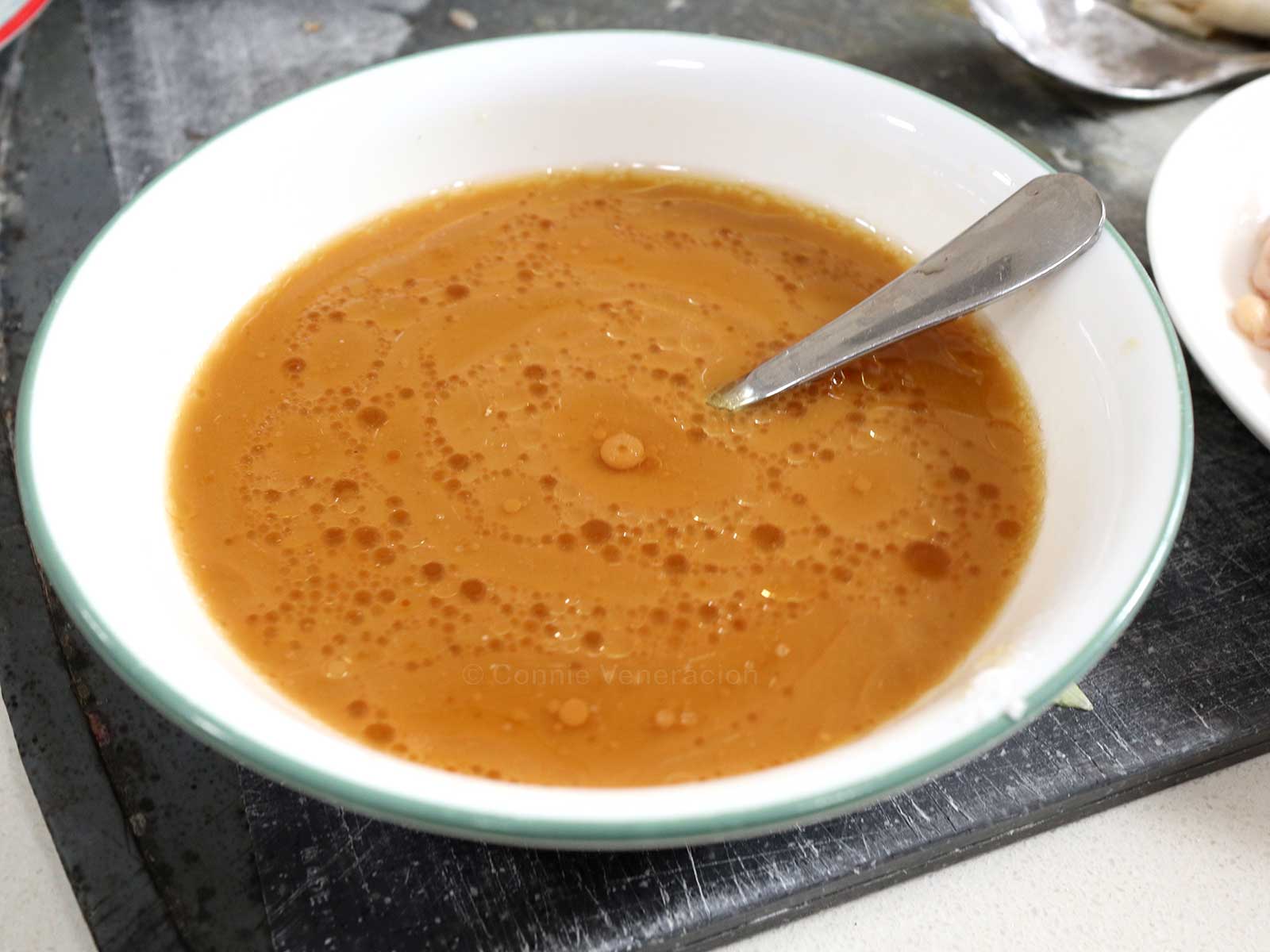
- In a bowl, stir together all the ingredients for the sauce.
- Heat the cooking oil in a wok.
- Saute the garlic and shallots for half a minute.
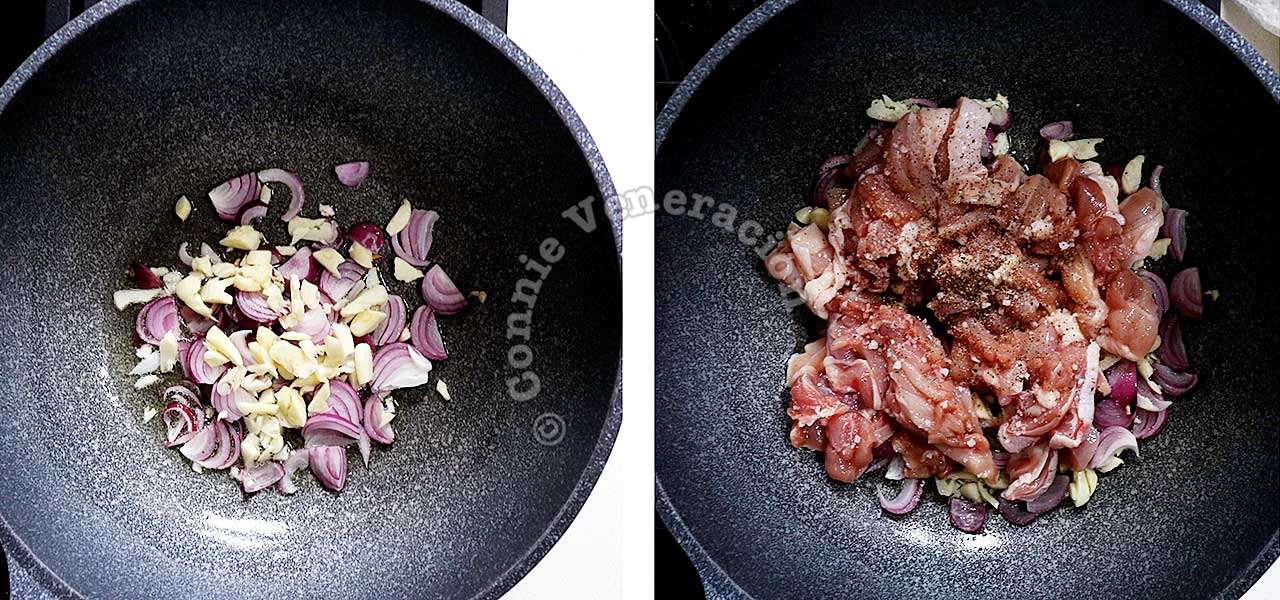
- Turn up the heat and spread the chicken in the hot oil. Sprinkle with salt and pepper.
- Stir fry just until the chicken is no longer pink.
- Add the carrot slices (they take longest to cook so they go in first). Stir fry for half a minute.
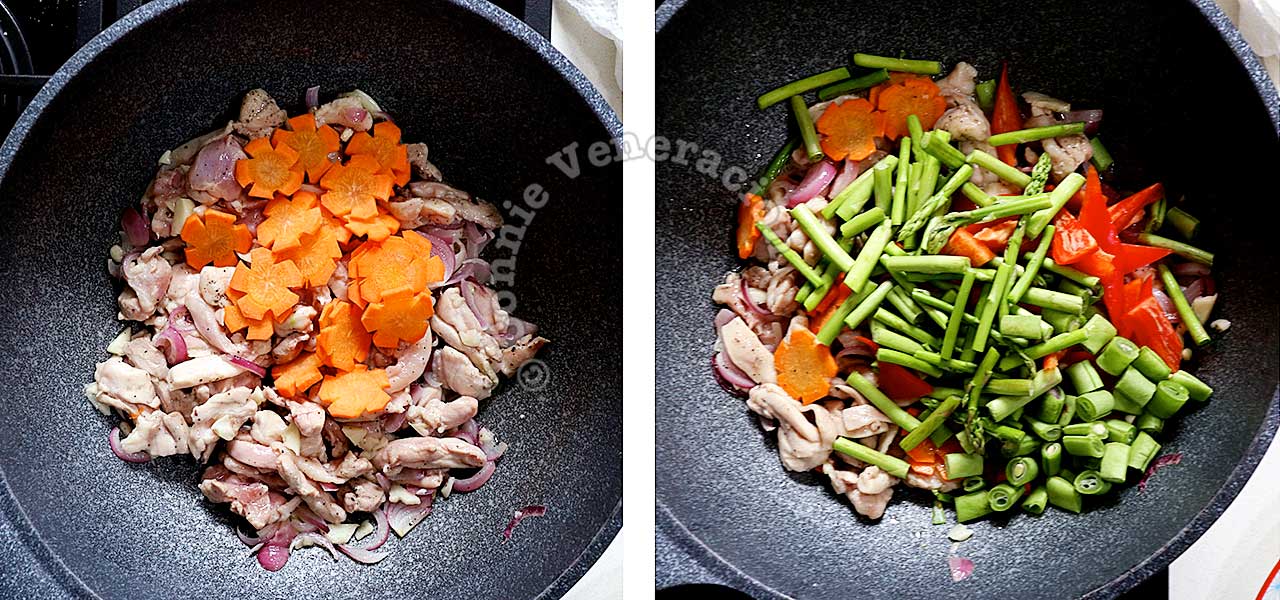
- Add the bell pepper, asparagus and green beans. Sprinkle with more salt and pepper. Stir fry for one minute.
- Add the cabbage and sprinkle in some salt and pepper. Stir fry for half a minute.
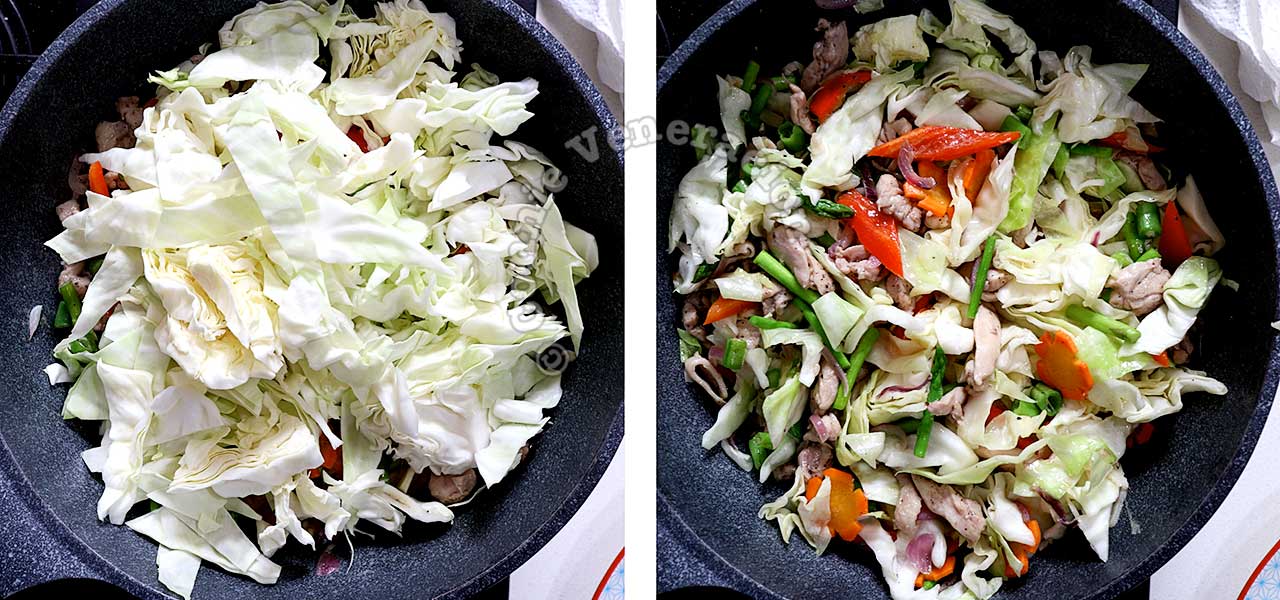
- Add the quail eggs, shiitake and oyster mushrooms. Again, sprinkle with a bit of salt and pepper. Stir fry for half a minute.
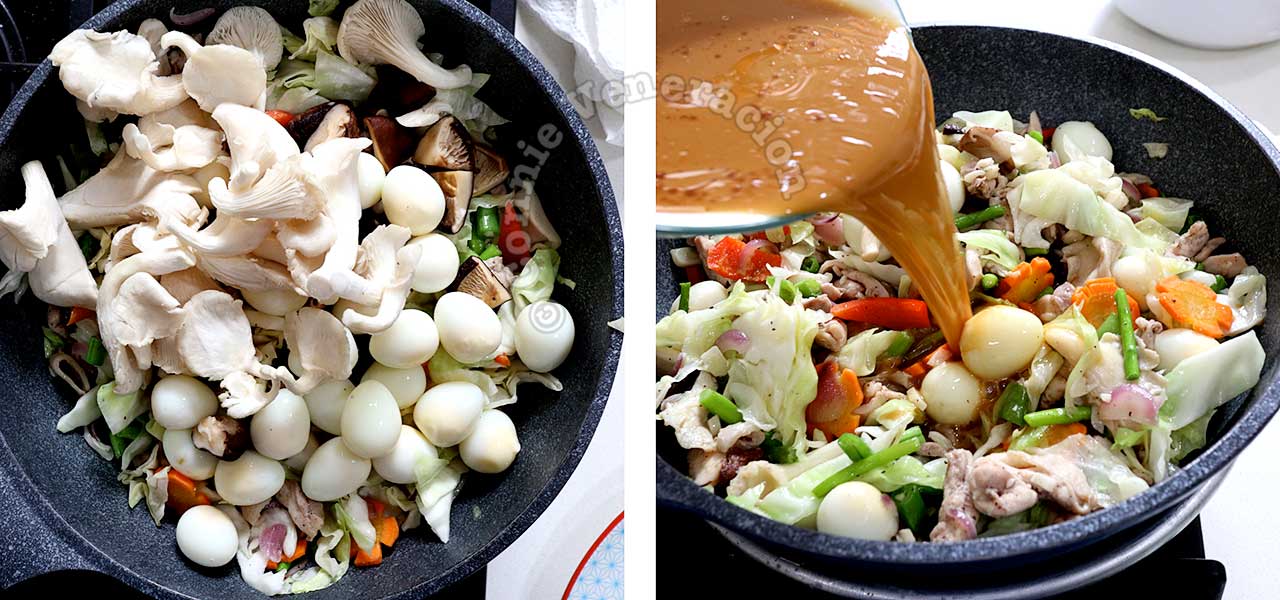
- Stir the sauce to loosen the starch that settled in the bottom then pour into the wok with the chicken and vegetables.
- Cook, stirring, until the sauce is thick and clear.

- Taste and adjust the seasonings, if needed, before serving. Best with rice.



 Chicken inasal