
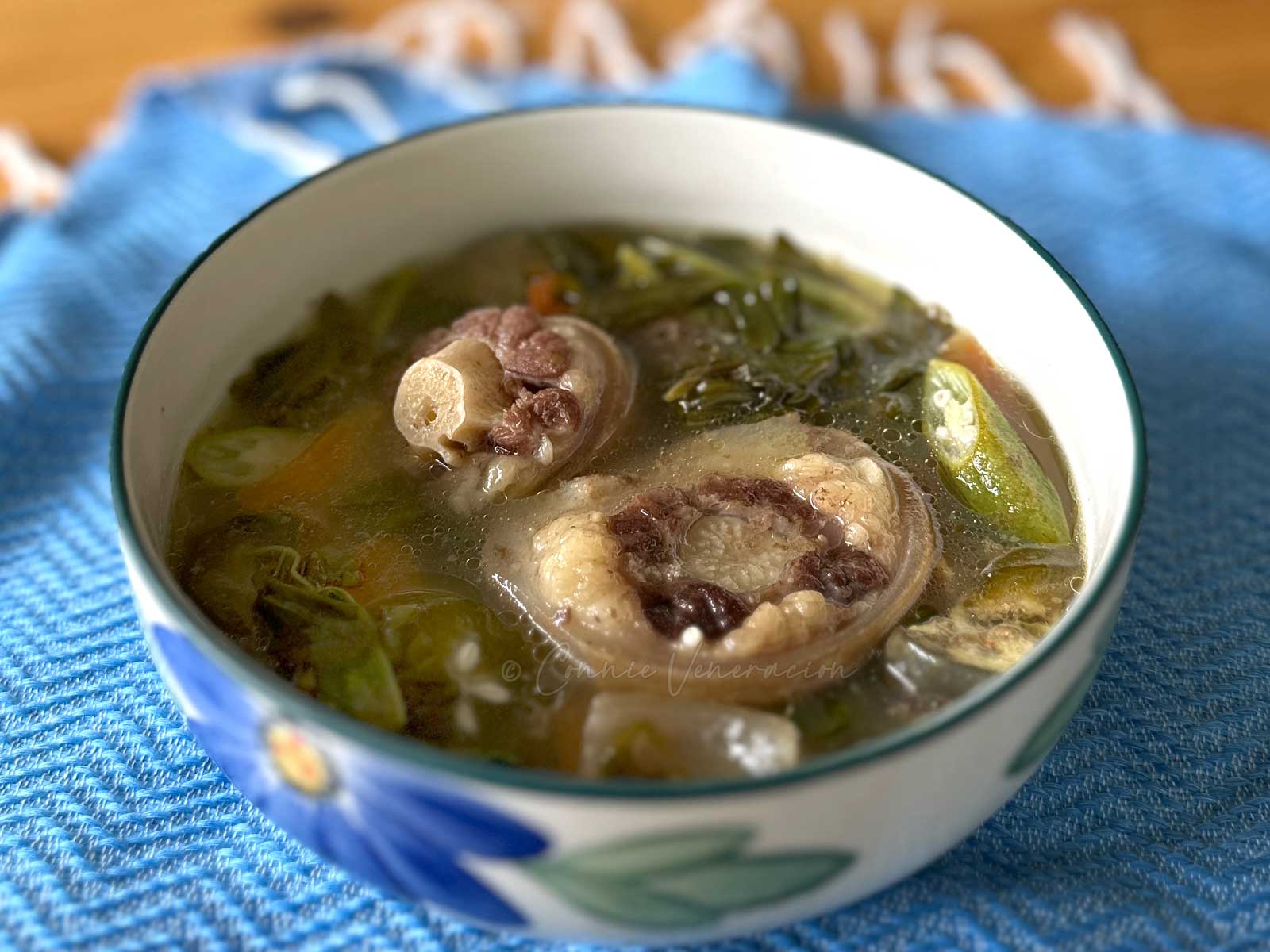
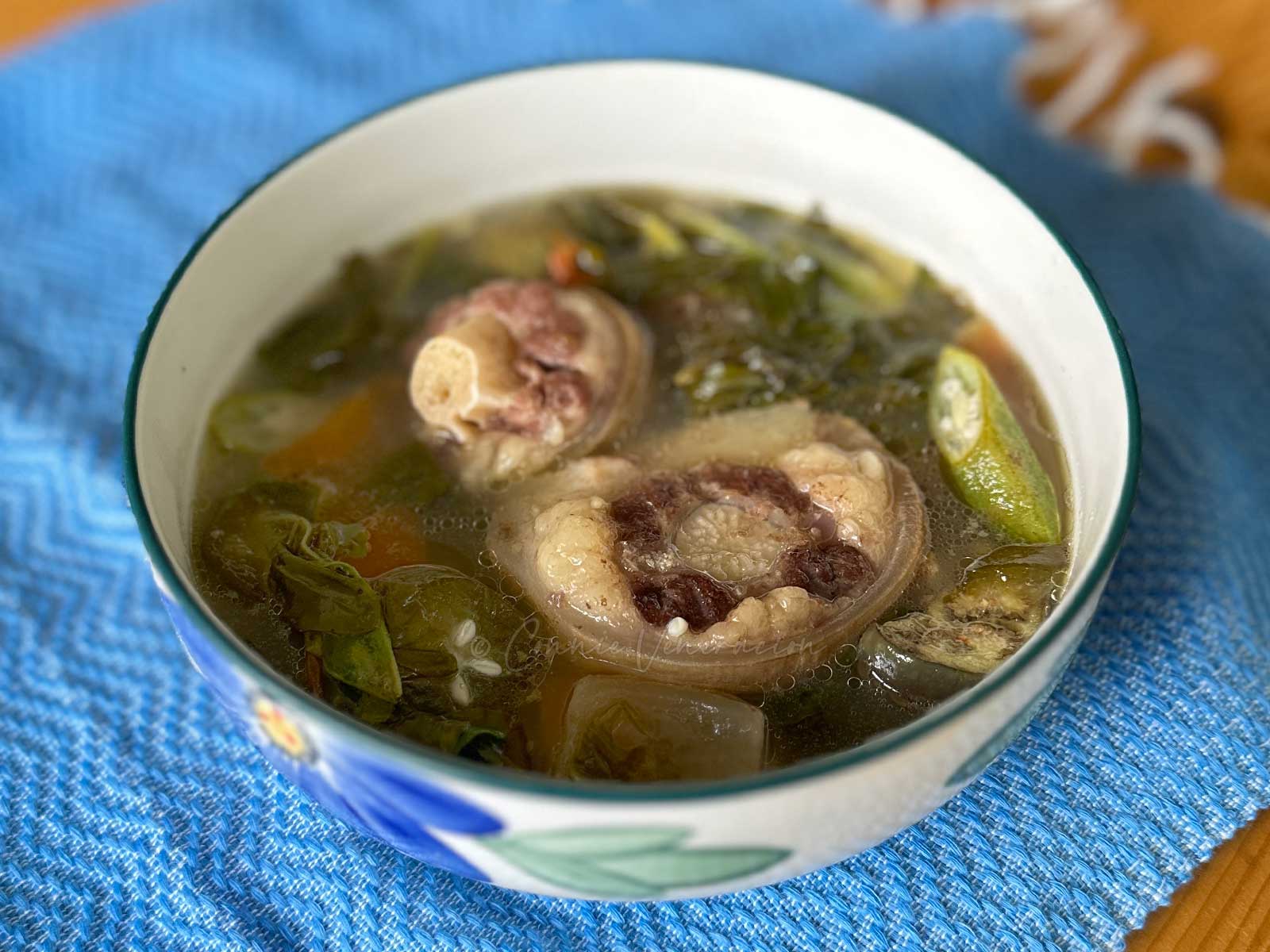
A variant of the iconic Filipino sour soup, sinigang na buntot ng baka, or oxtail sinigang, is not as common as its pork tail sibling. It takes much longer to tenderize oxtail but waiting is worth it.
Cook’s notes
If you’re new to sinigang and need an introduction, see Sinigang, the iconic sour soup from the Philippines.
Now, about this recipe. Why oxtail and not the usual pork tail? There is a world of difference in the texture of the cooked dish. Oxtail sinigang is richer; the broth is thicker and sticky because tendons liquefy during slow cooking and get mixed into the water. The downside is that oxtail takes much longer to cook to that melt-in-the-mouth tender stage.
There are several ways to tenderize the oxtail. You can do it the traditional way by simmering it on the stovetop (or in a claypot over charcoal if you’re feeling rustic). It will take several hours. A slow cooker is a better option. The cooking will take several hours too but the convenience can’t be beat. No need to check if the liquid needs to be replenished. No need to stir. You can just turn on the slow cooker before you go to bed and, when you wake up, the oxtail will be perfectly tender.
But if you don’t have much time to spare, there’s always the pressure cooker. In my case, oxtail always went into the pressure cooker until a couple of years ago when I finally learned how to use the slow cooker properly. Apparently, it’s not as idiot-proof as many like to think.
If you pressure cook your oxtail but want to achieve the texture of slow cooked meat, cool the cooked oxtail then let it sit in the fridge, in its broth, overnight. There’s something about allowing the broth to congeal that makes it richer the next day. Once your oxtail is tender, just proceed cooking your sinigang the usual way.
But, if you have a slow cooker, then, this recipe is perfect for you.
Boiled kamias (bilimbi) and its cooking liquid take the place of tamarind juice in this new sinigang recipe.
Kangkong or water/ swamp spinach (Ipomoea aquatica) is the default green leafy vegetable that goes into sinigang but, in this case, spinach (Spinacia oleracea) is used.
Slow cooker oxtail sinigang
Ingredients
For slow cooking the oxtail
- 1 kilogram oxtail (2.2 pounds) cut into 2-inch rings
- 1 tablespoon cooking oil
- 4 cloves garlic crushed
- 2 onions peeled and diced
- 4 tomatoes diced
- 2 tablespoons fish sauce
To complete the dish
- 15 kamias (bilimbi) cut into rings
- 12 pieces okra tips cut off sliced
- 2 to 3 eggplants diced
- 1 bunch spinach tough ends cut off and discarded (cut into manageable lengths if the stalks are long)
- fish sauce to taste
Instructions
Slow cook the oxtail
- Place the oxtail in a pot. Cover with water. Boil for 10 minutes. Drain and rinse well.
- Heat the cooking oil in a pan and saute the garlic, onions and tomatoes. Transfer the vegetables to the slow cooker.
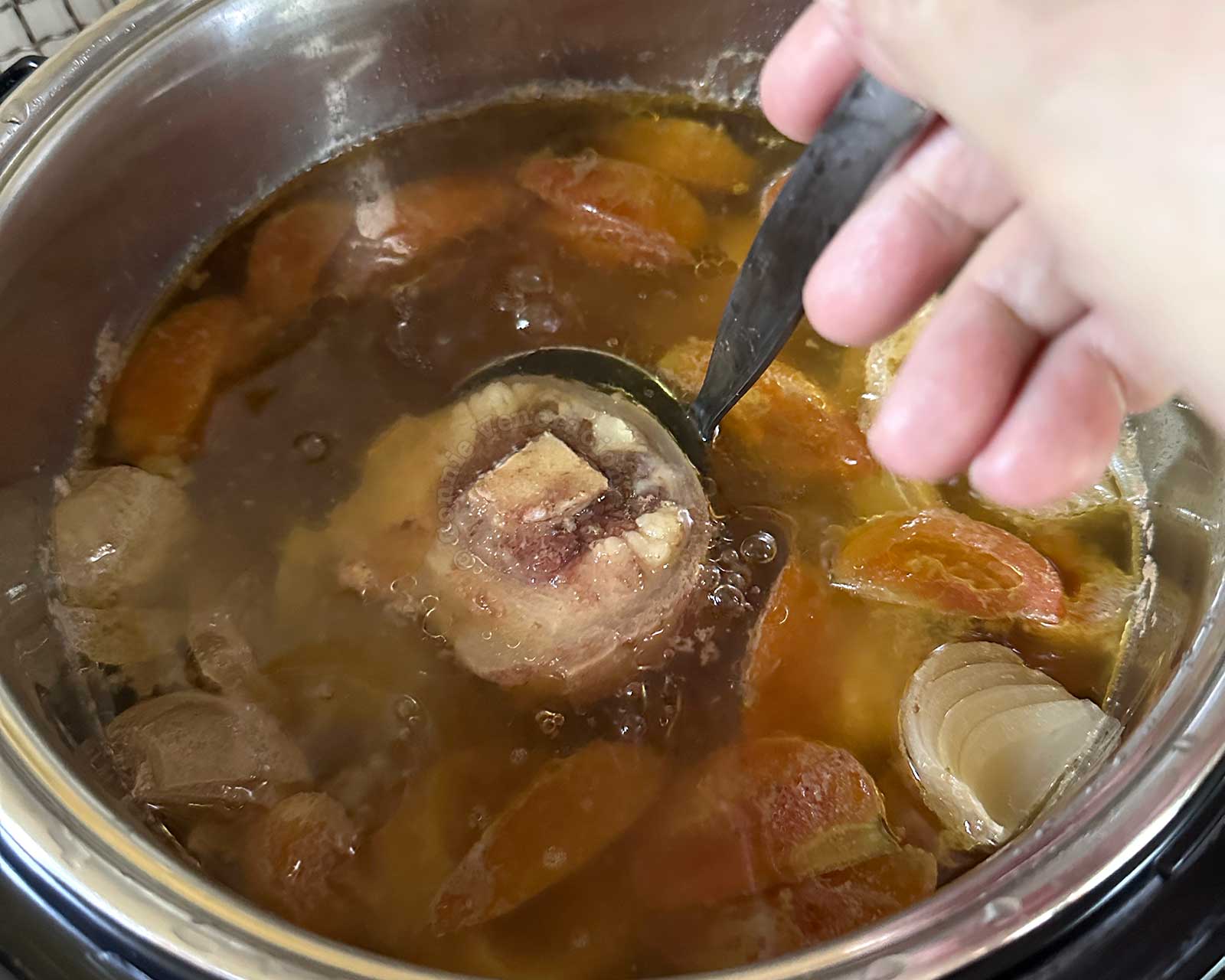
- Place the rinsed oxtail in the slow cooker. Pour in enough boiling water to cover. Slow cook the oxtail for eight hours on high or up to 12 hours on low.
- Scoop out the cooked oxtail. Reserve the broth and vegetables.
Cook the sinigang
- Boil the kamias in two cups of water until very soft. Set aside.

- Heat four cups of oxtail broth in a pot and, when boiling, drop in the okra. Cook for five minutes.
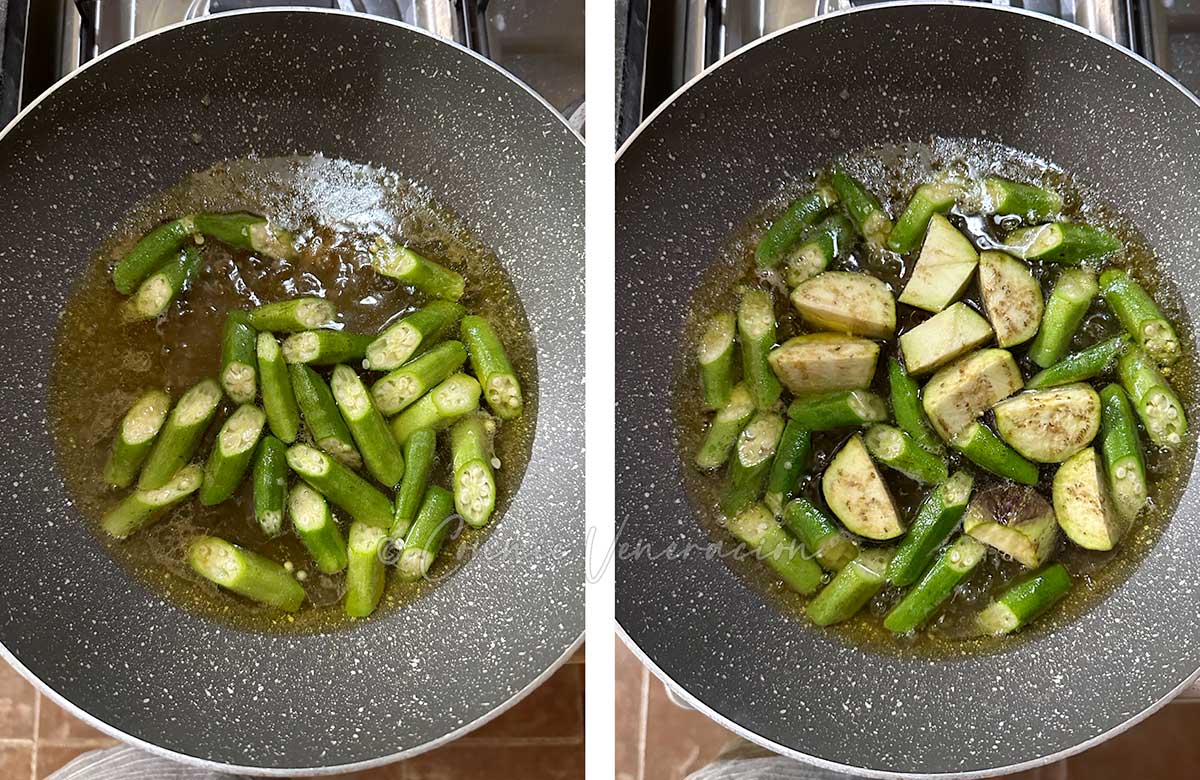
- Add the eggplants and cook for another five minutes.
- Stir in the spinach, add more oxtail broth to keep all the vegetables submerged and cook for another five minutes.
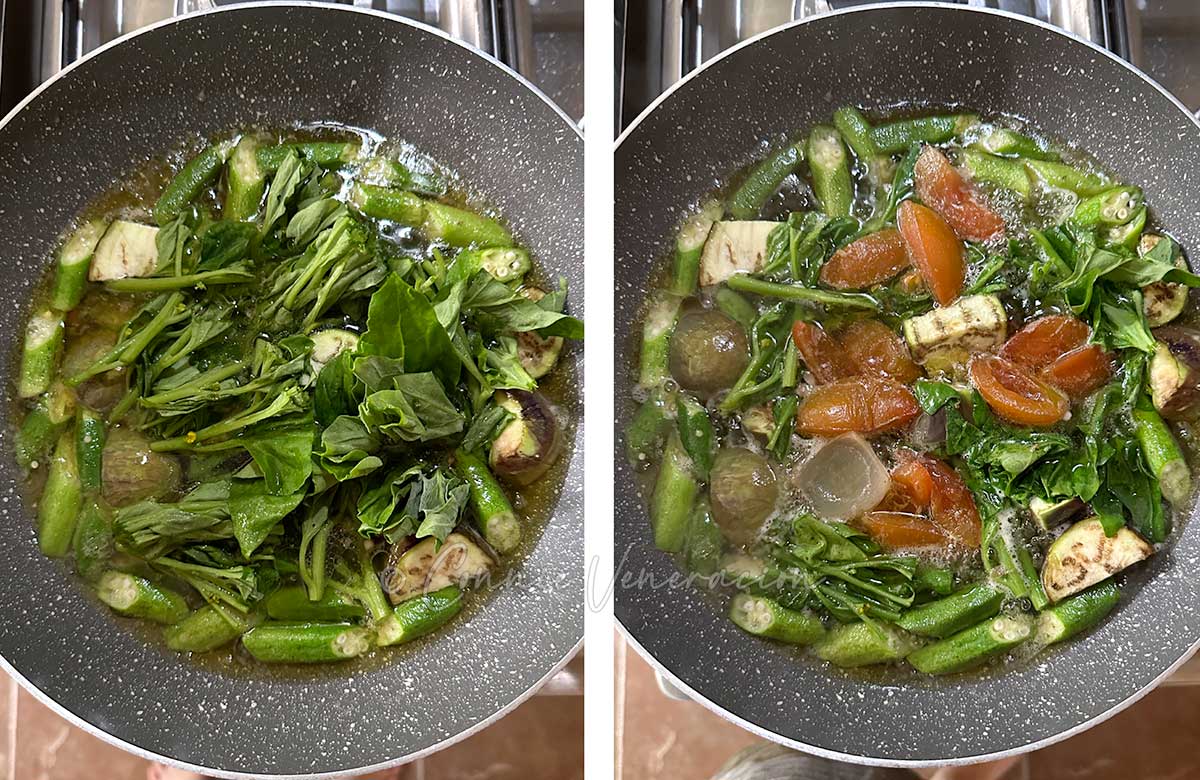
- Add the oxtail (and more broth, if needed) and simmer for another five minutes.
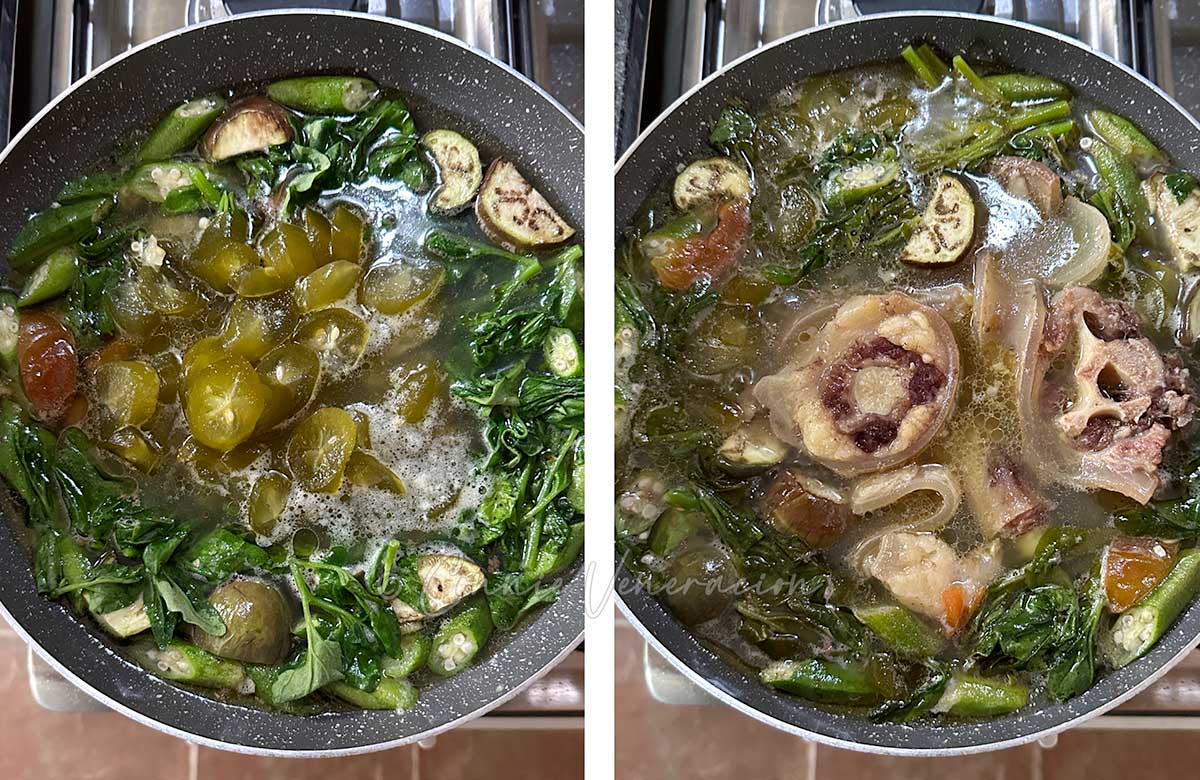
- Taste the sinigang broth one last time and add more fish sauce, if needed, before serving.




 Cranberry and pistachio pilaf