
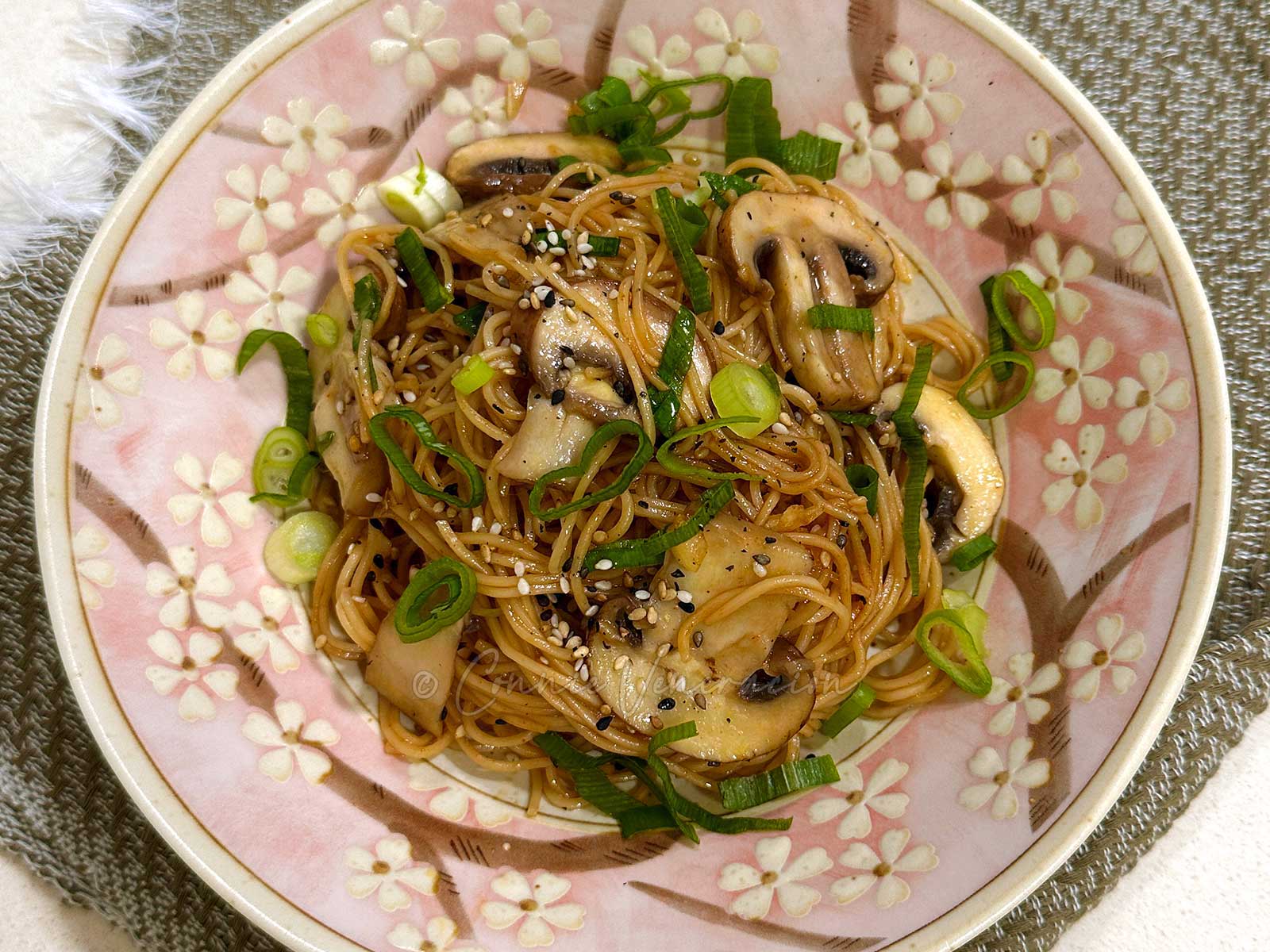
Sweet, sour, salty and packed with heat, this spicy meatless mushroom and noodle dish can be cooked in 15 minutes flat. Enjoy for breakfast, snack, lunch or dinner. Cook extra for second and third helpings.

Cook’s notes
A pantry dish whipped up on a day when the only fresh vegetables I had were a bunch of scallions and a head of garlic. But I had mushrooms, dried egg noodles, and common Asian seasonings including a newly opened tub of gochujang.
Gochujang is Korean chili paste. If you’re having problems pronouncing it, you’re not alone. It was a tongue twister for me for a long time. I learned to pronounce it in my head by articulating it over and over. In time, I could say it, verbally and mentally, as though I had been it all my life.
Then, I discovered it was the wrong pronunciation. In Korean, “g” is pronounced as “k”. So, it’s koh-choo-jang. In pronouncing the last syllable, it’s midway between jan and a hard jang as the “g” is almost silent.
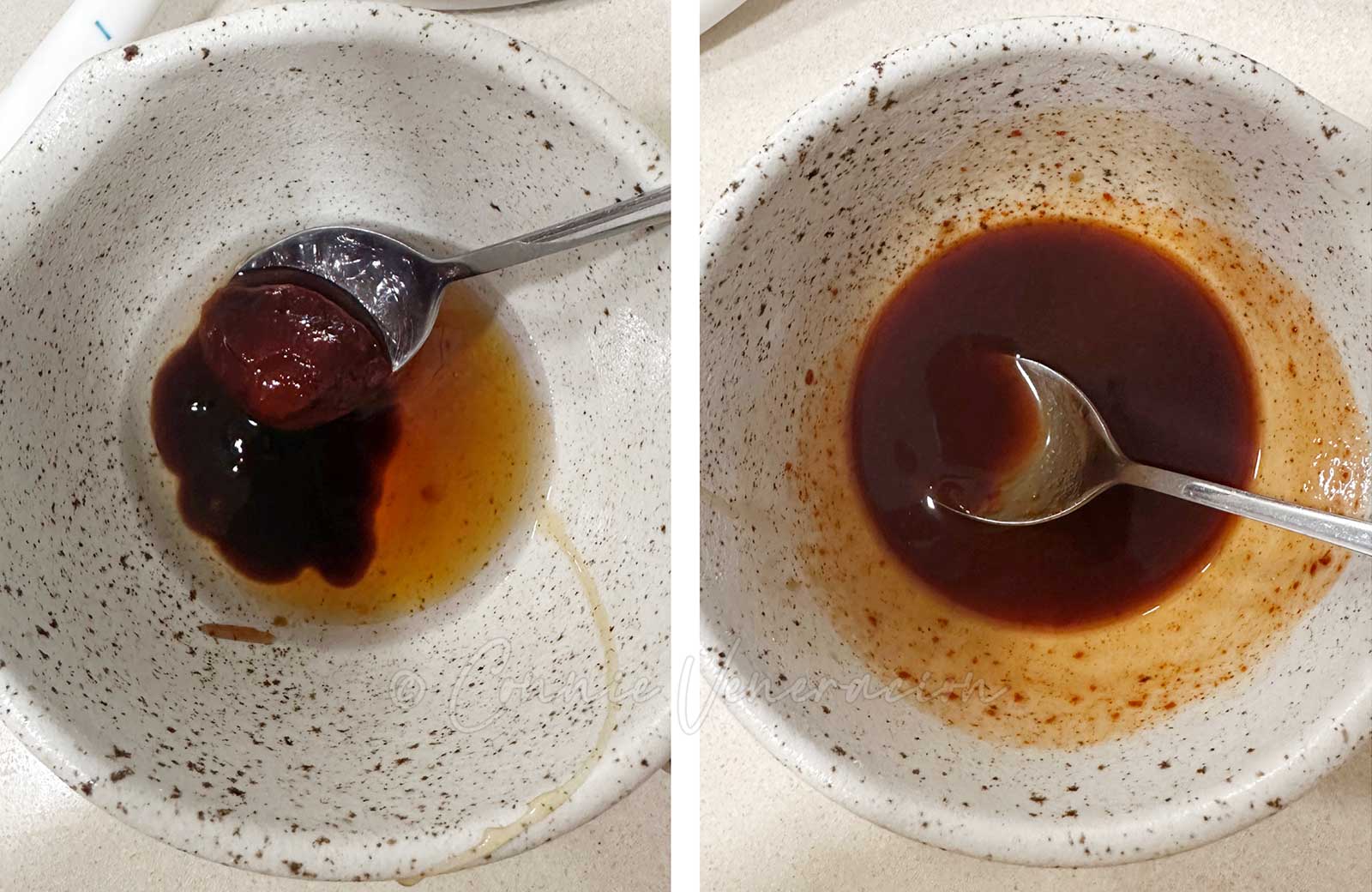
But gochujang is just one of the components of the sauce. The saltiness is derived from soy sauce, the sweetness from honey, the sourness from rice vinegar, added umami from oyster sauce and heat from gochujang. You’ll find all of these in Asian groceries or the Asian aisle of generic groceries.
If you happen to have fresh Chinese-style egg noodles, use them. You’ll be saved the trouble of boiling dried noodles. If you don’t have egg noodles, fresh or dried, you may substitute soba or even udon. Just stay away from Italian-style noodles. They have their place in cooking but this dish is not one of them. Stay with Asian noodles (see Asian noodles shopping guide).
Swiss brown button mushrooms went into this dish. White is fine, shiitake is fine, and shimeji should also be good. You may also opt for eryngii. You may even mix two or more mushroom varieties.
For ultimate enjoyment, adjust the level of heat and the sweet sour balance by adjusting the amount of gochujang, honey and rice vinegar to suit your palate.
Garlic butter noodles with honey and gochujang
Ingredients
Sauce
- 2 tablespoons soy sauce
- 1 tablespoon oyster sauce
- 1 tablespoon gochujang Korean chili paste
- 2 tablespoons honey
- 1 tablespoon rice vinegar
Noodles and mushrooms
- 120 grams dried thin egg noodles (4.2 oz)
- 4 tablespoons butter divided
- 300 grams fresh button mushrooms (10.5 oz) thinly sliced
- salt
- 2 tablespoons minced garlic
- ½ teaspoon sesame seed oil
To garnish
- finely sliced scallions
- toasted sesame seeds
Instructions
- Mix together all the ingredients for the sauce. Set aside.
- Cook the noodles in boiling water according to package directions. Drain, cool under the tap and drain again.

- Heat two tablespoons of butter in a pan, spread the mushroom slices and sprinkle generously with salt.

- Cook, stirring, for a minute or two. Scoop out the mushrooms and set aside.
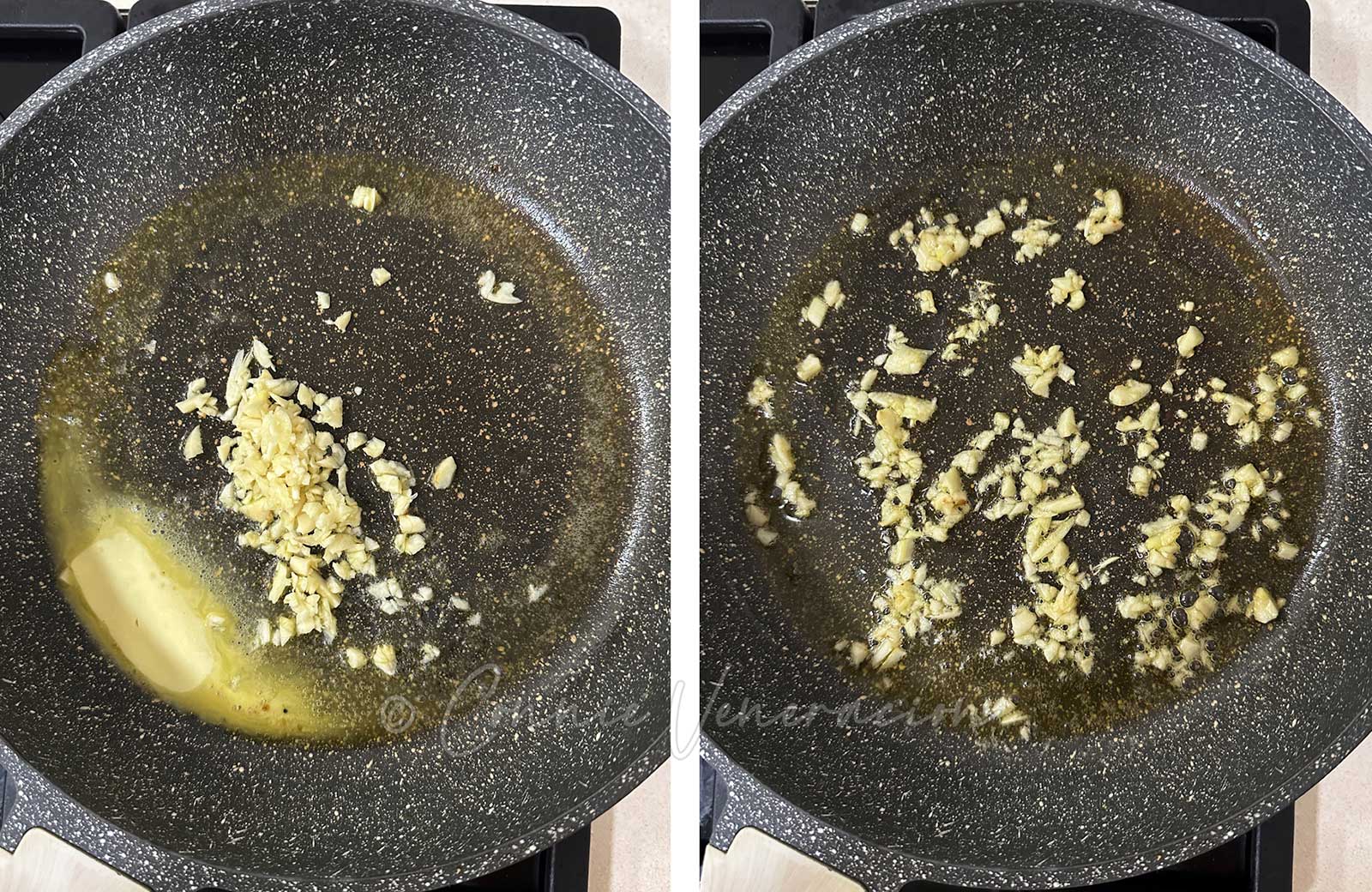
- Add two more tablespoons of butter to the pan, stir in the garlic and cook until lightly browned.
- Add the drained noodles and toss.

- Drizzle the prepared sauce over the noodles and toss repeatedly until evenly distributed.
- Taste and adjust the amount of saltiness, sweetness, sourness or heat by adding more soy sauce, honey, rice vinegar and gochujang.
- Add the mushrooms and pan juices, drizzle in the sesame seed oil and toss thoroughly.
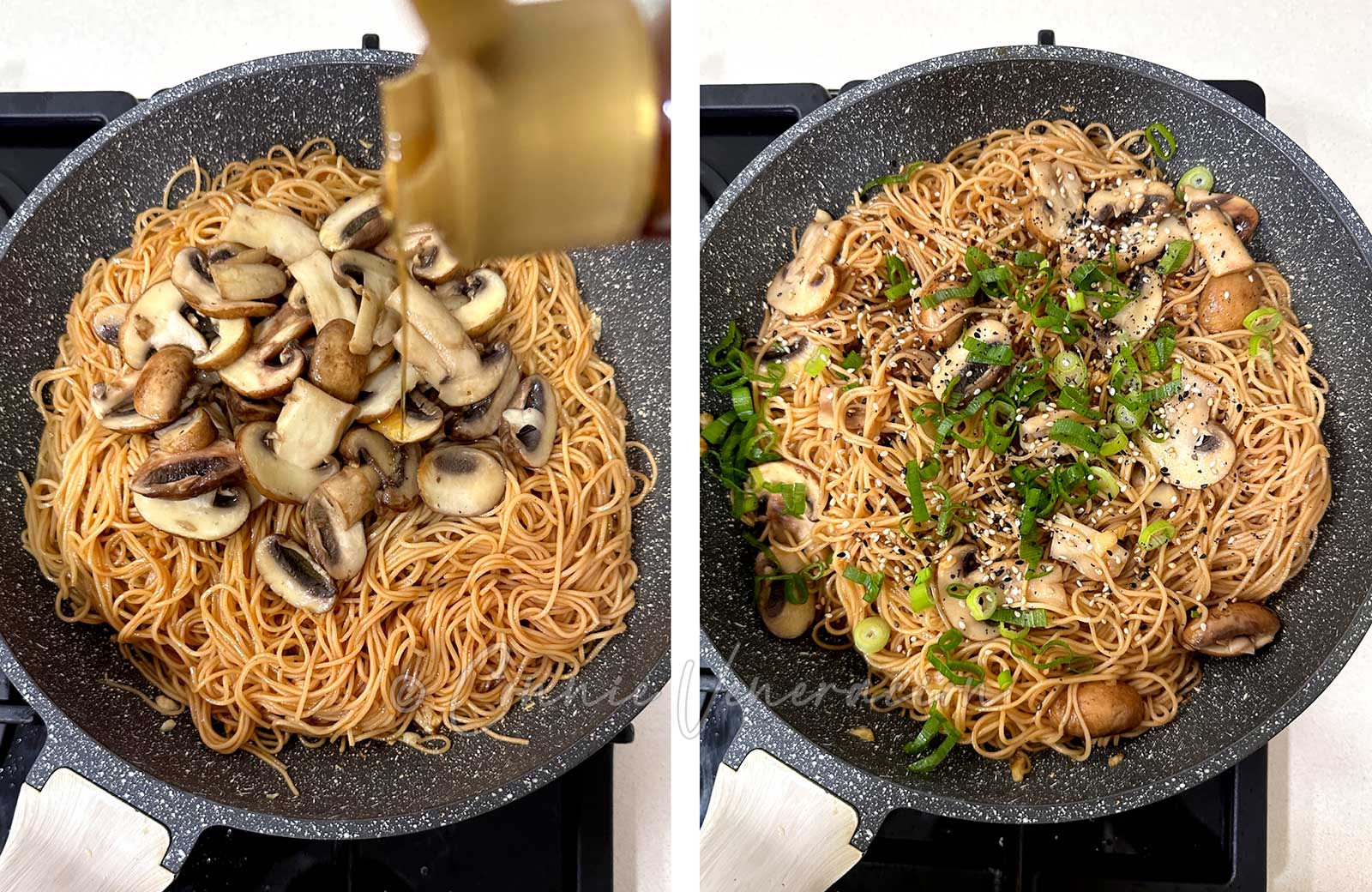
- Garnish with sliced scallions and toasted sesame seeds. Serve at once.

 Ice cream with coffee and cherry brandy